What I See in many Runners' Gaits Before They Get Injured.
By James Dodd BSc (Hons) Ost, FAFS AIM , Principal Osteopath at Back to Back Osteopaths, Earlsfield SW18
After more than two decades of treating runners — from weekend joggers preparing for their first 5k to competitive athletes logging 70-mile weeks — one pattern emerges more consistently than almost any other. The injury that brings someone through my door is rarely caused by the part of the body that hurts.
This seems counterintuitive. A runner presents with left knee pain. Naturally, they assume something is wrong with their left knee. What a thorough movement assessment often reveals, however, is something quite different: the left knee is the victim, not the culprit. The real problem is frequently happening on the opposite side of the body, one stride earlier in the gait cycle.
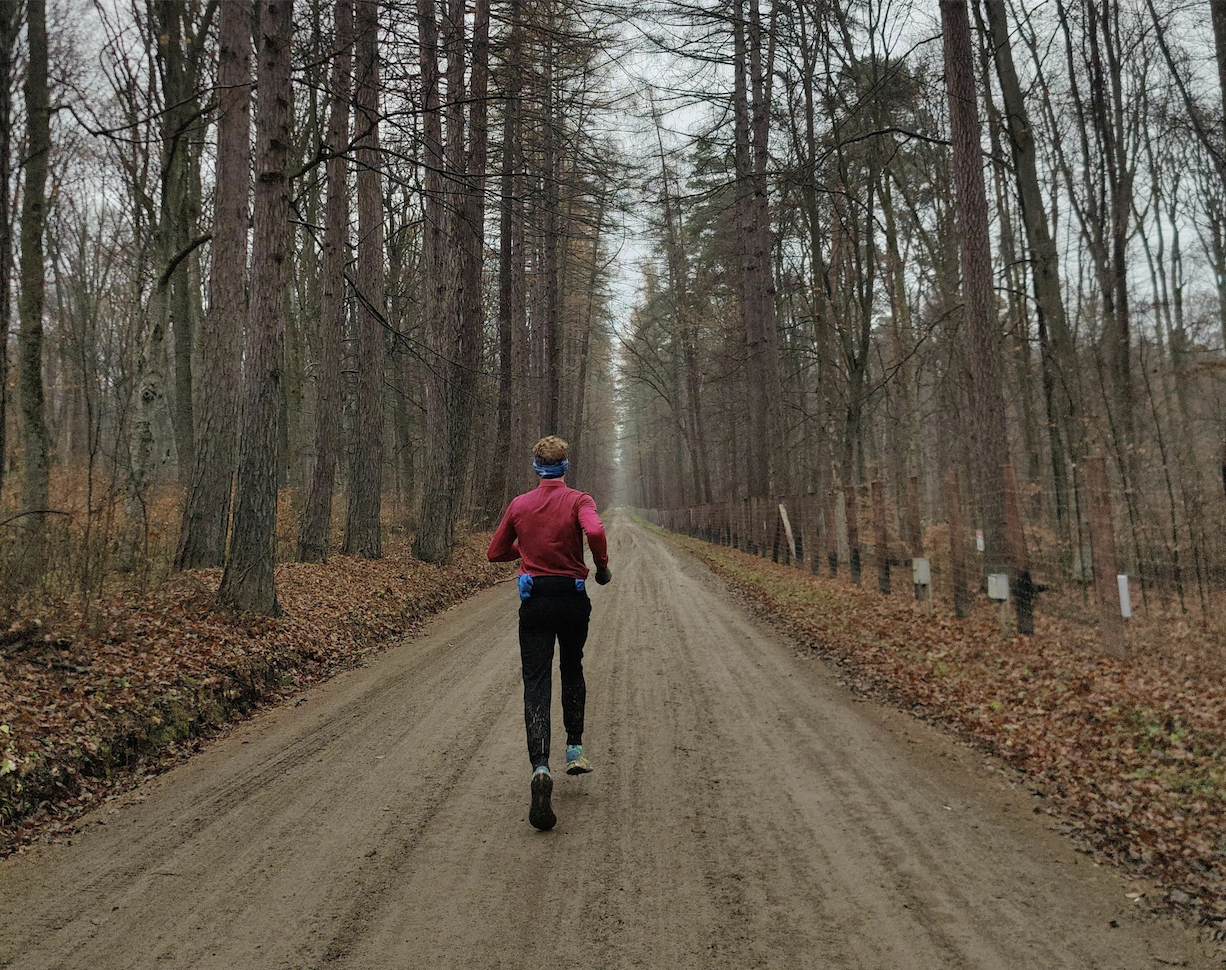
Running and gait. It is all joined up!
The gait cycle and why the push-off matters as much as the landing
To understand this, it helps to think about what running actually is. At its most basic, it is a continuous series of single-leg hops — a cycle of loading and unloading, absorption and propulsion. Every time your foot strikes the ground, your entire musculoskeletal system has about 120 to 200 milliseconds to absorb the force of roughly two to three times your body weight before the opposite leg swings through and lands.
That absorption demands mobility. The hip needs to extend fully behind you as you push off. The ankle needs to plantarflex and then dorsiflex fluidly as your body passes over the foot. If either of those movements is restricted — even subtly — the forces that should have been distributed across that joint complex don't simply disappear. They travel forward in the kinetic chain and are offloaded onto whatever structure is next in line to receive them.
Frequently, that structure is the contralateral (the other side) hip or knee knee.
What I look for in a movement assessment
When a runner comes in with knee or foot pain, my starting point is rarely the painful site. I want to watch them step, walk, step of a platform, hop, jump etc etc. I want to assess the full range of motion in both hips and both ankles — because restriction in one often tells you exactly why the other side is suffering.
A stiff right hip — specifically restricted hip extension — means the right leg cannot fully complete its push-off phase. The runner compensates by rotating through their pelvis or lumbar spine, or by shortening their stride, or both. But crucially, that incomplete push-off changes the mechanics of how the left leg lands. Because the propulsion from the right was diminished, the left leg has to work harder to maintain momentum. The left knee absorbs forces it was never designed to handle alone, repeatedly, for every stride of a 10-kilometre run. At some point something gives!!
The same logic applies to ankle restriction. A right ankle that lacks dorsiflexion (upward movement) — often the result of previous sprains, calf tightness, or longstanding stiffness — cannot allow the tibia to travel adequately over the foot during stance phase. The runner subtly compensates, often pronating excessively through the midfoot or externally rotating the leg. Again, the kinetic chain shifts the load forward and across: the left knee, the left plantar fascia, the left Achilles begin to absorb what the right ankle failed to.
This is the clinical picture I see repeatedly: a patient with left knee pain (or pain somewhere else) who has never had a right ankle or hip injury, and whose right side feels perfectly comfortable on a daily basis. The restriction is often subclinical — present, measurable, but not painful. It only becomes a problem under the cumulative load of running.
Why this pattern is so commonly missed
Standard clinical assessments tend to focus on the painful area. This is understandable — it is where the patient reports symptoms, and it is where imaging will be directed. But pain is a lagging indicator. By the time the left knee becomes symptomatic, it has often been absorbing excess load for weeks or months. Treating the knee alone — with strengthening, taping, or even injection — may provide temporary relief, but without addressing the restriction driving the overload, the injury will return.
This is why I use 3D movement analysis as part of my assessment process. Using tools like the 1080 Map system, I can assess how load is being distributed through the body in movement — not just at rest — and identify where mobility deficits are creating compensatory patterns under real functional demand.
Research supports this cross-body relationship. A 2019 study published in the Journal of Orthopaedic and Sports Physical Therapy found that contralateral hip weakness and restricted mobility were significantly associated with patellofemoral pain syndrome in runners, independent of local knee mechanics (Lack et al., 2019). Work by Powers (2010) in the same journal demonstrated that hip kinematics are primary drivers of knee loading patterns, and that interventions targeting the hip produced superior outcomes for knee pain compared to knee-focused treatment alone.
What this means for your training
If you are a runner currently managing niggling knee, foot, or shin pain, consider the following. Do you have a history of ankle sprains on the opposite side? Do you feel tighter through one hip than the other, particularly in extension? Do you notice that one leg feels like it pushes off less powerfully? Any of these may be relevant — and worth investigating before the niggle becomes a proper injury that forces you off the road entirely. Any of our functional team can help here.
Early assessment almost always shortens recovery time. A restriction identified at four weeks of mild symptoms is a very different clinical picture to the same restriction found after six months of deteriorating knee pain and a half-marathon.
Come and see us before the injury stops your training
At Back to Back Osteopaths in Earlsfield, Wandsworth, we see runners at every level — from those building their first base mileage to those preparing for ultras. Our functional team and 3D movement assessments are designed specifically to identify the kind of cross-body loading patterns described above, so that we can address what is actually driving your symptoms rather than simply managing where they appear.
If you are running with pain, or want an assessment before one develops, call us on 020 8605 2323 or book online.
Back to Back Osteopaths, 432 Garratt Lane, Earlsfield, London SW18 4HN
References
Lack, S., Barton, C., Sohan, O., Crossley, K., & Morrissey, D. (2019). Proximal muscle rehabilitation is effective for patellofemoral pain: a systematic review with meta-analysis. Journal of Orthopaedic and Sports Physical Therapy, 45(3), 234–243.
Powers, C. M. (2010). The influence of abnormal hip mechanics on knee injury: a biomechanical perspective. Journal of Orthopaedic and Sports Physical Therapy, 40(2), 42–51.