Back to Back Blog
Can Osteopathy Support Marathon Training or Triathlon Preparation?
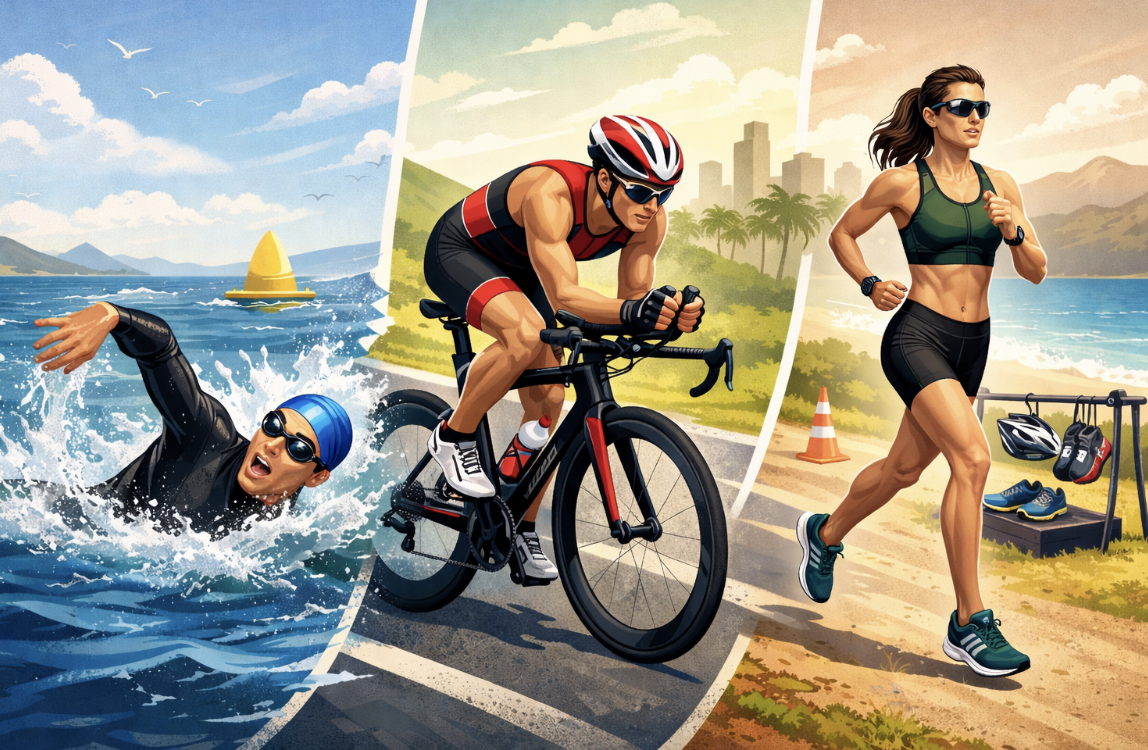
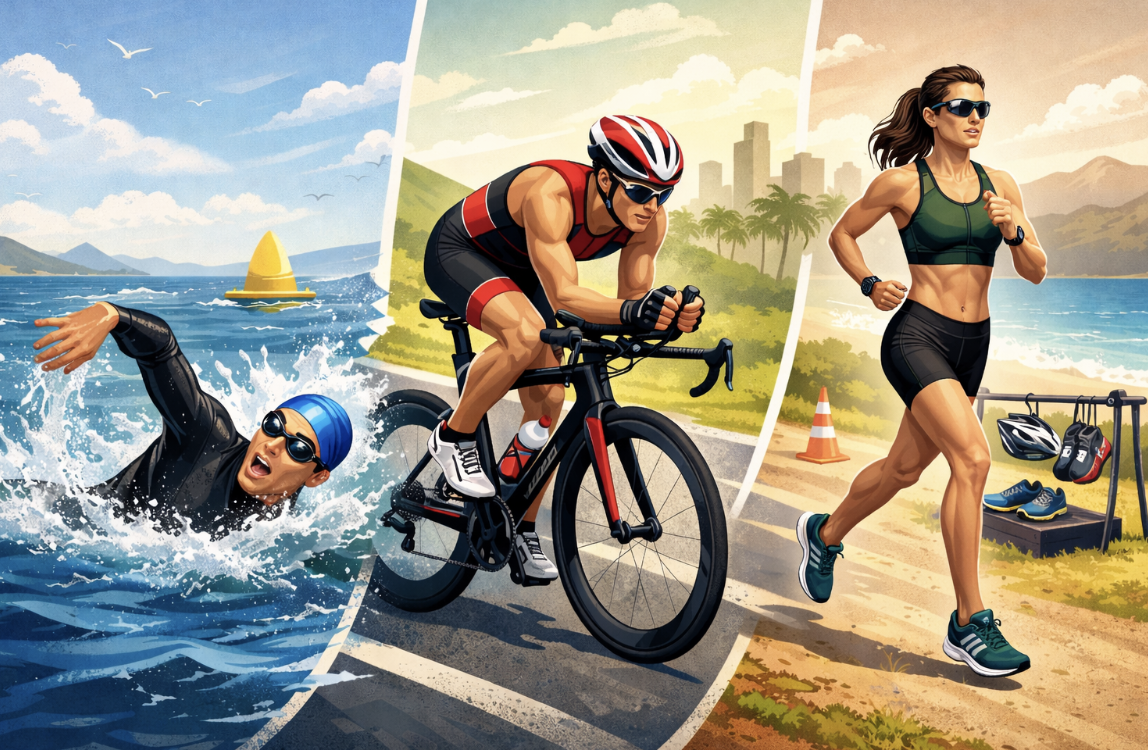
Training for a marathon or triathlon is hugely rewarding — but it places significant, repetitive stress on the body. Whether you’re preparing for the London Marathon or building towards your first Olympic-distance triathlon, the combination of mileage, intensity and time pressure increases your risk of overload injuries.
This is where osteopathy can play a valuable role.
At Back to Back in Wandsworth SW18, we regularly support runners and triathletes through structured training blocks — not just when they’re injured, but proactively to keep them moving well.
The Demands of Marathon & Triathlon Training
Marathon training typically involves:
Progressive weekly mileage
Long runs placing sustained load through the calves, Achilles and hips
Speed sessions stressing hamstrings and hip flexors
Reduced recovery time during peak blocks
Triathlon preparation adds:
High cycling volume (hip flexor dominance, lumbar flexion posture)
Swimming (shoulder load and thoracic rotation demands)
Transition training, where fatigue alters running mechanics
When training volume increases faster than tissue capacity adapts, problems arise.
Common issues we see include:
Achilles tendinopathy
Patellofemoral pain
IT band irritation
Hamstring overload
Bone stress reactions
Lower back stiffness linked to cycling
These are rarely “random injuries.” They are usually load-management or biomechanics problems that build over time.
How Osteopathy Supports Performance
1. Early Identification of Overload Patterns
Before pain becomes an injury, the body often gives warning signs:
Persistent tightness in one calf
Reduced hip extension on one side
Subtle asymmetry in single-leg strength
Increasing fatigue that doesn’t resolve with rest
Osteopaths are trained to assess movement patterns, joint mobility and tissue load tolerance. Identifying these early allows adjustments before full injury develops.
For example:
A restricted ankle joint may increase Achilles strain.
Reduced thoracic rotation from cycling may alter arm swing in running.
Gluteal weakness may overload the hamstrings late in long runs.
Addressing these proactively keeps training consistent — and consistency is everything in endurance sport.
2. Optimising Biomechanics
Marathon and triathlon performance relies on efficiency. Small mechanical inefficiencies repeated over thousands of steps become significant.
Osteopathic assessment looks at:
Hip extension and pelvic control
Ankle mobility and calf capacity
Thoracic rotation
Rib and breathing mechanics
Lumbar spine load distribution
Manual therapy can improve joint mobility and reduce protective muscle tone, but this is only part of the picture. The goal isn’t just to “loosen” tissues — it’s to restore optimal movement so force is distributed more evenly.
3. Strength & Load Guidance
Endurance athletes often focus heavily on mileage but neglect strength.
Evidence consistently shows that strength training:
Reduces running injury risk
Improves running economy
Supports tendon resilience
Enhances late-race performance
Osteopaths can guide:
Single-leg control work
Calf capacity progression
Hip abductor and glute strength
Plyometric progression for race readiness
Core and trunk endurance
This becomes especially important for triathletes managing cumulative fatigue across three disciplines.
4. Managing Recovery During Peak Blocks
During high-load weeks, athletes may experience:
DOMS that lingers longer than expected
Calf tightness after speed work
Shoulder stiffness from increased swim volume
Low back ache from long rides
Osteopathic treatment during these periods can help maintain joint mobility, improve circulation to overloaded tissues, and reduce compensatory patterns.
Importantly, treatment should be integrated into the training plan — not used as a last-minute fix when things break down.
5. Supporting Return from Niggles
Very few athletes complete a full marathon or triathlon block without any niggle.
The key is not eliminating discomfort entirely — it’s understanding when discomfort is acceptable and when it signals tissue overload.
An osteopath can help distinguish between:
Normal training soreness
Tendon overload
Early bone stress reactions
Neural irritation
Joint-related referral pain
This clarity allows smarter decisions around:
Whether to continue training
How to modify load
When to cross-train
When imaging or GP referral is required
This is particularly relevant in marathon build-ups where ignoring early bone stress symptoms can end a season.
Osteopathy Is Not Just “Treatment”
The biggest shift in modern sports osteopathy is moving away from purely passive treatment.
Effective support involves:
Movement assessment
Load management advice
Evidence-based strength programming
Biomechanical optimisation
Clear return-to-run frameworks
Manual therapy is a tool — not the entire solution.
When Should You See an Osteopath During Training?
Consider booking if:
You notice asymmetry developing
A niggle persists beyond 7–10 days
You are increasing mileage significantly
You’re entering peak training
You have a history of recurrent injury
You’re returning after time off
You don’t need to wait for a full injury.
Final Thoughts
Marathon and triathlon preparation place extraordinary demands on the body. The difference between successful completion and frustrating injury is often proactive management.
Osteopathy can support:
Injury prevention
Movement efficiency
Strength integration
Recovery management
Smarter training decisions
Whether you’re building towards your first race or chasing a PB, structured musculoskeletal support can make training more resilient and more sustainable.
And ultimately, staying healthy through the build-up is what gets you to the start line confident — and to the finish line strong.
Back to Back Osteopaths is a trusted resource for marathon runner and triathletes alike. But we also see athletes from most other sporting disciplines.
By James Dodd BSc (hons) Ost. FAFS.
GOsC registered
Book an appointment online today. Or not sure if your symptoms need treatment? Feel free to call our clinic in Wandsworth and we’ll happily advise.
Why Strength Training Is Essential for Injury Protection in the London Marathon
Training for the London Marathon is a huge physical undertaking. Over 26.2 miles, your body absorbs thousands of repetitive loading cycles. Every step places forces of two to three times bodyweight through your feet, ankles, knees and hips. Multiply that by 35,000–45,000 steps and it’s easy to see why injury rates in marathon training are high.
The common misconception? That more running is always the answer.
In reality, strength training is one of the most effective tools we have for injury protection in marathon runners. At our clinic in SW18, we regularly see runners who could have avoided weeks off training with a smarter strength foundation.
Here’s why it matters — and what to focus on.
The Marathon Is a Muscular Endurance Event
Marathon training is not just cardiovascular — it is muscular endurance under fatigue.
As fatigue builds:
Stride length shortens
Cadence drops
Hip control reduces
Ground contact time increases
This alters load distribution through the lower limb. When tissues fatigue, joints absorb more force. That’s when problems start.
Common marathon injuries include:
Achilles tendinopathy
Plantar fascia irritation
Patellofemoral knee pain
IT band pain
Bone stress injuries
In many cases, the root cause is not “tightness” — it’s insufficient strength and tissue capacity for the demands placed upon them.
Strength Improves Tissue Capacity
Every tendon, muscle and bone has a load tolerance threshold. Training increases that threshold.
When you perform progressive strength training:
Tendons become stiffer and more resilient
Muscles generate force more efficiently
Bones respond to loading by strengthening
Neuromuscular control improves
This creates what we call load capacity — the ability to tolerate marathon training without breaking down.
Without this, your running volume can outpace your body’s ability to adapt.
The Calf Complex: The Unsung Hero
The calf complex (gastrocnemius and soleus) is one of the most overloaded structures in marathon running.
The soleus, in particular, works tirelessly to control forward momentum and absorb force during stance phase. As fatigue builds late in the race, reduced calf capacity often leads to:
Achilles overload
Plantar fascia strain
Shin pain
Specific strength work should include:
Straight-leg calf raises (gastrocnemius bias)
Bent-knee calf raises (soleus bias)
Heavy, slow resistance work
High-repetition endurance sets
Many runners underestimate how strong their calves need to be for 26.2 miles.
Hip Strength Protects the Knee (your knee IS your hip!!!)
Poor hip strength and control can increase load through the knee and IT band.
When the gluteal muscles fatigue:
The knee drifts inward
Femoral rotation increases
Patellofemoral stress rises
Over thousands of strides, this becomes painful.
Key exercises include:
Single-leg deadlifts
Split squats
Step-downs
Lateral band walks
Side planks
The goal is not bodybuilding. It is controlled, unilateral strength under load.
Strength Reduces Fatigue-Related Breakdown
Research consistently shows that strength training:
Improves running economy
Reduces ground contact time
Enhances force production
Better economy means less energy cost per stride. That translates to reduced fatigue late in the race — and fewer compensatory movement patterns.
Injury risk increases significantly in the final third of marathon training blocks, when mileage peaks and cumulative fatigue is highest. Runners who maintain strength work during this phase tend to cope better.
“But I Don’t Want to Be Too Sore to Run”
A common concern.
The solution is intelligent programming:
Two sessions per week
30–40 minutes
Focus on lower limb and trunk
Avoid excessive new exercises during peak mileage
Reduce volume slightly in taper phase
Strength training should complement running, not compromise it.
Heavy lifting during base phase. Maintenance during peak weeks. Light activation during taper.
Bone Health and Stress Fracture Protection
Bone responds positively to load — but it needs varied stimulus.
Running is repetitive. Strength training introduces different loading patterns that stimulate bone adaptation.
This is especially important for:
Female athletes
Masters runners
Runners increasing mileage
Those with a history of bone stress injury
Under-fuelling combined with high mileage and no strength training is a high-risk scenario.
Practical Weekly Structure (just some ideas…)
A simple template might look like:
Day 1: Lower Limb Strength
Split squats
Romanian deadlifts
Straight-leg calf raises
Core control
Day 2: Stability and Endurance
Step-downs
Bent-knee calf raises
Single-leg bridges
Side planks
Keep it progressive. Add load when movements feel controlled and technically sound.
Strength Training Is Performance Training
This isn’t just about avoiding injury.
Stronger runners:
Maintain pace longer
Resist form breakdown
Produce more force per stride
Feel more robust during peak training
The London Marathon rewards durability.
Final Thoughts
Marathon training already places huge demand on the body. Relying on running alone is often not enough to prepare tissues for the cumulative load of 26.2 miles.
Strength training:
Increases tissue capacity
Reduces fatigue-related movement breakdown
Protects against common overuse injuries
Improves performance
If you’re building towards the London Marathon, investing in strength now could be the difference between standing on the start line — or sitting out injured.
Run consistently. Lift intelligently. Arrive strong.
For more advice book into see one of our osteopaths at the clinic in Wandsworth SW18.
Look at our blog on bone stress injuries here
By James Dodd BSc (hons) Ost. FAFS.
GOsC registered
London Marathon 2026: A Complete Guide to Bone Stress Injuries in Runners
With the London Marathon 2026 training cycle now building momentum, this is the period when we commonly see bone stress injuries emerging in runners across Earlsfield, Wandsworth and SW18.
Understanding the early signs can be the difference between finishing the race — or missing the season entirely.
What Is a Bone Stress Injury?
Bone stress injuries (BSIs) occur when repeated impact loading exceeds the bone’s ability to remodel and recover. They sit on a spectrum:
Stress reaction (early overload)
Stress fracture (structural crack)
During marathon training, runners may take 30,000–50,000 steps per long run. If recovery, nutrition and strength capacity don’t match the load, bone tissue begins to fail.
Common Locations in Marathon Runners
Tibia (shin) – the most common site
Metatarsals (forefoot) – pain during push-off
Calcaneus (heel) – deep heel ache
Femoral neck – deep groin pain (higher-risk and needs urgent assessment)
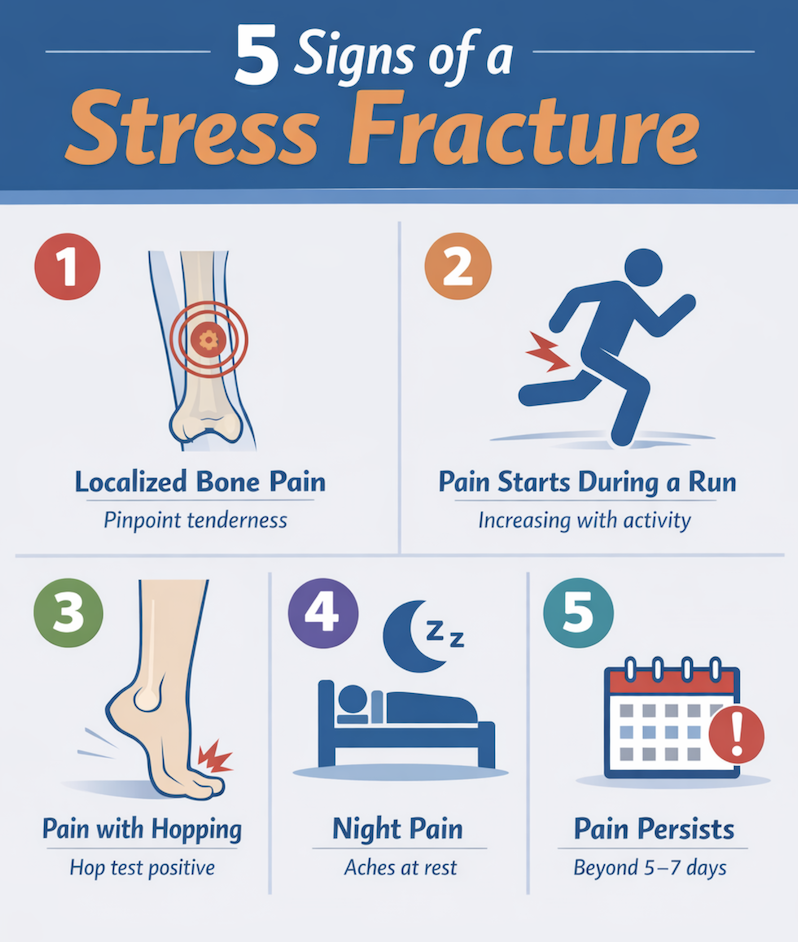
Early Warning Signs
Bone stress injuries rarely start dramatically. They build gradually.
Watch for:
Localised pain (you can pinpoint it precisely)
Pain that appears earlier in each run
Pain on single-leg hopping
Pain that persists after the run
Pain that begins to hurt during walking
Night pain (more concerning)
If pain is broad and diffuse, it may be shin splints. If it is sharp and focal, think bone.
Why They Increase During Marathon Training
Several risk factors stack up during London Marathon preparation:
1. Rapid Mileage Progression
Jumping from 15km to 25km long runs within weeks.
2. Hard Winter Surfaces
More pavement running, less terrain variation.
3. Inadequate Recovery
Busy professional schedules often compromise sleep and fuelling.
4. Low Energy Availability
Under-fuelling reduces bone turnover and resilience. This is particularly relevant in endurance athletes and female runners, but affects men too.
5. Lack of Strength Training
Bone responds to heavy load and varied force. Many marathon runners accumulate mileage but neglect progressive strength work.
Prevention: What Actually Works
Evidence supports:
Gradual mileage increases (avoid >10% weekly spikes)
Heavy calf raises (straight and bent knee)
Split squats and single-leg strength
Progressive plyometrics
Adequate carbohydrate intake around training
Sleep >7 hours per night
Bone health is influenced by both load and energy availability.
When to Stop Running
You should stop and seek assessment if:
Pain is focal and worsening
Walking becomes painful
Hopping is painful
Pain is deep in the groin
Continuing to train through a stress reaction often progresses it into a full stress fracture.
How We Help at Back to Back Osteopaths (SW18)
For runners in Earlsfield and Wandsworth training for London 2026, we assess:
Load management and weekly mileage
Strength capacity vs training demand
Running mechanics
Recovery strategies
Nutrition risk factors
Early intervention often means modifying training rather than stopping completely.
If you are preparing for London 2026 and experiencing persistent, localised pain — don’t ignore it.
A small problem in February can become a season-ending injury by April.
By James Dodd BSc (hons) Ost. FAFS.
GOsC registered

Do you get pain when playing golf?
At Back to Back we treat more than a few golfers and their injuries. An injury common to the golfer may be one of many…. But often a golfer presents with pain in their elbow, shoulder, their back, hip or knee. Pain is all too common in golfers!

At Back to Back we treat more than a few golfers and their injuries. An injury common to the golfer may be one of many…. But often a golfer presents with pain in their elbow, shoulder, their back, hip or knee. Pain is all too common in golfers!
Identifying with their pain can be the easy part. Working out why they have pain is often a little more challenging.
Assessment of injuries
Our AFS (or Applied Functional Science) team will be best to do this. Their aim is to track down the ‘why behind the what’. What I mean by this is … why has that particular area of your body failed? Which area in that person’s body is not working as it should and increasing the ‘load’ elsewhere?
I saw a patient last year and remembered this all too common story. He was in his late forties with a handicap of 4! He had been suffering with right shoulder pain for the previous 5 months! He had seen a few other practitioners before finding his way to the clinic.
To me, it was crucial to see him swing as if he was hitting the ball! Watching this and adapting the way he hit the ball, it immediately became apparent that he was restricted in his left hip. As he was halfway through his backswing the movement that should have been available at his left hip was not there and he was then using his upper back and right shoulder to do much more work than it needed or was build to do.
All that was happening was his shoulder was becoming strained because of his hip! Before coming to see us, this lovely patient had had his shoulder and surrounding area rubbed for 14 treatments. Working with his left hip and left foot and integrating them into his swing gave great results in 3 treatments and he was almost pain free at 4 treatments. He still has a small way to go, but it just goes to show that rubbing symptoms (in this case the shoulder) is not always the right answer. Getting fully assessed by someone that appreciates integrated movement and treats the body as a whole is critical.Get assessed properly and get properly fixed!

The endangered glutes!
There’s a fairly obvious giveaway about the importance of our gluteal muscles; they are rather big! Having a big, powerful set of muscles such as the glutes should indicate to us that, through our evolution, the body has developed a demand for strength and power in that area.

Why are they not firing and what to do about it.
There’s a fairly obvious giveaway about the importance of our gluteal muscles; they are rather big! Having a big, powerful set of muscles such as the glutes should indicate to us that, through our evolution, the body has developed a demand for strength and power in that area.
Human anatomy has evolved to cope as efficiently as possible with the forces exerted upon it. Perhaps the most important force of all is gravity. Every time you take a stride, or step off from a curb, or land from a jump, there is a demand for the body to control this movement. Without our muscular system engaging to catch us, we would collapse like a bag of bones under the force of gravity.
The most powerful hinge in the body, which has evolved to adsorb these forces, is the hip. It makes sense, therefore, that the hip would need a big set of muscles surrounding it in order to absorb these forces and exert the control that is required – hence the big glutes!
Having developed a powerful set of muscles such as the glutes, it would be efficient for the body to regularly recruit their power when performing tasks. If I want to perform a movement efficiently, such as bending down to empty the dishwasher, I would like the powerful parts of my body to control this movement – rather than the smaller and more vulnerable muscles.
If we don’t use the large muscle groups appropriately, then smaller muscles may be asked to do more work and may end up failing.
The importance of the glutes is widely recognised and often discussed in gyms and clinics all over the world. You may have even been told that “your glutes aren’t firing” and may be currently trying to rectify this! Unfortunately, however, the glutes are often blamed (and trained) in isolation.
A lack of understanding of how the glutes work, leads to a very limited approach to gluteal training. The important question to ask is; why are the glutes not firing? Only by answering this will you be able to improve your gluteal activation and strength.
So, why do so many of us under use our glutes and how do you actually get them to work harder for you?
Evolution lesson #1 – use it or lose it!
I always feel that any announcement to a patient that “your glutes aren’t firing” should be delivered with a caveat. The caveat being that, for most of us, this is simply a bi-product of our modern lifestyles, it is not an unfortunate affliction that you just happen to be unlucky enough to have developed. Don’t worry; we’re all in the same boat. It’s not your fault!
A quick look at the animal kingdom can help to explain this point. Often we identify animals by their anatomical features, without necessarily knowing that we do so. If I asked you to look at the images below of the Capuchin Monkey and the Springbok and tell me where their “big bits” are, then I’m hoping you would say the Capuchin’s tail and the Springbok’s hind legs.
Even without knowing the habits of these animals, you would probably be able to make a fairly good guess as to what they were good at. The monkey has a powerful tail for climbing and swinging from trees, the Springbok has big hind legs for jumping.
Their anatomy has evolved to be fine-tuned for their lifestyles, habitats and activities and their continued success as a species is dependent upon them using these powerful areas to gain advantages in the wild. These animals take maximum advantage of their powerful areas!
This is where the problems for humans arise. We are far more sedentary now than at any time during our evolution. For many of us, the continued demands required to maintain the strength and power of our big muscle groups has significantly reduced. Our anatomy has been fine tuned to cope with regular, unpredictable, multi-directional movement such as jumping, landing, walking on uneven ground, running, sprinting, changing direction. By sitting, moving less and existing in very flat, unchallenging habitats we are no longer putting these demands on our bodies.
The gluteal muscles fire when they are placed under load through movement combined with the forces of body weight and gravity. They respond to three dimensional movement, so not just up and down, but side to side and rotational movements. We, not only, have a habit of being too sedentary but also training and exercising in a very one dimensional fashion. This leaves our glutes fairly underwhelmed.
So, how do we actually get the glutes to fire?
Although there is no literal need to throw out the trappings of modern life and return to an animalistic state in order to rescue our glutes, there may be a figurative one.
The best way to get the muscular system to activate, and to make any long term changes to the firing of muscles, is to make them do authentic movements. It is crucial for us to really understand what the gluteal muscles have evolved to do.
The glutes are designed to slow down and control our hip movements, both from the ground up and the top down.
Every time our foot hits the ground, the forces from above and below place a huge demand on our hips and the large glutes are there to cope with this significant work load. As the hips absorb movements such as landing or squatting (combined with gravity), the glutes fire in order to control this movement and convert these forces into elastic and kinetic energy. This energy is then utilised to fire us off into the next part of the movement, whether it be the next step or a jump from our squat.
If we want to train the glutes, then we need to create authentic movements at the hip. Only then will the nervous system recognise the movement and create the appropriate activation.
Glute bridges don’t cut it.
If you have been told that you have lazy glutes then you may currently be doing regular glute bridges to switch the blasted things back on again. This is where you lay on your back with your knees bent and lift your pelvis towards the ceiling.
Although this will indeed shorten the glute muscles and may cause them to fatigue – it is by no means an authentic movement. A glute bridge is not something that you are really required to do in daily life.
Putting one foot out in front of you, while reaching forward to pick something up is an action you are required to do frequently. Landing on one foot, while rotating your upper body, is a movement that you do every time you walk. By exercising and challenging the hips in these authentic positions, we begin to re-educate the glutes as to their true purpose. Our nervous systems are very plastic; they have the potential to adapt quickly. If we actually encourage the body to move in the way that it is designed to, our nervous systems will soon catch on to what we are asking of the body and begin to adapt and create the appropriate firing of muscles. If we continue to train in a non-authentic way, our nervous systems will remain confused and will seek ways of compensating – often leading to dysfunction.
Blog post by James Dodd

3 tips for Knee Rehabilitation and the need to be patient!
My Knee Rehabilitation! Nothing much to write today, other than I have been gradually increasing the amount of walking I have been doing and very clearly, it was too much! My knee was feeling unstable and it was ‘talking’ to me more. It was not unstable in any way. But it was just telling me to back off and I needed to listen. Knee rehabilitation after surgery takes time!

My Knee Rehabilitation! Nothing much to write today, other than I have been gradually increasing the amount of walking I have been doing and very clearly, it was too much! My knee was feeling unstable and it was ‘talking’ to me more. It was not unstable in any way. But it was just telling me to back off and I needed to listen. Knee rehabilitation after surgery takes time!
At only just over 2 weeks post operatively, mild swelling and inflammation was still present and the areas that had been cut inside were still sensitive.
What I did note, was that there were other aggravating factors having an impact. My footwear and the terrain that I had been walking on.
My shoes have been harder underneath with little or no give; this would have created more ‘jarring’ through to my knee. We have been increasing the distance that was walked, this inevitably included more hills, both up and down. In Cornwall these can be steep, especially in some of the beautiful towns that we visited.
So what did I do? The patient backed off and walked less! I wore softer shoes with more give in the soles.
I STOPPED being stubborn and soldiering on! It is so easy to just say….”Let’s carry on, it will be fine.” Clearly, it was not!
But I kept on with the same exercises without adding any more and would resume with more as soon as I was able.
I kept on reminding myself. It was ONLY 17 days post surgery and I am good with that. Healing takes time!!
Those 3 tips I mentioned.
I have really found walking is great- it is ‘free’ and being outside is brilliant for you in so many other ways too. Integration of your exercises is really important. Trying to work your knee in an integrated way joins other joints and muscles together. Your knee never works by itself.! Don’t underestimate how important your foot is. Your knee is a bit of a slave to your foot and so a really well moving foot allows your knee to track and load with greater efficiency.
More soon.
As Osteopaths at Back to Back, we recognise that it is crucial for post surgical rehabilitation to be UNIQUE to THE INDIVIDUAL. Exercises should be given to YOU and for YOUR problem and for YOUR stage of healing. The progression of exercises is also unique to the patient and given under the advice of a good health practitioner.
The above is all the opinion of Back to Back.
If you are concerned in anyway about your rehab, do come in and see one of our highly trained team.
Blog by James Dodd

Ligament injuries of the knee and footballers!
Knee/ligament injuries within football
I recently read the article on the BBC website by Karl Braidwood on the angst of the increased incidence of ligament injuries in the football premier league. Here is a link to the article.

Knee/ligament injuries within football
I recently read the article on the BBC website by Karl Braidwood on the angst of the increased incidence of ligament injuries in the football premier league. Here is a link to the article.
It is well written with a good amount of detail and is looking at the opinions of the experts as to ‘why’ there has been such a great increase of ligament injuries in football over the past few years. It is massively expensive to have football players that are unable to play. They are taking about £177m in wages paid to injured (all injuries) players just last season!!! And of those, knee injuries appear to be the costliest!!
There are many contributing factors for this increase.
Several experts have given their opinions. Included in these is the amount of football played, the kind of footwear and the newer and more modern/harder pitches. Most of these make complete sense and I wanted to explore these a little.
The consultant talks about players overplaying and fatigue. This makes huge sense as the impact of the amount of training and games played per season is massive. The games are faster and more challenging. The players are certainly fitter than they were in the 60s, 70s and 80s….. they do train harder. The ‘capacity’ in their bodies needs to be there for them to play and train this way. If the capacity is absent or not available at the time and the player is fatigued, injury becomes more of a possibility as their bodies are less able to cope with the demand.
With the advent of modern pitch construction the pitches are much more able to cope with the wear and tear and still look great for TV with ‘whatever’ logo they choose to place on it….. But the pitches are harder and this also helps to prevent the player slipping. This will take its toll as there is less give under the players boot and the next link in the chain is the knee!! There is a balance between ‘zero’ give under foot and a small amount of give.
The ‘footwear expert’ talks about the ‘softer and less supportive boots’ are a large factor as to why knee injuries are more prevalent in football as the pace of the game is increasing exponentially. I am not so sure about this and feel that a stiffer boot will again put more strain up onto the knee.
For those of you that are old enough….. do you remember those fantastic ‘high-tops’ that were developed for basketball? They all wore them for some time. Then they realised that MORE injuries were happening. They took the high-tops out of the leagues and injury rates went back down again to where they were before.
What is really not talked about is the kind of training that they do do. Maybe it is that this needs to be changed or adapted to cope with the modern challenges that are faced of the fatigue and the different surfaces that are played on. I think that they could do much more three dimensional loading and improved training into how the body copes with changes in direction. This could be done with arms below their hips and overhead. The players bodies need to be taken gradually into those positions of ‘vulnerability’ to get them adapting to those ‘stresses’ and to get their neurological systems more ‘proprioceptively’ aware.
Sometimes we will get injured. It happens. There will always be injuries like Zlatan Ibrahimovic hurting his knee. Link here. He did land badly on one leg as he was travelling backwards and his body was very upright…….. his knee just ‘had no place to go’.
If you are concerned about your knee or any other muscle or joint, come in and see one of our great osteopaths who can fully assess and treat you.
The above is the opinion of Back to Back and is not in any way intended as advice. IF you are concerned about your training and want more information, see a great health professional.
Blog post by James Dodd

Golf and the golf swing
At Back to Back we treat more than a few golfers and their injuries. An injury common to the golfer may be one of many…. But often a golfer presents with pain in their elbow, shoulder, their back, hip or knee. It could be their neck or other area.
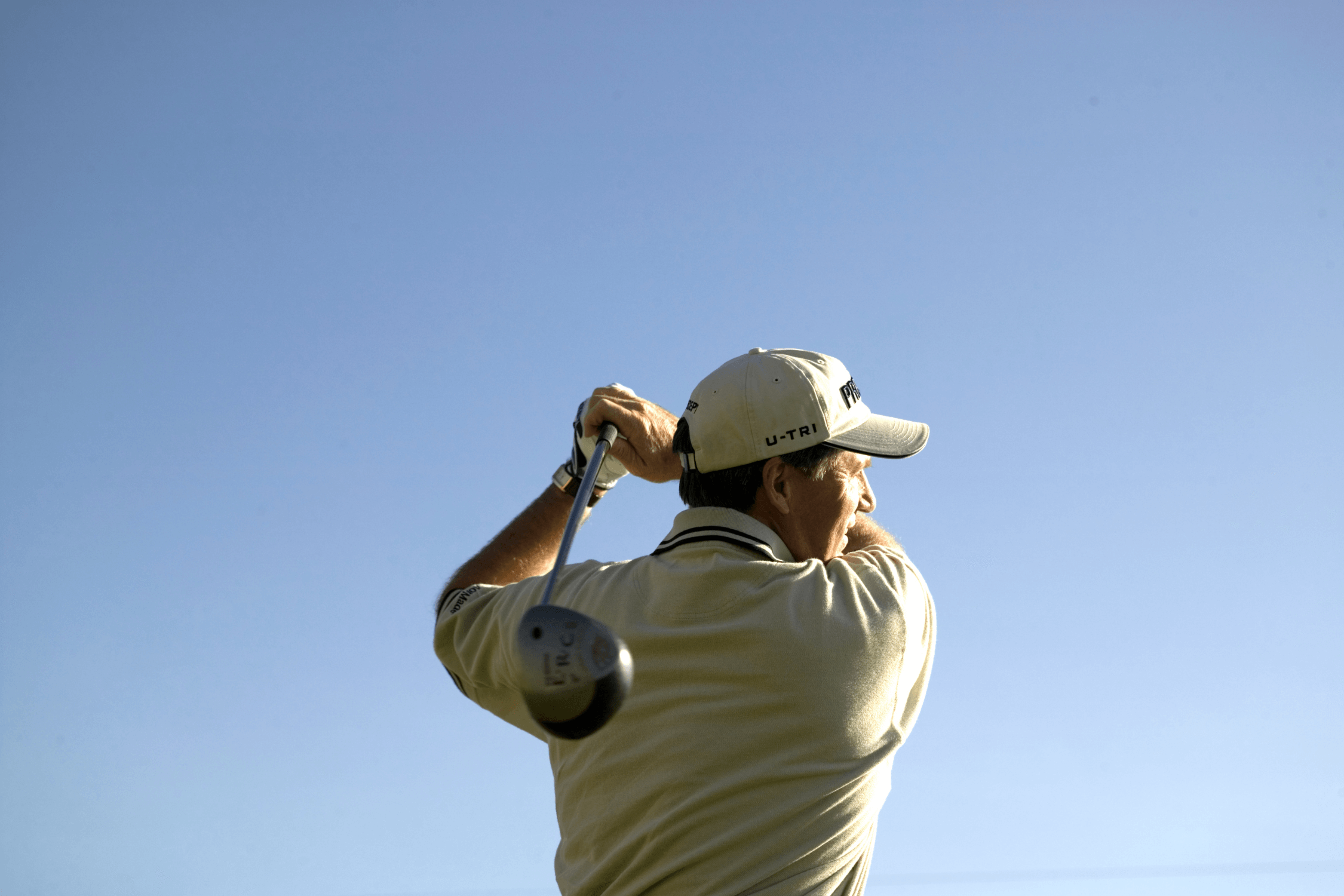
At Back to Back we treat more than a few golfers and their injuries. An injury common to the golfer may be one of many…. But often a golfer presents with pain in their elbow, shoulder, their back, hip or knee. It could be their neck or other area.
Identifying with their pain can be the easy part. Working out why they have pain is often a little more challenging.
Our AFS (or Applied Functional Science) team will be best to do this. Their aim is to track down the ‘why behind the what’. What I mean by this is … why has that particular area of your body failed? What in that person’s body is not working as it should and increasing the ‘load’ elsewhere?
What encouraged me to write this was a patient that I saw just over 4 weeks ago. He was in his late forties with a handicap of 4! He had been suffering with right shoulder pain for the last 5 months! He had seen a few other practitioners before find his way to the clinic.
To me, it was crucial to see him swing as if he was hitting the ball! Watching this and adapting the way he hit the ball, it immediately became apparent that he was restricted in his left hip. As he was halfway through his backswing the movement that should have been available at his left hip was not there and he was then using his upper back and right shoulder to do much more work than it needed or was build to do.
All that was happening was his shoulder was becoming strained because of his hip! Before coming to see us, this lovely patient had had his shoulder and surrounding area rubbed for 14 treatments.
Working with his left hip and left foot and integrating them into his swing gave great results in 3 treatments and he was almost pain free at 4 treatments. He still has a small way to go, but it just goes to show that rubbing symptoms (in this case the shoulder) is not always the right answer. Getting fully assessed by someone that appreciates integrated movement and treats the body as a whole is critical.
Get assessed properly and get properly fixed!
Blog post by James Dodd

Your knee is your hip and your hip is your knee… it is joined by a big bone!
As we are entering spring, more of us are getting outside to enjoy some sun and take up those summer activities, tennis being one of them. So what does this mean for our hibernating bodies and how can your knee become a victim of your new interest?
The knee can be your best friend, but it can also take a ‘beating’ in games like tennis.

As we are entering spring, more of us are getting outside to enjoy some sun and take up those summer activities, tennis being one of them. So what does this mean for our hibernating bodies and how can your knee become a victim of your new interest?
The knee can be your best friend, but it can also take a ‘beating’ in games like tennis.
The primary purpose of the knee and its surrounding tissues is to absorb shock and propel us in movement. It is mostly known for its ability to flex and extend and allowing us to twist and turn.
To help you understand why the knee takes a beating, I would like to explain why and how you can give your knees a better start to the summer.
“The Knee is caught in the middle with few places to go and no place to hide”
What does this mean?
As we walk, run, jump or bounce, the foot reacts as it makes contact to the ground. This pretty quickly feeds the information to the knee. The knee will then go through an appropriate movement depending on what stage you are in gait: it will react to most of what the foot does.
Sounds easy enough, but what happens if you are the knee and your foot or your hip (or both) does not load or move properly? Your knee may struggle to cope with the different movement above and below and this may be the start of your knee symptoms or dysfunction.
So what do we advise?
Great foot and hip motion is going to give the knee the best opportunity to work in all of its planes of motion and will facilitate the reaction of the proprioceptors, (information messenger’s found in joints, muscles and joints) and muscles.
We want to create an environment for the knee where the knee can twist, turn, bend, straighten at speed and adjust to different environments such as different terrain.
Does this sound familiar when playing a game of tennis?
By doing a simple matrix (an exercise to brilliantly allow the integration of the hip, knee and foot ) you will be providing a successful chain of movement which will help to provide stability for the knee and improve overall muscle control. See the videos below on how to do these.
Blog post by Annie Fonfe

Skiing preparation
Many of you are about to go skiing soon. Even if you are a great skier, it is really important to have laid some fitness foundations and have prepared your body to enable it to cope with the power and endurance that is required. As we get older, it becomes more important that we look after ourselves to protect ourselves from injury.
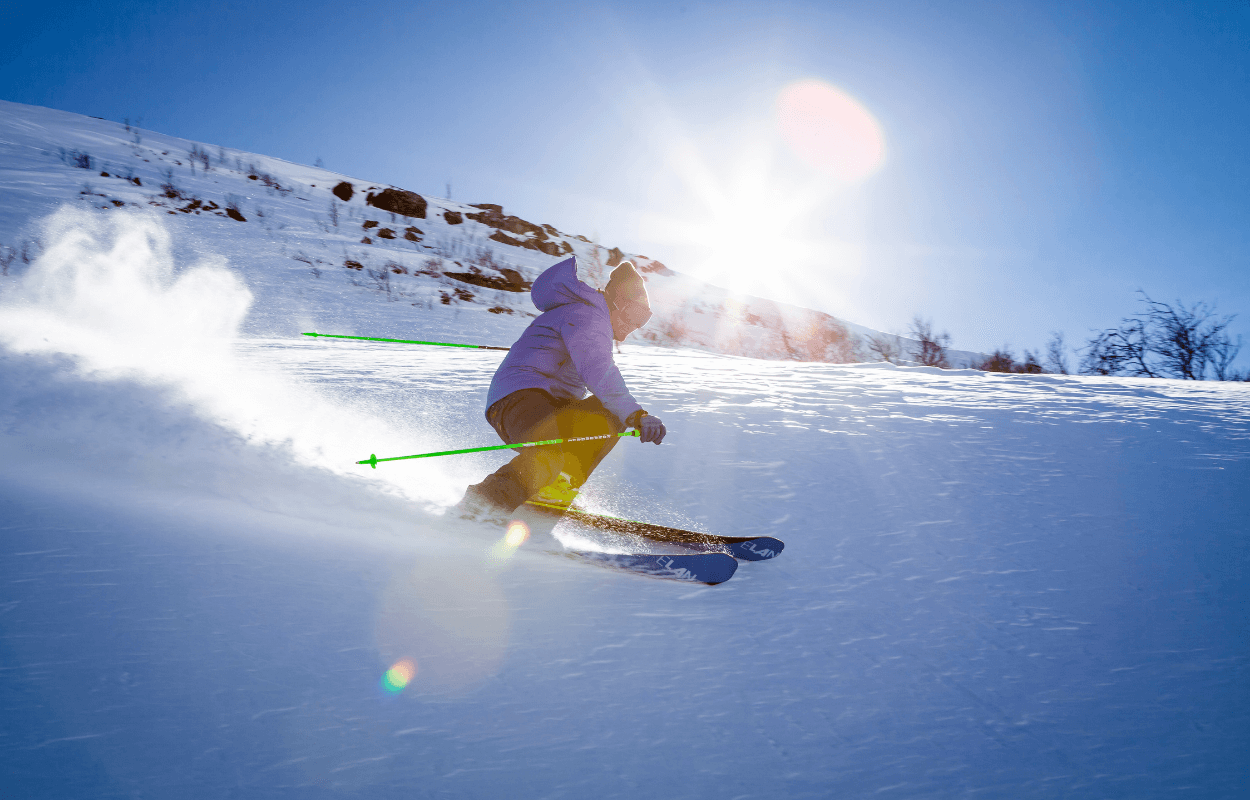
About to go skiing??
Many of you are about to go skiing soon. Even if you are a great skier, it is really important to have laid some fitness foundations and have prepared your body to enable it to cope with the power and endurance that is required. As we get older, it becomes more important that we look after ourselves to protect ourselves from injury. Going from sitting at a desk all day every day, to a week or two of skiing can create havoc on an unconditioned body. Check out these two videos from Mark Leyland that will be a great starting point. Build on these gradually. It is important to see that these movements are pretty close to what we all do when we ski. Noting is fixed and it works the whole kinetic chain.
Please be safe and do get hurt. If you do, call us on 020 8605 2323 and we will be able to help.

Sprained ankle on the tennis court? Think TWICE before grabbing the ICE
If you sprain your ankle on the tennis court, the first port of call is usually the clubhouse freezer. But is ice actually doing you more harm than good?

If you sprain your ankle on the tennis court, the first port of call is usually the clubhouse freezer. But is ice actually doing you more harm than good?
R.I.C.E. (Rest, Ice, Compression, Elevation) has been the most common initial treatment of acute injury over the last 30 years, as introduced by Dr. Gabe Mirkin in his 1978 publication The Sports Medicine Book. A recent study by the American Journal of Sports Medicine (June 2013), however, has made Dr. Mirkin swallow a slice of frozen humble pie. The study demonstrated no evidence that ice hastened recovery, leading Dr. Mirkin in his 2014 article “Why Ice Delays Recovery” to admit that he was wrong.
So, why is ice not always the best solution?
Firstly, it is worth noting that the inflammatory process is vital for the repair and remodelling of tissues. Common sense would suggest that inhibiting this process may not be the best idea. Ice acts to constrict blood vessels thereby reducing the amount of inflammatory cells deposited by your blood stream.
Although this may reduce pain and pressure on an injury, it also stops healing cells from entering injured tissue. Ice, as well as constricting blood vessels, also constricts the lymphatic system which is responsible for clearing out inflammatory debris. So, you can begin to get a picture of the effect ice has on an injury; less healing cells and a reduced ability to remove inflammatory waste – not ideal for recovery.
So, what should you do?
Here are Dr. Mirkin’s new set of tips for acute injury treatment:
1. Stop exercising immediately; you don’t want to cause further damage.
2. If the injury is very painful, then cold has been shown to reduce pain, in these circumstances you can grab a bag of peas from the freezer but use intermittently – 10 minutes on, 20 minutes off.
3. As soon as possible, get yourself assessed by a health professional to ensure no serious damage has been done.
4. After 48-72 hours the inflammatory process will usually have done its job, movement and the correct exercises then become the order of the day.
5. Joint pumping is a fantastic way of naturally assisting the lymphatic system to remove excess waste, while the correct movements will stimulate tissue repair.
If you are suffering from an injury and need to have it treated, just call the clinic to book an appointment with me.
Neil Sharland
Osteopath M.Ost

Biomechanics of running….
Running is VERY different to walking and injuries for both need to be addressed differently. it is critical to be assessed correctly.

Good paper here on the Biomechanics of Running.
Running is VERY different to walking and injuries for both need to be addressed differently. it is critical to be assessed correctly.
The practitioner needs to look at you thoroughly and understand chain reaction biomechanics.
It could be how your back leg or hip is not extending as to why you have opposite foot pain….. As always… get it looked at …properly…
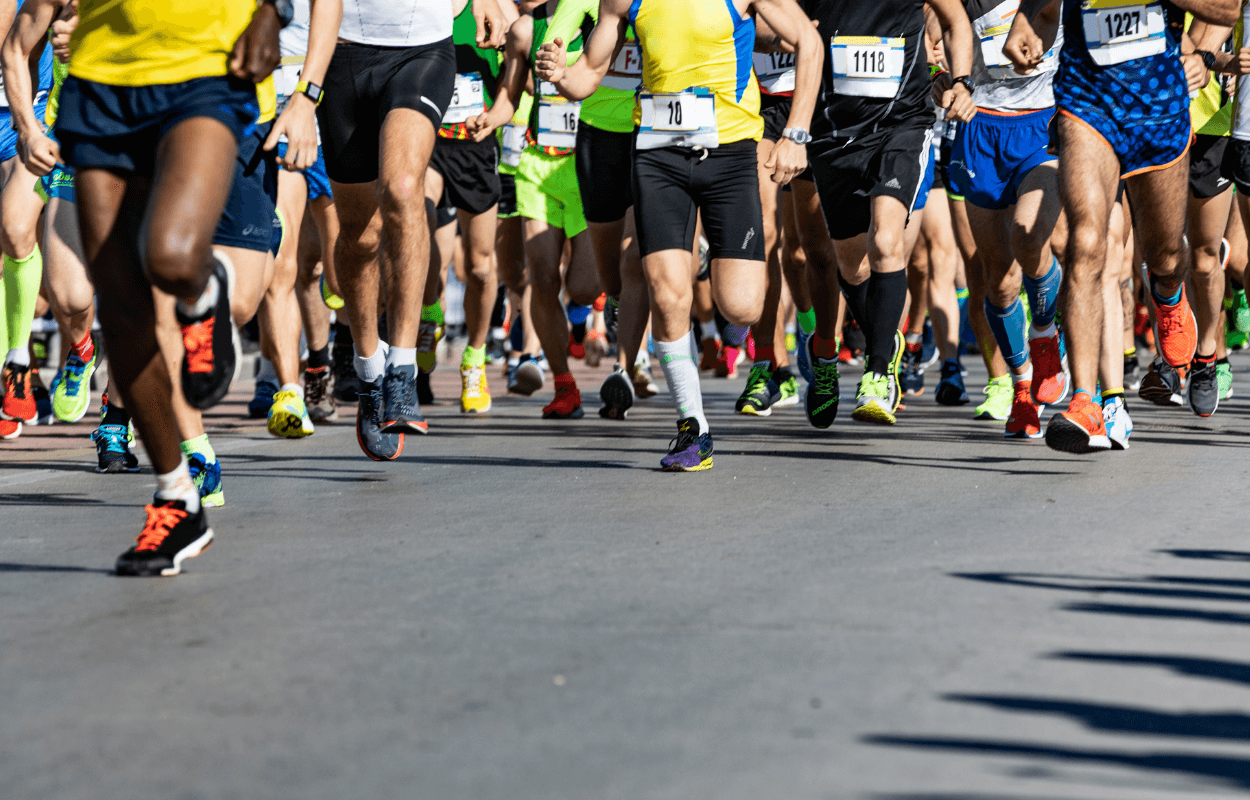
Nutrition tips for marathon runners
Nutririon tips for marathon runners…
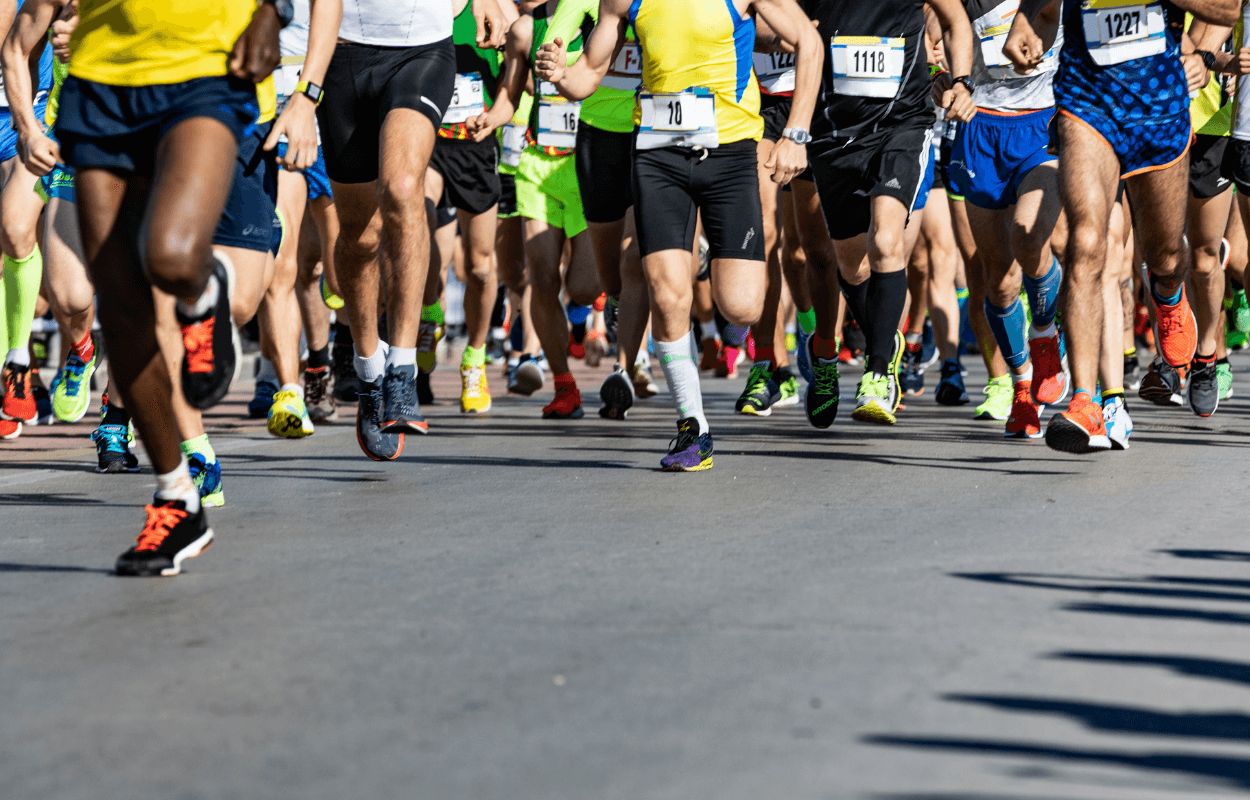
RUNNING THE MARATHON?
Here are some vital nutrition tips:
1. STAY HYDRATED
It’s really important to be hydrated for the marathon. The trick is in the preparation. You don’t want to be making lots of toilet trips during the race! Drink plenty the week before and in the morning 700ml will do, avoiding any for the hour before the race.
Make sure you have water throughout the run, but don’t feel the need to drink constantly. The most recent research suggests it’s best to drink when you are thirsty. This helps avoid over-hydrating and can also reduce gut discomfort and improve performance on the day. Coconut water is also a great natural alternative to the energy drinks in replacing lost hydration, sugars and electrolytes during the race.
2. FAT THEN CARB LOADING GIVES MORE ENERGY
Research has shown that a diet (short term) high in fat before you embark on the more traditional pre-race carb loading offers great benefits for increased energy. 10 days of fat loading are enough to increase the muscles fat burning capacity, while the three day carbohydrate load ensures muscles have plenty of glycogen available for energy.
In the fat loading days, start 2 weeks before the race and aim for 65% of your total calorie intake from foods containing healthy fats. These could be avocados, cheese, eggs, salmon, whole milk, Greek yoghurt, nuts, olives and olive oil. In the carb loading days, start 3 days before your race and aim to get 70% of your total calories from carbohydrates.
3. DRINK BEETROOT JUICE
Beetroot juice is packed with dietary nitrates, which dilate blood vessels, increasing blood flow to muscles during exercise. Studies have shown that drinking 500ml of beetroot juice 2-3 hours before running can enhance performance. Try it on a couple of training runs before your marathon day and see if the red juice helps.
REMEMBER YOUR NUTRITION IS FUEL
Getting it right can really make the difference not only in performance, but your enjoyment of the day. Good luck and fuel smart.
Written by Stephanie Gammell M.Ost FAFS
Functional Osteopath at Back to Back – The Earlsfield Osteopath

SHIN PAIN IN RUNNERS EXPLAINED
Lower leg pain can come on for unseasoned runners or those that change their training routine too quickly without laying suitable foundations. This could be switching to lots of hill running or adding in more speed work.
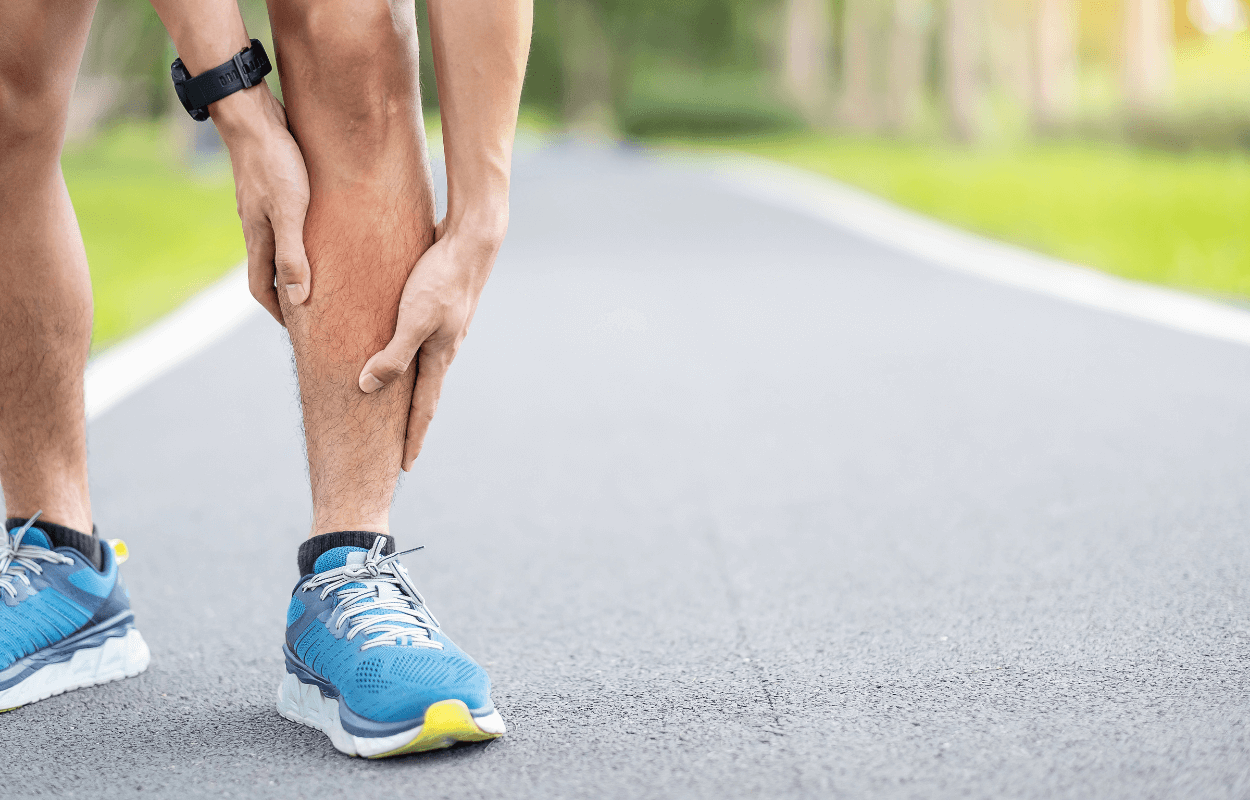
Lower limb injuries in runners are all too common and unfortunately hard to predict. With the ‘Virgin Money London Marathon’ not too far off, we wanted to share some Back to Back thoughts on shin pain.
Lower leg pain can come on for unseasoned runners or those that change their training routine too quickly without laying suitable foundations. This could be switching to lots of hill running or adding in more speed work.
One or more of THREE pathological processes are often involved in shin pain.
Shin Splints or Medial Tibial Stress Syndrome/Inflammatory shin pain
This is normally pain on the front or inside of your tibia/shin bone. It can wax and wane, but normally decreases as you warm up. The runner can often complete their training but it can recur after exercise and be painful the following morning. If left untreated, it can become worse.
It is generally agreed that if you have shin splints, you should stop running or alter your training depending on its severity. Reduction of the inflammatory response is key and it may be helped by rest, stretching, ice and soft tissue work.
Medical Acupuncture in the right places appears to be pretty effective. Off load your shins with alternative training methods or running in a pool. When you return to running, do it gently and follow the 10% rule. Don’t increase your speed or distance by more than 10% per week.
Bone Stress Response
Pain in the shinbone may be due to a stress response/stress fracture of your tibia. This without doubt is more serious than ’shin splints’ and needs to be ruled out if pain persists. This sort of pain can be increasing or pretty constant. It is often worse on impact or after use. There may be some night pain. Pain is normally more localised or acute than ‘shin splints’.
Compartment Syndrome
The muscles in your lower leg are separated into compartments. Causes are not fully known, but as your muscles swell during activity, they create increased pressure in these ‘closed compartments’. Signs and symptoms are directly related to use and intensity. It increases with exercise and decreases with rest. Soreness can be minimal and diffuse. There may be muscle weakness and sensory symptoms into the foot and toes.
Seeking help is important if you have pain, especially if it does not go away. Making sure you see an appropriate practitioner with suitable qualifications to enable a correct diagnosis or referral is important.

Cancaneal Apophysitis (Sever’s Disease)
Sever’s Disease in children; the cause and treatment.
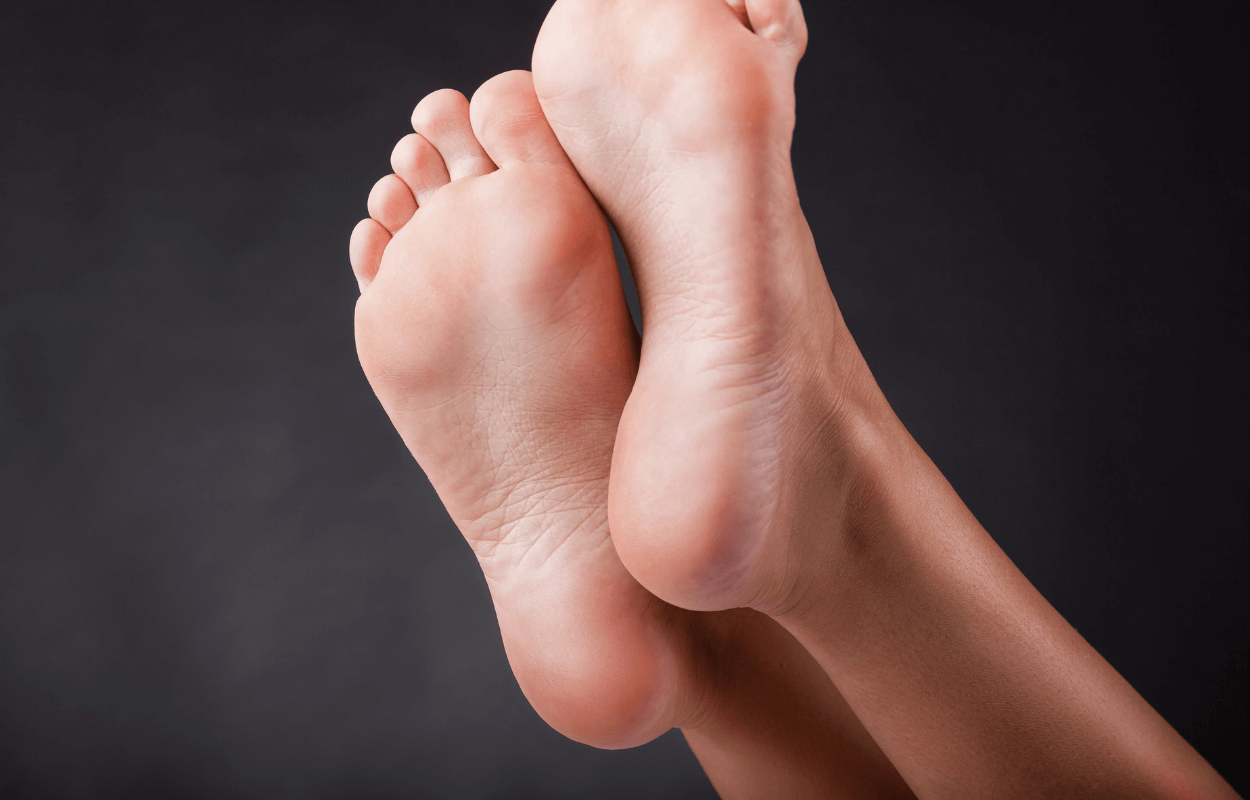
This is painful inflammation of a child’s growth plate at the heel. Normally, this affects children between 8 – 14 years old as their calcaneus (heel bone) is still developing. It is also at a time when children often increase the amount of exercise they do. With increased and repetitive use, the achilles tendon ‘tractions’ on the growth plate at the heel and so causing pain and inflammation. Approximately 60% of Sever’s is bilateral.
Causes
It is essentially an overuse injury at the time of growth. Sports that ‘load’ the achilles tendon and heel such as running and jumping are normally the culprits. Often a bout of Sever’s can become aggravated at the start of a season after a ‘rest’ period or exercising on harder ground as it gets colder. Tightness in the calf can also lead to increased load onto the heel bone. It bad cases, it may take until the child stops growing before complete resolution. It is also really important to try to observe why there has been more load placed onto their heel… this may be from a stiff hip or other area. This is key to successful treatment.
Diagnosis
This needs to be based on a full and correct examination by your osteopath, doctor or other medical professional. X-ray or MRI may be used to confirm the diagnosis or monitor the progress, but often this is not necessary.
Treatment
Calcaneal apophysitis has no known long-term complications and is self-limiting; that is, it should go away when the two parts of bony growth eventually join together (occurring around 16 years of age).
It is important to limit (temporarily) excessive or rigorous activity in its painful stages. But it is also about management, as you can get times when it calms and at other times, it can then flare up again as they increase activity. Soft shoes and heel cups can make a difference and it is important to make sure the child has sound biomechanics (eg no excessive pronation or muscular imbalance). Regular and correct stretching of the tight muscles in the calf and thigh are essential. Ice can be of great help if used correctly. Anti inflammatory medication may be of use – but do check with your medical professional about this first.
Seeking help from your osteopath or good physical therapist can really help too. They will check for poor biomechanics and work and stretch the calf and thigh and manage this injury with some good strengthening exercises.
Return to sports or activity
The goal here is to get your child back to their desired sport or activity as soon as safely possible. It may be a gradual return to see if the condition regresses. If they return too early, it may lead to more chronic pain.
To return to sport your child should have no pain at rest and should be able to walk pain free. They should also be able to jog, sprint and hop pretty much symptom free too.
If after the pain resolves…. it is important that there is still a regime of regular stretching of their calves, thigh and leg muscles

Sports Massage… the low down
Research shows that there is moderate data supporting the use of massage to facilitate recovery from repetitive muscular contractions, as well as being effective in alleviating DOMS (delayed onset muscle soreness – that achey feeling you get after tough exercise) by approximately 30%.

Here is a great write up by Bhavesh Joshi about the benefits of Sports Massage. It does make a difference and people do report that they feel and notice the difference. With those of you that are training for an event such as the London Marathon or triathlons in the near future, make sure that you try a regular sports massage to keep your muscles less tight and feeling better!
Bhavesh says…..
Research shows that there is moderate data supporting the use of massage to facilitate recovery from repetitive muscular contractions, as well as being effective in alleviating DOMS (delayed onset muscle soreness – that achey feeling you get after tough exercise) by approximately 30%.

Dry Needling and Neck pain
When used in combination with osteopathy, acupuncture is a hugely effective treatment for neck and back pain.

A study (see link) published in 2014 in the Journal of Orthopaedic and Sports Physical Therapy has found patients who received dry needling for their neck pain showed significantly better improvement than the untreated group. It was a small study, but always a good place to start. The patients reported 33% less pain immediately after treatment and 66% less pain a week later.
Most of our osteopaths have completed their acupuncture training with the British Medical Acupuncture Society (BMAS) and it is a hugely effective method of treatment, especially when used in combination with osteopathy. We often use this for neck and lower back pain, hip and shoulder pain along with many other injuries.

True Proprioception and Function
You get great proprioceptive training for free if you do authentic Functional Exercise. Proprioceptors provide us with information about movement and the position of our head, limbs and body in time and space.

Proprioception could be looked at as one of the inner ‘controllers’ of our body!
You get great proprioceptive training for free if you do authentic Functional Exercise. Proprioceptors provide us with information about movement and the position of our head, limbs and body in time and space. Their aim is to protect our body from damage by using ‘stretch reflexes’ and these can restrict or limit our movement at times of need. Some of these sit in joints, some in our muscles and some in skin and fascia. In combination, proprioceptors give our body a supreme and enhanced awareness of our ‘whereabouts’.
You do need to proprioceptively train the body towards the function it so requires. Doing a ‘plank’ for example will not train your abdominals proprioceptively to protect you in upright function with lumbar spine extension and rotation. Squatting will not proprioceptively train your legs to run and that ‘static squat hold’ at 90 degrees that many are given, will certainly not protect your hips, knees and ankles while you ski.
Training proprioceptors effectively requires movement and often (although not always) it needs ground force reaction too! Increased effectiveness is achieved by using different tweaks or additions to our movement such as adaptations in speed, depth, height and angulation and this may involve using your head, limbs and body, all in 3 planes of motion. An INTEGRATED chain reaction is needed, nothing is ISOLATED.
Whatever sport or exercise you want to do, to become and stay good at it, your conditioning and rehabilitative training needs to look and smell like the sport you want to do!
If you need any help with Functional Training or need an injury treated, call us at Back to Back on 020 8605 2323

Get Wise for CrossFit – and keep safe!
The first affiliated CrossFit (CF) gym was opened in Santa Cruz in 1995 and was founded and developed by the coach Greg Glassman. Over his years of watching the fitness industry, his idea was to create versatile athletes (gymnastics and weightlifting) through primal movements and intense training.

The first affiliated CrossFit (CF) gym was opened in Santa Cruz in 1995 and was founded and developed by the coach Greg Glassman. Over his years of watching the fitness industry, his idea was to create versatile athletes (gymnastics and weightlifting) through primal movements and intense training. It has since gained worldwide momentum and a huge following.
The typical workout or WOD may involve intense drills of weightlifting (squats, deadlifting and carrying odd objects or kettlebells etc) box jumps, burpees, sprinting and using gymnastic rings to name a few. Most activities are all well and good and with a structured and progressive integration into your lifestyle and using the basic premise of not walking before your can crawl and not running before you walk. This puts in place not just the neurological inputs that are needed to perform and function, but embeds some firm foundations of the chain reaction needed for movement and structural control.
I see and treat a fair amount of injuries sustained through CrossFit and whilst injury is often seen to be part of any intense exercise, I do feel some of these could be avoided.
CrossFit is massively intense and with that comes excitement and vigor and over time, a body that develops in power, coordination and agility. But I feel that with this excitement and vigor often comes lack of care for ones self and the idea that if your push yourself harder, you get faster results.
Let me use the example of running again. If we have a basic level of fitness, most of us assume we should be able to run. Running is composed of lots of hops and leaps. When treating/rehabbing athletes, I am often asked “am I ready to run yet?”…… and I ask them “can you repeatedly hop and leap?” and then depending on their answer we watch and see…… and we see if they can or if they fail. That gives us the answer and often, they cannot hop and leap! So surely, they should not run!
My point of this is much more about creating the foundations much deeper than you think you need. To enable Mo Farah’s fabulous achievements at the 2012 Olympic Games, he would have run around those tracks hundreds if not thousands of times and known that if he gets a PB, it will probably be within a certain amount of time.
So doing 25 squats with 100kgs if you have only ever twice before would be foolish. Doing 25 squats with 100kgs should ok if you are regularly doing 25 times 90kgs.
To enable good technique with power moves such as deadlifts and squats you don’t just need good technique, you really need good functional mechanics such as sufficient ankle, knee and hip movement and these need to be able to load the weight correctly. If they cannot do this, somewhere else will take the hit….and this hit maybe your lower back, shoulder or neck!
Over the next few months I will be working with Tom and Harri Bold from CrossFit Bold and other coaches from Athletic Alliance to develop some easy strategies to enhance movement and control, which we will be sharing with all the members. All with the idea injury avoidance! But in the meantime, please be careful of your form and technique and keep your ego in check and don’t find yourself where you are trying to push your body to a place where it has not been before too quickly.
Ignore the figures but, think of it like an iceberg – 70% underneath and 30% on top…..
Could your groin injury be coming from your hip?

Groin pain can be a difficult problem for patients as well as their clinicians. Part of the problem is that the location of the pain is often a poor indicator of the where the pathology actually lies. Additionally, when the pain becomes chronic, multiple pathologies can be generated, adding a further layer of complexity.
It is very important to make a clear diagnosis, and we should seek to look beyond merely labelling the problem as a ‘groin sprain’. There many causes of pain in the groin, but approximately 50% of groin pain can be attributed to pain generated by the hip joint; a surprise, perhaps, for younger patients. As in any medical condition, the patient’s history will give us many clues. It is extremely important to rule out sinister ‘red flags’, such as night pain, severe pain on loading the leg, weight loss or systemic symptoms, and we need to be mindful of conditions which may occur in certain age groups, such as slipped epiphysis in teenagers.
Common causes of groin pain besides the hip, include those generated by the lumbar spine, pubic overload (osteitis pubis), iliopsoas and adductor tendon pathologies and stress responses in the femoral neck in runners. Abdominal wall hernias may cause pain which is a little higher in the groin, and less commonly, younger patients can experience the rectus femoris pulling away from its attachment at the anterior inferior iliac spine. Testicular tumours and avascular necrosis can present insidiously and we need to be on the lookout for them.
A big proportion of patients who present with groin pain as a result of hip pathology, have an underling condition known as ‘femoral acetabular impingement syndrome’, or FAI. This is essentially a problem resulting from a tear in the acetabular labrum, usually caused by repetitive trauma due to a ‘bump’ or ‘CAM’ on the head neck junction of the femur, which may be genetic.
This can cause groin pain which is worse with exercise, sitting or standing, and the pain can be brought on by putting the patient in the ‘impingement position’ of hip flexion + internal rotation + adduction. In the long term, we believe that the tear in labrum causes changes in the acetabular articular cartilage next to it, and over many years, this may lead to osteoarthritis in the hip.
FAI can affect people of all ages, and is often missed in 30-40 year olds. Taking a careful history, and carrying out a thorough examination can help identify the likely cause. Imaging, such as MRI arthrogram of the hip, can help confirm the underlying diagnosis (as X-Ray cannot rule out FAI), but it should be remembered that imaging needs to be interpreted in light of the history and examination findings. FAI may require treatment with hip arthroscopy surgery, but in some cases injection therapy and robust physiotherapy or osteopathy may be enough to get a person back to full activity.
Sports Physicians and Osteopaths are ideally placed to identify the underlying cause of unexplained groin pain, and are skilled in directing the rehabilitation necessary to resolve the problems.
If you have any problems at all and would like in to see James Dodd or one of the team at Back to Back, please call 020 8605 2323.