Preparing Your Body for Winter Sports Season: Skiing, Skating and Sledging
Winter Sport Comes in More Forms Than You Think
When most people hear "winter sports injuries," they think of skiing. But every year, we see the results of the full range of things this city gets up to once the weather turns — a ski trip to the Alps, an afternoon at one of London's pop-up ice rinks, or an hour on a sledge if we're lucky enough to get proper snow. They're very different activities, but they share a common thread: each asks a body that's spent months sitting at a desk, walking the same familiar routes, and doing very little unfamiliar physical work, to suddenly perform on an unstable, unfamiliar surface — often for the first time in a year.
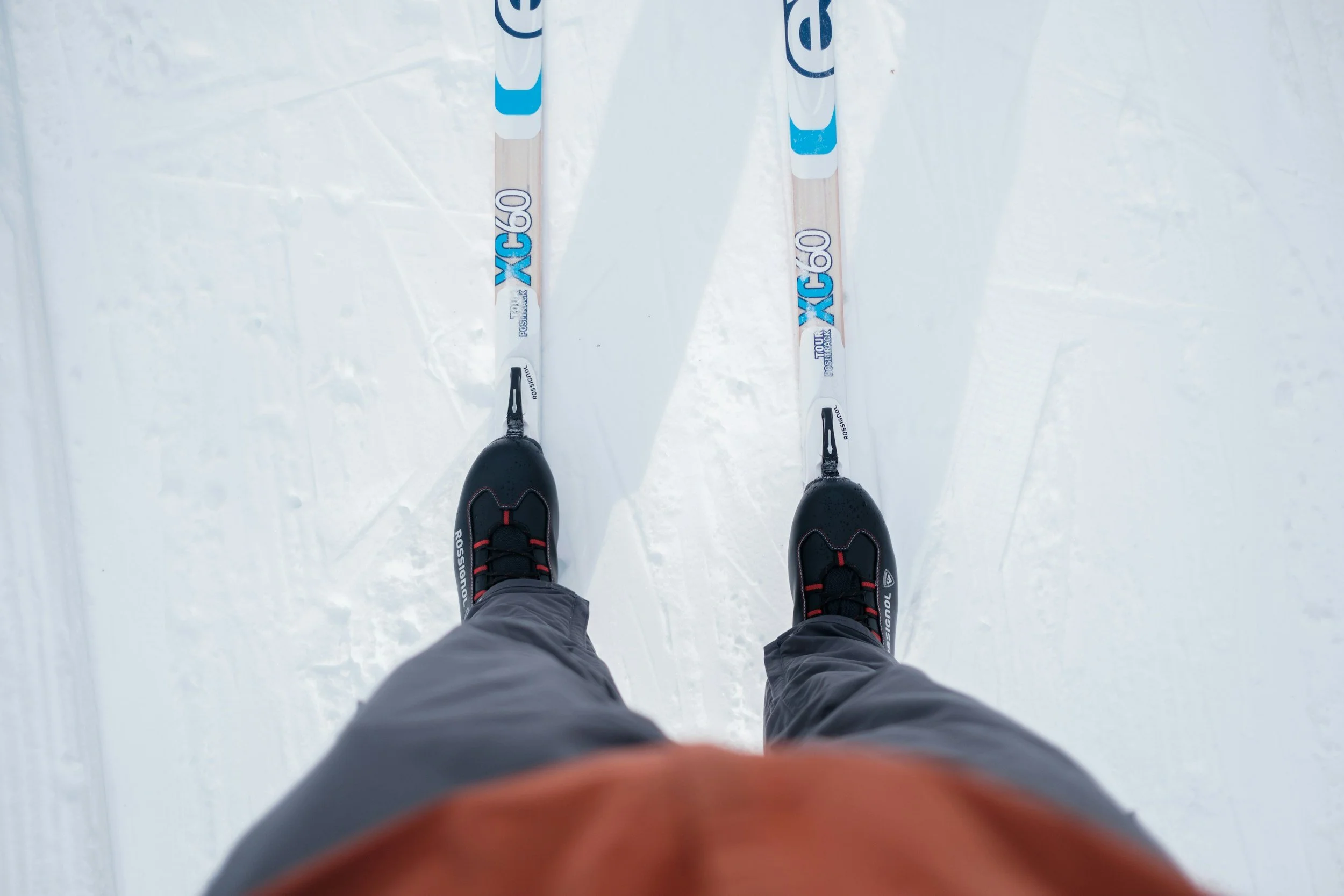
It is important that you prepare for the activity that you will be doing. Especially if you only do it once or twice a year!!!
What We See in Clinic, and Why
Two things drive most of what we see around winter sports season. The first is pre-existing issues surfacing before a trip. A knee that's been a bit sore since a five-a-side game in April, or a lower back that flares up occasionally, tends to sit quietly under the radar for most of the year — until someone's about to spend a week loading that same joint repeatedly on a mountain.
The second is what comes back afterwards, and this covers far more than skiing. We see wrist and shoulder strains after the first ice skating trip of the season, sore backs and shoulders after a heavy day on the slopes, and — particularly if the snow does arrive — the bumps, sprains and occasional fracture that follow an enthusiastic afternoon of sledging, most often in children. None of this is really about any of these activities being unusually dangerous. It's about bodies being asked to do something demanding and unfamiliar with little to no preparation.
H2: The Injuries We See Most, and Why They Happen
Skiing — knee ligament sprains and the odd surprise
The injury most associated with skiing is damage to the knee ligaments — most often the medial collateral ligament (MCL) and, in more serious cases, the anterior cruciate ligament (ACL). These typically happen through a twisting fall, when the ski catches an edge or fails to release cleanly while the body keeps rotating. It's a slightly counterintuitive part of ski history: modern release bindings, designed to detach the boot under excessive force, dramatically cut the lower-leg fractures common in skiing's earlier decades — but they're calibrated to release under bone-breaking force, not the lower, twisting force that still tears a ligament. So as fractures fell, knee ligament injuries became proportionally more common. We also regularly see lower back strain from hours spent in a semi-crouched, load-absorbing position, and thumb ligament sprains from a fall onto a planted pole — commonly called "skier's thumb," though interestingly, research suggests this specific injury more often comes from ordinary falls onto an outstretched hand in daily life than from skiing itself.
Snowboarding — a different fall, a different injury
Snowboarders fall differently to skiers, because both feet are fixed to one board rather than moving independently. Wrist fractures are the classic result, particularly for beginners who instinctively put a hand out when falling forward — exactly the mechanism that breaks the wrist. Shoulder injuries follow a similar pattern, often from the same forward falls or from being caught off-balance at speed.
Ice skating — more common, and more injurious, than people expect
This is the one most people underestimate, largely because it feels like a low-key Christmas activity rather than a sport. Research into recreational ice skating puts the injury rate at around 1 in every 700 skaters, with the average injured skater in their early thirties — in other words, exactly the demographic taking the kids to Winter Wonderland or Somerset House rather than a professional on the ice. The most common injury by some distance is a wrist fracture, again from falling onto an outstretched hand, followed by fractures around the elbow. Head injuries are much less common — around 1 in 200 injuries — but are taken seriously when they happen, since a backward fall on ice can generate real force. Skating asks for a level of balance and ankle stability most of us simply don't use in daily life, which is exactly why an unprepared first session of the season is when most injuries happen.
Sledging — mostly about the kids, and mostly about what they hit
If snow does settle properly, sledging brings its own, quite distinct injury pattern, and it disproportionately affects children — one large study of emergency department visits found children under 19 accounted for nearly 70% of sledding injuries, and were roughly seven times more likely than adults to need emergency treatment. The critical detail is that most of these injuries aren't from the sledge itself, but from collisions — running into a fence, a tree, another sledger, or simply the ground at the bottom of a slope that wasn't as clear as it looked. Head injuries were the single most common result, particularly for children on tubes or discs rather than traditional sledges. It's a useful reminder that the real risk on the common isn't really the speed — it's what's waiting at the bottom of the hill.
The Hidden Factor: Fatigue and Cold Muscles
Across all of these activities, one theme keeps reappearing: the injury is rarely about the first attempt. It's the third run of the day, the second hour on the ice, the muscles that are cold, tired, or simply out of practice that stop responding quickly enough to correct a stumble before it becomes a fall.
This links back to something we've talked about before: cold genuinely does make muscles stiffer and slower to respond, and a body that's been sedentary through autumn is starting winter sports season already behind. On a multi-day ski trip, this shows up as injuries clustering later in the day and later in the week, as the small stabilising muscles around the knee, hip and ankle tire and technique quietly deteriorates. On the ice rink or the sledging hill, it shows up more simply — as the first attempt in a year, on a body that hasn't asked its balance or reflexes to work this way since last winter.
What Preparation Can — and Can't — Do
We want to be honest about this rather than overstate it: no amount of preparation guarantees you won't fall, get caught by another skier, or take a tumble on the ice. That's not how any of these activities work, and anyone promising otherwise isn't being straight with you.
What preparation genuinely does is change your odds. It builds the strength to hold good technique for longer before fatigue sets in. It builds the balance and proprioception — your body's sense of where it is in space — that lets a stumble be corrected rather than becoming a fall. This applies just as much to catching yourself on an ice rink as it does to a ski slope; the physical skill underneath is largely the same.
A Sensible Plan for Skiers, Skaters and Sledgers Alike
If you're skiing or snowboarding
Six to eight weeks of consistent preparation makes a genuine difference. Squats, lunges and step-ups build the leg strength that drives your turns and absorbs impact. Planks and rotational core work support the trunk control both sports demand. Single-leg balance work — progressed onto an unstable surface like a wobble cushion as it improves — trains exactly the split-second correction that stops a wobble becoming a fall. And general cardiovascular fitness (brisk walking, cycling, swimming) delays the fatigue that catches people out by day three or four of a trip.
If you're skating or sledging
These are harder to specifically "train" for, since they're often spontaneous rather than planned months ahead — but the same underlying strength and balance work helps considerably, and a few practical habits matter more here than fitness. For skating: take the first session gently rather than heading straight into confident laps, and don't dismiss wrist guards if you're a beginner — given how common wrist fractures are, they're a sensible precaution rather than an overreaction. For sledging with children: choose a slope with a clear, obstacle-free run-out at the bottom, keep well away from roads, fences, trees and other sledgers' paths, and treat helmets the same way you would for cycling if the hill has any real speed or a busy run-out.
When to Get Checked
If you're carrying an old knee injury, a history of back problems, or a shoulder that's never quite felt the same since a previous fall, it's worth having it assessed before a ski trip rather than hoping it holds up. And if anyone in the family — adult or child — comes back from a skate or a sledging afternoon with something that isn't settling after a few days, it's better to have it looked at properly than to assume it'll sort itself out.
At Back to Back Osteopathy, our GOsC-registered team — including our paediatric osteopathy service — has been helping patients across Earlsfield, Wandsworth and SW18 prepare for, and recover from, winter sport of every kind for over 25 years. Whatever your winter looks like this year, get in touch and we'll help make sure everyone's ready for it.
References