Back to Back Blog

Fascia – a couple of great and informative reads!
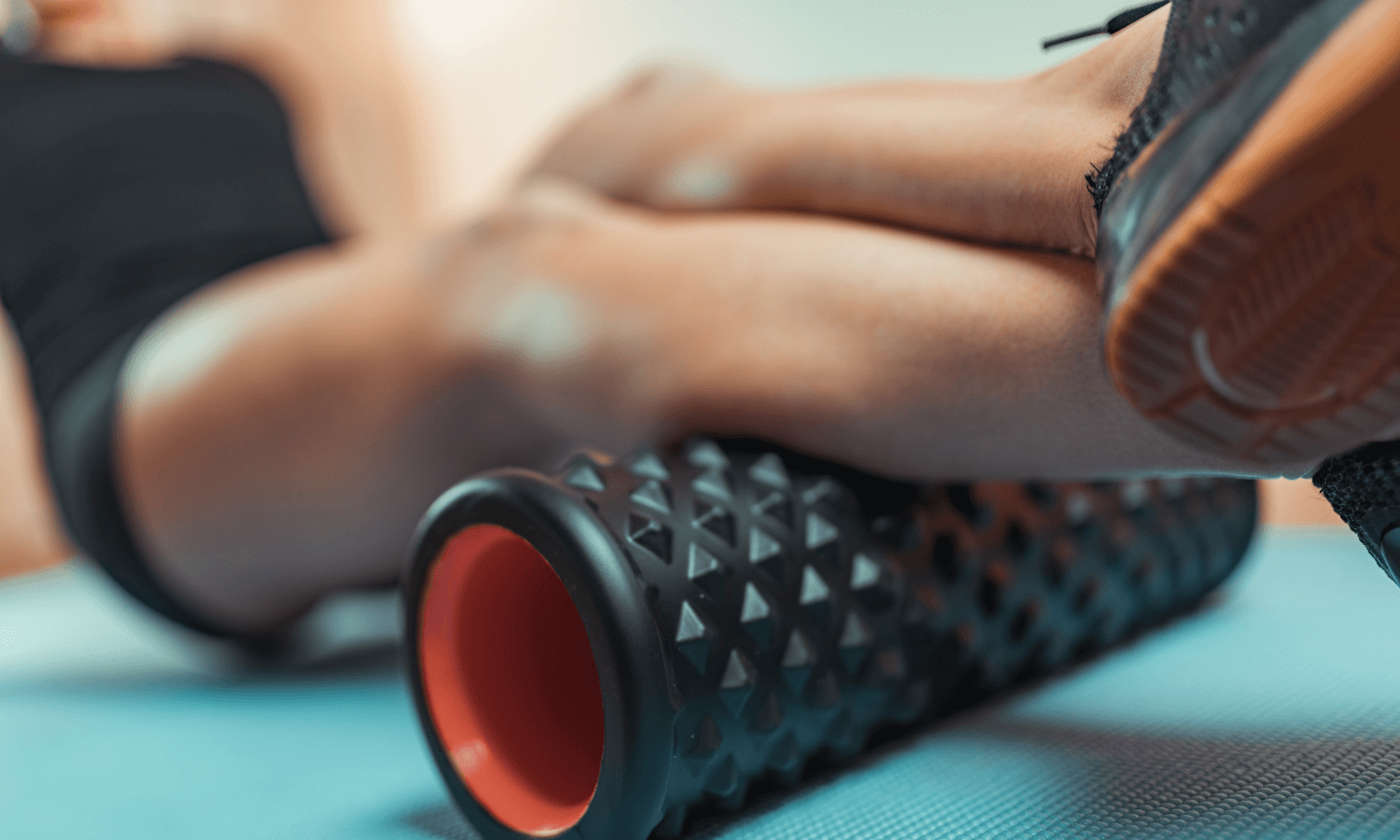
Have a read here about fascia from Jennie Rawlings. It is a good read and it highlights common myths and the more modern views on the robustness of fascia and how a simple ‘rub’ does not break down fascia.
Here is another by the brilliant ‘Pain Science‘ writer Paul Ingram. He goes into massive depth on the current views and research on fascia.
Wonderfully interesting! Using this knowledge should empower practitioners in the management and treatment of their patients and enable them to make sound therapeutic decisions based on current research.
Blog post by James Dodd

Diabetes ….. the way to reverse Type II
In Michael Mosleys’ book ‘The 8-week blood sugar diet’, he states “Now we have completed careful studies which have shown that people who REALLY want to get rid of their type II diabetes can, in just 8 weeks, lose substantial amounts of weight and return blood sugar to normal or near normal. They remain free of diabetes provided they keep their weight off”.

Prof Roy Taylor and Newcastle University have published a recent paper on Diabetes. The team showed that Type 2 diabetes could be reversed even in people who had the condition for 10 or more years.
See the paper’s breakdown here.
In Michael Mosleys’ book ‘The 8-week blood sugar diet’, he states “Now we have completed careful studies which have shown that people who REALLY want to get rid of their type II diabetes can, in just 8 weeks, lose substantial amounts of weight and return blood sugar to normal or near normal. They remain free of diabetes provided they keep their weight off”.
The biggest part of what he says is ‘those who really want to’! This is about people taking responsibility for their health and making that difference. Sure, that is super hard to do. But to take control of your diabetes and ‘beating it’ would be a phenomenal thing to achieve. For those that have achieved this, risks to their lives would have been reduced massively!!
Blog post by James Dodd

The Glutes, the butt, the big one and lower back pain
A bit of contention, but we all have big butts for a reason. Or compared to your biceps, shoulders or calves anyway! This is because the Glutes need to be able to do so much. They control the ‘top down’ movement of your head and trunk etc and also of the ‘bottom up’ part of you ….meaning of your legs and the reaction of you contacting with the ground.

Your Glutes!
A bit of contention, but we all have big butts for a reason. Or compared to your biceps, shoulders or calves anyway! This is because the Glutes need to be able to do so much. They control the ‘top down’ movement of your head and trunk etc and also of the ‘bottom up’ part of you ….meaning of your legs and the reaction of you contacting with the ground.
Glutes NEED to be able to control movement and be strong. So many of us extensively sit and this does nothing to help with strengthening your butts. This even deconditions your glutes. Then some of us go to the gym or exercise and only train this fantastic muscle in one plane. To really get your glutes working well (‘switching on’ or firing) you really need to to a combination of multi-plane exercises. The exercise that you do must not all be in one direction. This should involve some side-to-side and some rotational loading.
Many people garden at this time of year and this involves a lot of bending down. Great glutes will really assist with this. Yet we do very little to help with our bending.
If I went to lift a heavy weight with my arm, many may say ‘that’s too heavy, you have not done that before. You need to regularly exercise those muscles in your arms to be able to do that. Your gluts are the same. To enable you to bend well, your glutes need to be able help with the job of bending. If a crane was only rated to lift 1000kgs – you would never load up that crane with 1500kgs because you would be worried it will fail. And it probably would fail!
When we bend many muscles, our glutes included, have to be able to cope with the weight of our head, shoulders and trunk and then be able to sustain that bend for as long as we are bending. If your butt or glutes are not strong enough, one of the parts that often fails is our lower backs. And lower back pain is massively prevalent in today’s society. There is way too much of it.
Dr Rangan Chatterjee recently did a post about back pain. One of the things he mentions in his post was the butt and how it really helps our backs. It is massively important!
The last think I wanted to say was that along with training your glutes in a multi directional way, you must train them in an ‘integrated’ way rather than in a ‘isolated’ way. It is not just about that buzz word – ‘the core’. All our muscles work as a team and no one muscle ever works by itself when we move. Your glutes NEVER work by themselves and so you must train them in an integrated way. For example, when you bend, your calves and hamstrings switch on along with your glutes and the muscles in your lower back.
Thinking about this when you train can make exercise much more fun, but also more challenging.
If you are worried about a problem or want some advice, come in and see one of our osteopaths at Back to Back. Call 020 8605 2323.
Blog post by James Dodd

Shoulder impingement – probable suspects….?
Great article from David Tiberio from the Gray Institute on shoulder impingement.

Great article here from David Tiberio from the Gray Institute on shoulder impingement.
If you are concerned about your shoulder or indeed have been diagnosed with impingement, come in and see one of our ‘Functional osteopaths’. Using Applied functional science (or AFS), we assess and treat using whole body movements. This will often identify some other part of your body that is less efficiently. This may be making your shoulder work harder thus creating the impingement.
Blog post by James Dodd

Knee pain and running
If you think you’re suffering from ‘runners knee’ and knee pain it is critical for the landing hip to work (not just your gluts) and how essential it is for the foot to be able to sustain the mass of your landing. With knee pain, sometimes the last place you need to look at is the knee. So many other factors can affect the knee.

Very recently, there was an interesting article in The Guardian on ‘runners knee’ and knee pain. The link is here. The article contains some great information. But we feel where is does fall short is not mentioning how critical it is for the landing hip to work (not just your gluts) and how essential it is for the foot to be able to sustain the mass of your landing. With knee pain, sometimes the last place you need to look at is the knee. So many other factors can affect the knee.
Knee pain is certainly not just about ‘pronation’ or the ‘rolling in’ of your foot. If you have a high arched foot your knee takes more hit as you are unable to react to the ground well. Sometimes people need to pronate more! Gary Gray from the Gray Institute coined the phrase ‘Everything changes when your foot hits the floor’ and he is so correct! You also need to assess what happens to the ‘back leg or trailing hip. If your left hip does not extend fully – the knee of your right leg will have to work harder.
I think it is critical to appreciate that everything is connected in our bodies. How one area not working may or may not increase the load onto another and make the body compensate. Then knee is stuck between your hip and your foot. It is more likely that one of these is not working well and the knee pain is only the symptom.
Then the rehabilitation must then target the areas that are not working, rather than just the symptomatic areas.
If you are concerned about your running or indeed are suffering, make an appointment to come and see one of our great osteopaths.
Blog post by James Dodd
The Physical Therapies:- Osteopathy, Chiropractic and Physiotherapy ….The Differences…
Osteopathic therapy, physiotherapy, chiropractic care and massage share a common philosophy: The integrity of the spine is important in ensuring good health. In fact, this philosophy is shared by almost all traditional healing arts and is also found in many modern alternative treatments.
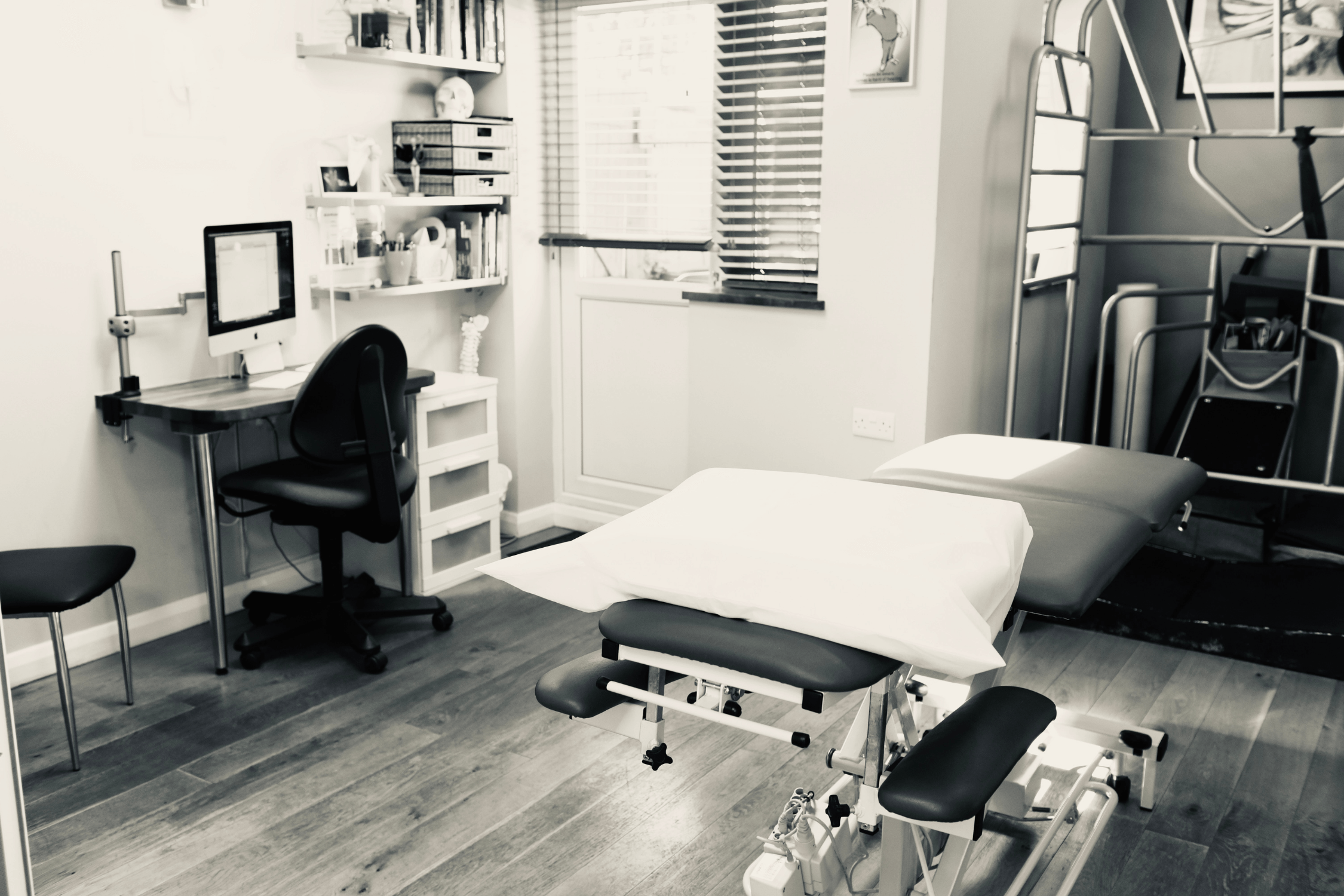
The Difference Between Osteos, Chiros, Physios and massage……
We are often asked how osteopathic therapy differs from physiotherapy, chiropractic care or massage.
Please note – this is general overview that we have found over the years and what many other patients have reported. All practitioners treat differently and it is important to find one that works for you! Being osteopaths – we are obviously Osteopathically biased!
Let’s start with the similarities:
Osteopathic therapy, physiotherapy, chiropractic care and massage share a common philosophy: The integrity of the spine is important in ensuring good health. In fact, this philosophy is shared by almost all traditional healing arts and is also found in many modern alternative treatments.
Now for the differences:
Generally people seek a therapist because of pain or impaired movement. Let’s look at how the same problem might be treated by the different types of therapists. Imagine you have a shoulder injury. You play some recreational golf and each year you get a twinge in your shoulder at the beginning of the season. You’d like to play golf pain-free and you’d like the pain dealt with once and for all.
You try physiotherapy . . .
Your treatment time will vary from 15 to 30 minutes.
The physiotherapist assesses your shoulder using standard orthopaedic tests and reaches the conclusion that there is some impingement of one of the rotator cuff muscles, which is a very common shoulder injury.
The therapist might choose to use some ultrasound on your shoulder.
You will get some specific exercises to increase strength to any weakened muscles of your shoulder.
The treatment may or may not include hands-on work. If it does, it will probably just be focused on your shoulder or upper ribs.
You are asked to come back twice a week for eight treatments.
You try chiropractic care . . .
Your treatment time will vary from 5 to 30 minutes for your first appointment, and last for about 5 minutes in subsequent sessions.
Like the physiotherapist, the chiropractor might assess your shoulder using some standard orthopaedic tests. The tests might also include an assessment of your spine, often using x-rays.
The chiropractor will be looking at the parts of your spine where the nerves to the shoulder come out, checking for what is called a subluxation. From the chiropractic perspective, the spine can become minutely out of alignment, and the resulting subluxations inhibit nerve flow, which can cause joints to become injured.
Treatment will probably involve manipulating your spine to free up the nerves so that they can control your shoulder better.
You are probably asked to come back two to three times a week for three weeks. You will then slowly decrease the frequency of your treatments until you are on some sort of monthly maintenance program to check for general subluxations.
You try massage . . .
Your treatment time is usually an hour.
The massage therapist will probably feel what muscles are tight and will just work on those muscles.
Generally you will lie down and the therapist will massage the tight or sore muscles to increase blood flow to the area to speed up the healing.
You will probably be encouraged to come back whenever you feel the need.
You try osteopathy at our clinic . . .
Your first treatment lasts one hour. Subsequent treatments last 30 minutes.
We assess your shoulder to find our which areas are damaged or strained.
We then assess your spine to see if the nerves to your shoulder are compromised. In this way we are similar to a chiropractor.
BUT we also look further afield because your shoulder never works in isolation:We assess other joints that work in conjunction with your shoulder, especially your wrists, elbows, neck and hips.We might even choose to look at movement patterns. For example, we’d ask you to demonstrate your golf swing technique to see if any restrictions in your hips or neck are placing too much work on your shoulder. We may even video this and slow it down.
The treatment is strictly hands-on.
The hands of an osteopathic therapist are more sensitive and knowledgeable than any type of machine. We don’t use ultrasound or any other machine to help us understand what’s going on.We find we get the best results by keeping the treatment to the work of our trained hands.We are trained to do manipulations (both gentle and firm), joint movements and massage techniques.We also know how to use our hands in a very subtle way to gently free restrictions around organs and other deep body structures to restore health to your whole body.It is key for us to grasp why your body is struggling and assessing and treating it in an joined-up way is important here. We may work with your hips and feet to enable you to achieve better range in your shoulder (as everything is connected….)
The course of treatment with osteopathic therapy
We might ask you back in one or two weeks.Dependent on what the diagnosis is or how severe the injury may be, on average, we will want to see you about four to six more times over a two to three month period to make sure the problem is resolved.That will also give us a chance to assess and help you with any other problems that we think will cause you trouble in the future.
Blog post by James Dodd

Ibuprofen and back pain
The Guardian recently reported ‘Anti-inflammatory drugs or NSAIDs (like Ibuprofen) are not much more effective than placebo and patients taking them are 2.5 times more likely to suffer from stomach problems’.

The Guardian recently reported ‘Anti-inflammatory drugs or NSAIDs (like Ibuprofen) are not much more effective than placebo and patients taking them are 2.5 times more likely to suffer from stomach problems’. See the link to the article in The Guardian here.
All good points…. but two things need to be looked at here.
1. There are many different reasons that people suffer with back pain (‘back pain’ is never that simple) and so when every patient comes into see an osteopath here at Back to Back, we take a comprehensive case history and they have a thorough examination. This gives us a really good idea why they may be suffering.
There ARE inflammatory reasons why we can get back pain. These people will most likely respond well to anti-inflammatory medication. The back pain that is not inflammatory may not get the same level of relief. Also, during an acute episode of back pain, there may well be an inflammatory phase as the body reacts to the injury. These patients may also get some relief from ibuprofen. Once back pain becomes CHRONIC or more longer term, often it looses its inflammatory nature and so these drugs will be less useful.
2. Patients that take these medications for a short time only are less likely to suffer from stomach problems unless they already have a sensitivity to them. If you take them for extended periods, it is very well documented that anti-inflammatory drugs (NSAIDs) can irritate your gut and cause other problems. There are also different types of NSAIDs (varying in strength and mechanism) and some also have gut protecting properties. So taking care with high doses or for extended periods is important.
Taking any painkiller does not sort out the cause of your back pain. It is sort of like putting a plaster on it, but is does not sort out why it happened to you in the first place. Often getting assessed first is a great place to start and work out why it happened. Get the cause treated and then become empowered to move more efficiently and effectively.
It always depends why things happen…. bodies are super complicated. There is never a straightforward answer. If you are told it is straightforward, maybe look deeper. So as ever….Get good advice from your health professional.
Blog post by James Dodd

Golf and the golf swing
At Back to Back we treat more than a few golfers and their injuries. An injury common to the golfer may be one of many…. But often a golfer presents with pain in their elbow, shoulder, their back, hip or knee. It could be their neck or other area.
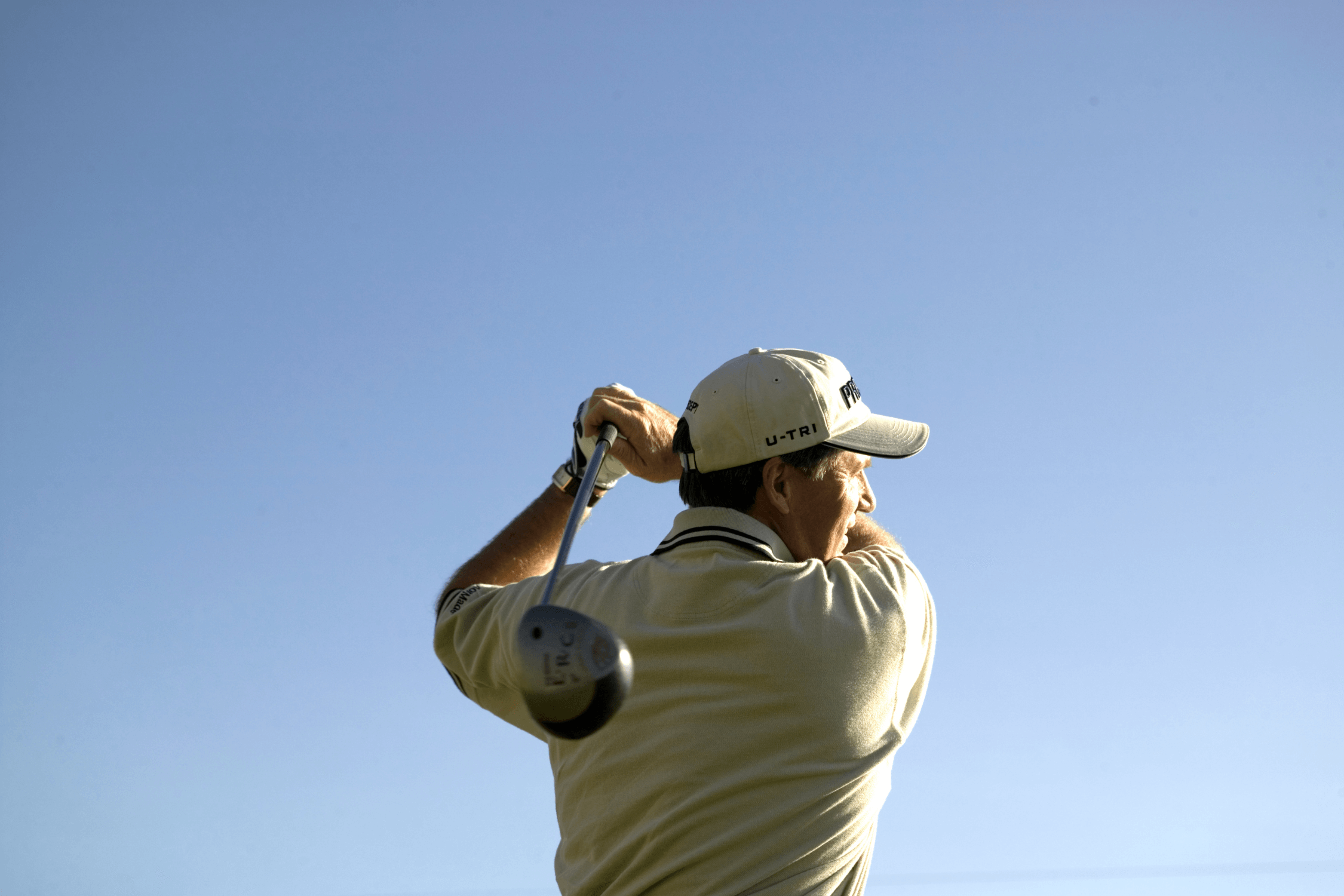
At Back to Back we treat more than a few golfers and their injuries. An injury common to the golfer may be one of many…. But often a golfer presents with pain in their elbow, shoulder, their back, hip or knee. It could be their neck or other area.
Identifying with their pain can be the easy part. Working out why they have pain is often a little more challenging.
Our AFS (or Applied Functional Science) team will be best to do this. Their aim is to track down the ‘why behind the what’. What I mean by this is … why has that particular area of your body failed? What in that person’s body is not working as it should and increasing the ‘load’ elsewhere?
What encouraged me to write this was a patient that I saw just over 4 weeks ago. He was in his late forties with a handicap of 4! He had been suffering with right shoulder pain for the last 5 months! He had seen a few other practitioners before find his way to the clinic.
To me, it was crucial to see him swing as if he was hitting the ball! Watching this and adapting the way he hit the ball, it immediately became apparent that he was restricted in his left hip. As he was halfway through his backswing the movement that should have been available at his left hip was not there and he was then using his upper back and right shoulder to do much more work than it needed or was build to do.
All that was happening was his shoulder was becoming strained because of his hip! Before coming to see us, this lovely patient had had his shoulder and surrounding area rubbed for 14 treatments.
Working with his left hip and left foot and integrating them into his swing gave great results in 3 treatments and he was almost pain free at 4 treatments. He still has a small way to go, but it just goes to show that rubbing symptoms (in this case the shoulder) is not always the right answer. Getting fully assessed by someone that appreciates integrated movement and treats the body as a whole is critical.
Get assessed properly and get properly fixed!
Blog post by James Dodd

Your knee is your hip and your hip is your knee… it is joined by a big bone!
As we are entering spring, more of us are getting outside to enjoy some sun and take up those summer activities, tennis being one of them. So what does this mean for our hibernating bodies and how can your knee become a victim of your new interest?
The knee can be your best friend, but it can also take a ‘beating’ in games like tennis.

As we are entering spring, more of us are getting outside to enjoy some sun and take up those summer activities, tennis being one of them. So what does this mean for our hibernating bodies and how can your knee become a victim of your new interest?
The knee can be your best friend, but it can also take a ‘beating’ in games like tennis.
The primary purpose of the knee and its surrounding tissues is to absorb shock and propel us in movement. It is mostly known for its ability to flex and extend and allowing us to twist and turn.
To help you understand why the knee takes a beating, I would like to explain why and how you can give your knees a better start to the summer.
“The Knee is caught in the middle with few places to go and no place to hide”
What does this mean?
As we walk, run, jump or bounce, the foot reacts as it makes contact to the ground. This pretty quickly feeds the information to the knee. The knee will then go through an appropriate movement depending on what stage you are in gait: it will react to most of what the foot does.
Sounds easy enough, but what happens if you are the knee and your foot or your hip (or both) does not load or move properly? Your knee may struggle to cope with the different movement above and below and this may be the start of your knee symptoms or dysfunction.
So what do we advise?
Great foot and hip motion is going to give the knee the best opportunity to work in all of its planes of motion and will facilitate the reaction of the proprioceptors, (information messenger’s found in joints, muscles and joints) and muscles.
We want to create an environment for the knee where the knee can twist, turn, bend, straighten at speed and adjust to different environments such as different terrain.
Does this sound familiar when playing a game of tennis?
By doing a simple matrix (an exercise to brilliantly allow the integration of the hip, knee and foot ) you will be providing a successful chain of movement which will help to provide stability for the knee and improve overall muscle control. See the videos below on how to do these.
Blog post by Annie Fonfe

Skiing preparation
Many of you are about to go skiing soon. Even if you are a great skier, it is really important to have laid some fitness foundations and have prepared your body to enable it to cope with the power and endurance that is required. As we get older, it becomes more important that we look after ourselves to protect ourselves from injury.
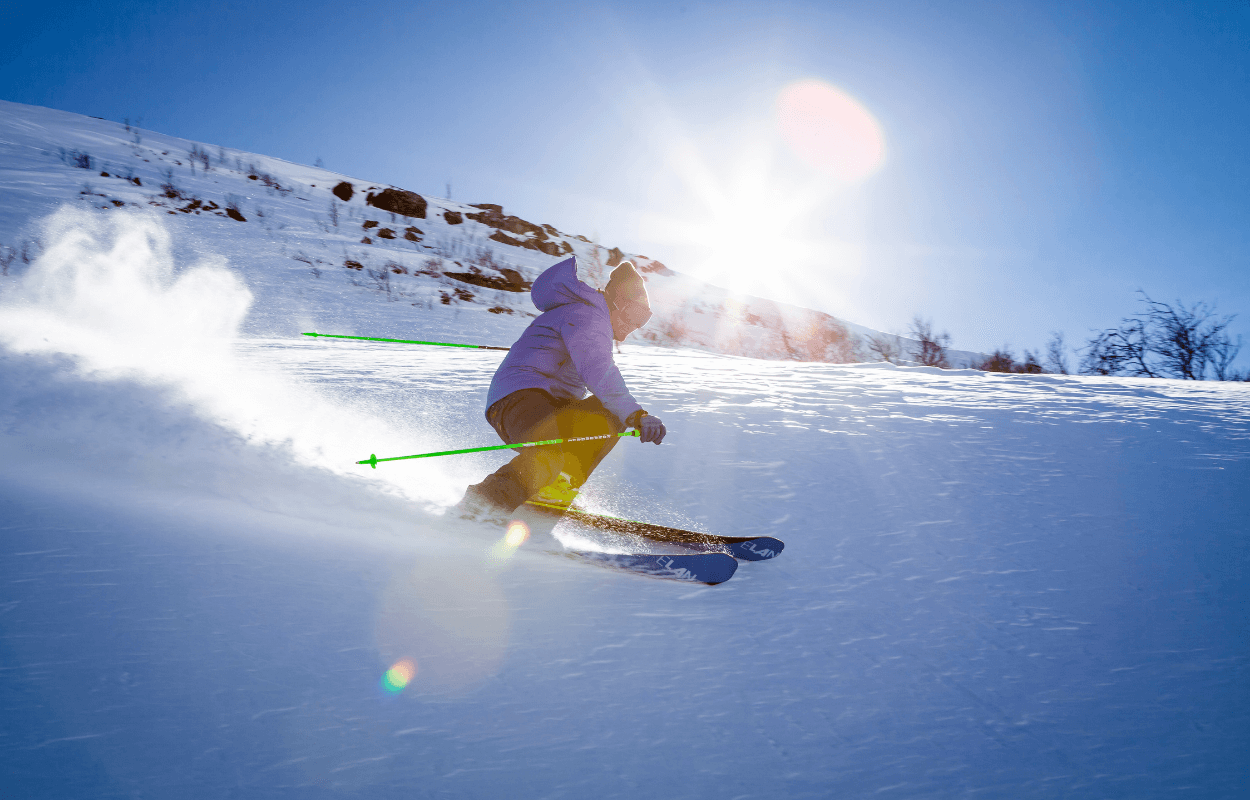
About to go skiing??
Many of you are about to go skiing soon. Even if you are a great skier, it is really important to have laid some fitness foundations and have prepared your body to enable it to cope with the power and endurance that is required. As we get older, it becomes more important that we look after ourselves to protect ourselves from injury. Going from sitting at a desk all day every day, to a week or two of skiing can create havoc on an unconditioned body. Check out these two videos from Mark Leyland that will be a great starting point. Build on these gradually. It is important to see that these movements are pretty close to what we all do when we ski. Noting is fixed and it works the whole kinetic chain.
Please be safe and do get hurt. If you do, call us on 020 8605 2323 and we will be able to help.

Health Benefits of Zumba® fitness training: a systematic review
An interesting paper which concluded that:
Zumba® fitness could be considered an effective type of physical activity able to improve aerobic capacity. Limited evidence described positive effects on muscular strength and flexibility.

Read this paper here.
It concluded that:
Zumba® fitness could be considered an effective type of physical activity able to improve aerobic capacity. Limited evidence described positive effects on muscular strength and flexibility.
So a great one to try. Good multidirectional, upright cardiovascular exercise. Fun too!
If you are concerned about an injury, come and see on of the team at Back to Back. Call reception on 020 8605 2323

Ankylosing spondylitis….and food
Jo Harding and her Ankylosing spondylitis……
Love this – this was a patient of ours that has done really, really well by stripping out her diet and becoming responsible for ‘what’ and ‘how’ she eats. It was a journey for her….but she was motivated and would not listen to someone saying ‘no’. She is doing brilliantly and is happy! Jo is now in remission and off all of her medication! So proud of her!!!!

Jo Harding and her Ankylosing spondylitis……
Love this – this was a patient of ours that has done really, really well by stripping out her diet and becoming responsible for ‘what’ and ‘how’ she eats. It was a journey for her….but she was motivated and would not listen to someone saying ‘no’. She is doing brilliantly and is happy! Jo is now in remission and off all of her medication! So proud of her!!!!
Look at the amazing story of Jo. She has put huge thought into her recipes gleaned from her direct experience with this condition and its gives life back to food.
Have a read here. It has some information about Ankylosing spondylitis and some great ideas of how you can help yourself. Links to Jo Harding are below too….
Blog Paleocrust.com
Instagram @paleocrust
Twitter @paleo_crust
Pinterest/ Facebook paleocrust
If you need some help with Ankylosing spondylitis or other back or joint problem, come in and see one of our great osteopaths. Call at the clinic on 020 8605 2323.

Explaining back pain
This really lovely and simple short video from Dr Mike Evans explaining some of the reasons for lower back pain and what you may be able to do to help yourself. Often it is about taking responsibility for yourself and talking control and deciding what you need to do. Movement and treatment are often great ways to start. Osteopaths are able to treat and advise.
This really lovely and simple short video from Dr Mike Evans explaining some of the reasons for lower back pain and what you may be able to do to help yourself. Often it is about taking responsibility for yourself and talking control and deciding what you need to do. Movement and treatment are often great ways to start. Osteopaths are able to treat and advise.
Have a watch …. it is only a few minutes! But really good…
Come in and see one of the great osteopaths at Back to Back if you need help or are concerned. They are registered and qualified to assess and treat you. We are also trained to rule out any ‘red flags’ or ‘things of concern’. Osteopaths not only treat lower back pain, but neck pain, shoulder pain and most muscle or joint pains. We also rehab patients post surgery and some of us also use exercises to improve performance or movement in sport.
Call us on 020 8605 2323

Osteoporosis… the silent one!
Many people don’t know that they have osteoporosis until they sustain a fracture, often after a fall. Across the European Union in 2010, there were an estimated 43,000 deaths causally related to fractures! It is important to note that osteoporotic related fractures do not only affect women: one in five men in the UK over 50 years old break a bone due to low bone strength…. and it is interesting to know that men’s fracture related mortality is higher than women’s.

Many people don’t know that they have osteoporosis until they sustain a fracture, often after a fall. Across the European Union in 2010, there were an estimated 43,000 deaths causally related to fractures! It is important to note that osteoporotic related fractures do not only affect women: one in five men in the UK over 50 years old break a bone due to low bone strength…. and it is interesting to know that men’s fracture related mortality is higher than women’s.
As ever with the articles we write, we highlight how crucial it is for people to take greater responsibility for themselves. Diagnosing osteoporosis early is critical to managing the condition.
Females over 50 are more likely to get osteoporosis, especially if there is a family history.
Other risk factors are:
Thyroid problems or other problems with hormone levels.
Low calcium levels or eating disorders increase the likelihood of osteoporosis.
Long-term use of oral or injected corticosteroid medications such as prednisone or cortisone.
Lifestyle choices can also have a large impact on your bone health. Excessive alcohol consumption and the use of tobacco, along with a being too sedentary directly impacts on bone strength.
Make your health your priority and keep strong, agile and healthy. Walking regularly is great – up and down hills is better. Dancing may not be your thing, but it has been shown to improve your strength. So maybe give it a go!
If you are concerned….. come in and see one of the osteopaths here at Back to Back for advice. Call us on 020 8605 2323
Blog by James Dodd

Sportsman’s hernia? An ambiguous term…
Here is an interesting paper on sportsman’s hernia. It is a recent article that highlights more recent observations in treatments and why naming this set of injuries has always been a challenge.

Interesting paper on this is here. It is a recent article that highlights more recent observations in treatments and why naming this set of injuries has always been a challenge.
Diagnosis of the problem needs to be based on a thorough history and examination. Onset can be sudden, but often is of a progressive gradual nature. There may be months of low grade/dull abdominal or groin ache. It is usually unilateral and can progress to unilateral burning or sharp pain that can travel to the groin, abdomen, upper thigh or lower back. It may be aggravated by activities like running, cutting,twisting or kicking.
If you are concerned about your pain, come in and see one of our osteopaths. You can make an appointment to see them on 020 8605 2323.

Paracetamol for back pain
Do you take paracetamol for your back pain?
One of the most important issues to understand here is WHY you have pain in the first place. WHAT has put your body in a position where it feels under threat? Pain is an OUTPUT from your brain and just by blocking that output you are not fixing WHY you have pain. Would it not be far better to get the WHY addressed and sorted?

Do you take paracetamol for your back pain?
Have a look at this link on some of the more recent research about this.
This states…..
‘Paracetamol is ineffective at treating back pain and osteoarthritis despite being a recommended treatment, a group of Australian researchers has warned’.
One of the most important issues to understand here is WHY you have pain in the first place. WHAT has put your body in a position where it feels under threat? Pain is an OUTPUT from your brain and just by blocking that output you are not fixing WHY you have pain. Would it not be far better to get the WHY addressed and sorted?
If you can, get properly assessed by a professional who has been fully trained to assess, diagnose and treat you appropriately. Pain in your back may be due to another part of your body working less effectively and so your back ends up having to work harder.
Call us on 020 8605 2323 if you have any questions.

Highlighting the need for 3d movement…
On Easter day I read a great article by Lucy Fry in the Telegraph newspaper. Lucy’s areas expertise include health, fitness and lifestyle.
Her article (I cannot yet see an online link) was about the Martin brothers and how they work using 3d movement. Andrew is a Chiropractor and Matthew is an Osteopath and they both use functional movement as part of their assessment and treatment strategies.

On Easter day I read a great article by Lucy Fry in the Telegraph newspaper. Lucy’s areas expertise include health, fitness and lifestyle.
Her article (I cannot yet see an online link) was about the Martin brothers and how they work using 3d movement. Andrew is a Chiropractor and Matthew is an Osteopath and they both use functional movement as part of their assessment and treatment strategies.
What Lucy brought to the table so well was how is it crucial for multiplanar movements to be used in treatment and exercise.
Like us at Back to Back, both of the Martin brothers work with many elite athletes (the article was in reference to how they work with many of Oxford boat crew) and more and more athletes and teams across the globe are starting to appreciate the importance of 3-dimensional assessment, treatment and exercises….that we really do move in 3 planes.
All clinicians spend a considerable amount of time learning about anatomy as part of their training. This is a huge and thorough undertaking. But it teaches us about the anatomy of a dead person on a mat and not what really happens when we move. When you really look and experience people moving, what our skeletons and muscles really do becomes very different to what we are taught.
We as practitioners need to challenge ourselves more to observe what really happens when we move and how this ‘real’ movement can be used for the success of our patients.
At Back to Back, we have the largest number of Functional Osteopaths in any one clinic in the UK who treat and assess using 3-dimensional movement. Exercises and rehabilitation is mostly upright and functional (i.e. close to the task required). Our Functional Osteopaths are trained in Applied Functional Science or AFS. A couple of us have also trained with Gary Ward of Anatomy in Motion.
AFS uses chain reaction biomechanics and is based on the principles of functional movement. Instead of looking at isolated areas of the body, AFS realises that everything is connected. For example, it can explain how a lack of ankle motion can affect the lower back.
If you are in need, call and speak to reception on 020 8605 2323.
Blog post by James Dodd

Statins… do you need them.. really need them..??
Have a read of this article in the Telegraph newspaper about a cardiovascular surgeon’s views about statins….and what he says is not great for statins!!

Have a read here….. It is an article written in the Telegraph newspaper about a cardiovascular surgeon’s views about statins….and what he says is not great for statins!!
Nicely written – it highlights how wrong doctors could have been for years… lead by incorrect and poorly done research….. and possibly the people to gain are the shareholders of the pharmaceutical companies….. not the patients who have been given the drugs!
Your call – but have a good look at your life and if there is a problem, how can YOU make a difference?… how can you become more empowered about what YOU can do? Become RESPONSIBLE for YOUR body. People often take medications without question and sit on the fence and think as they are taking the medication, it absolves them from doing anything themselves. They think they don’t need to take action… and they should!
It is REALLY hard to change things ….. especially the things that we love like sugar and bread. You would crave them for sure…most of us are addicted to things like sugar and bread. But would it not be worth it if it meant that you did not have to take drugs for the rest of your life??
Obviously do not come off medication without advice – but start to look at research and start to question… talk to your doctor and see if you can get them onto your side.
It is your body – and it is YOUR call!!
Blog post by James Dodd

Function and Functional Osteopathic Clinic
Did you know that Back to Back – The Earlsfield Osteopath has the greatest number of osteopathic practitioners that have completed the unique and prestigious GIFT programme in the USA.
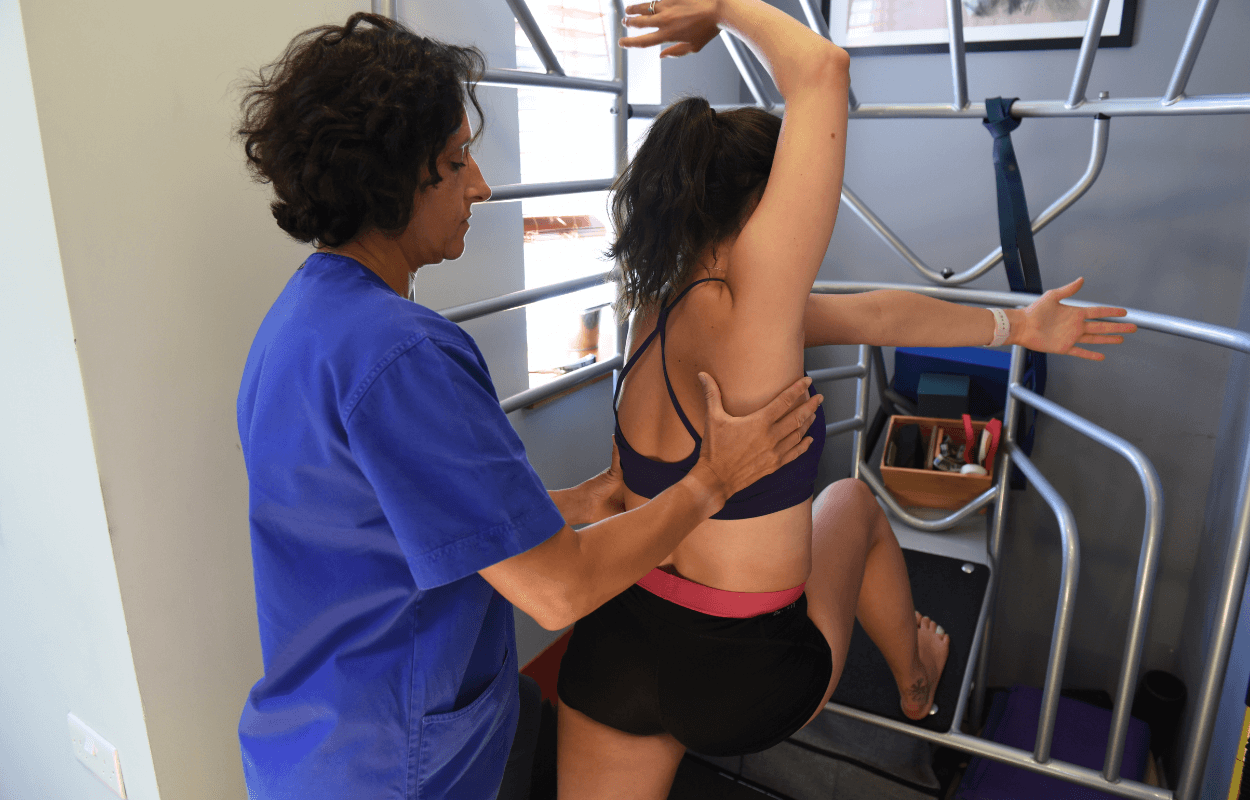
Wow…Did you know that…….?
Back to Back – The Earlsfield Osteopath has the greatest number of osteopathic practitioners that have completed the unique and prestigious GIFT programme in the USA. Neil, has also enrolled to do this in 2016!
What does ‘Functional Osteopathy’ mean and how can it benefit our patients?
Functional osteopathy involves a new way of assessment and treatment. It uniquely combines Osteopathy with Applied Functional Science (AFS). AFS uses chain reaction biomechanics and is based on the principles of functional movement. Instead of looking at isolated areas of the body, AFS realises that everything is connected and integrated. For example, it can explain how a lack of ankle motion can affect the hip, lower back, neck or shoulder. Hands on osteopathic therapy is used. However, assessment is based around what you do in real life. There are no artificial testing methods such as touching your toes if it doesn’t relate to the way you move naturally. Treatment often occurs in upright functional positions. This enables treatment to directly translate back to improving your movement in everyday life. Treatment is unique to your ability, function and goals and will not be the same as the client before or after you. This treatment approach gives the body access to parts it has not been able to use and teaches it how to move better. The power of combining Osteopathy and Applied Functional Science is in utilising the body’s natural moving state.
Lying someone on their side and asking them to lift up their leg in not ‘functional’ to work the glut muscle and it does not get them more successful at walking, dancing, running or jumping. Asking someone to stand with a leg forward and to reach in a particular way becomes a better way to improve glut function and is closer to what we all do everyday. We all need to function in an energy efficient manner, but ideally in a pain free way. When our bodies are in pain, most often it changes the way we move and go about our daily lives.
The ‘functional’ way works fantastically well with elite athletes and performance enhancement, but also is brilliant at treating everyday injures, such as back or neck pain, hip, knee and foot pain or shoulder and elbow pain.
A combination of Osteopathic methods and AFS is used for treatment and in the rehabilitation of injuries.
When assessing a patient, we are really trying to see WHY something has happened and not the fact that it has happened. This enables us to go faster to the route of the problem.
We feel that creating great function enhances our health and well-being and is a remarkable way of encompassing movement into an integrated way and not an isolated way.
If you would like to see one of our ‘Functional Osteopathic’ practitioners, book in to see James, Annie or Steph. reception can be contacted on 020 8605 2323.
Blog post by James Dodd

Walking. Simple but effective
Other than the obvious: It’s free and pretty much predictable at what time you will get somewhere, walking also has great health benefits. If your doctor has no concerns, walking briskly is even better.

Other than the obvious: It’s free and pretty much predictable at what time you will get somewhere, walking also has great health benefits. If your doctor has no concerns, walking briskly is even better.
The benefits…
It’s mildly aerobic, getting your heart and lungs working
Improves circulation and can help lower blood pressure
Walking a mile can burn about 100 calories
Has great cognitive benefits. Some suggest it improves your memory too
Great help with insulin sensitivity. A fifteen minute walk after every meal curbs risky spikes in blood sugar
Can help with sleep
Stress relief – especially in the fresh air!
Try to add walking more into your daily routine. To track your steps, use a pedometer, you can even get an app for your smart phone. Aim for 10,000 steps a day. It sounds like a massive amount, but once you take the stairs instead of the lift, walk home rather than the bus, walk around the block at lunchtime, you actually hit that number pretty easily. If you get to 8,000 steps later in the afternoon, there is your target for the rest of the day, just 2000 more! Make it a daily challenge to get to your target.
James Dodd
Principal/Functional Osteopath
BSc (Hons) Ost. FAFS GPS