Back to Back Blog

Can Osteopathy Support Marathon Training or Triathlon Preparation?

Training for a marathon or triathlon is hugely rewarding — but it places significant, repetitive stress on the body. Whether you’re preparing for the London Marathon or building towards your first Olympic-distance triathlon, the combination of mileage, intensity and time pressure increases your risk of overload injuries.
This is where osteopathy can play a valuable role.
At Back to Back in Wandsworth SW18, we regularly support runners and triathletes through structured training blocks — not just when they’re injured, but proactively to keep them moving well.
The Demands of Marathon & Triathlon Training
Marathon training typically involves:
Progressive weekly mileage
Long runs placing sustained load through the calves, Achilles and hips
Speed sessions stressing hamstrings and hip flexors
Reduced recovery time during peak blocks
Triathlon preparation adds:
High cycling volume (hip flexor dominance, lumbar flexion posture)
Swimming (shoulder load and thoracic rotation demands)
Transition training, where fatigue alters running mechanics
When training volume increases faster than tissue capacity adapts, problems arise.
Common issues we see include:
Achilles tendinopathy
Patellofemoral pain
IT band irritation
Hamstring overload
Bone stress reactions
Lower back stiffness linked to cycling
These are rarely “random injuries.” They are usually load-management or biomechanics problems that build over time.
How Osteopathy Supports Performance
1. Early Identification of Overload Patterns
Before pain becomes an injury, the body often gives warning signs:
Persistent tightness in one calf
Reduced hip extension on one side
Subtle asymmetry in single-leg strength
Increasing fatigue that doesn’t resolve with rest
Osteopaths are trained to assess movement patterns, joint mobility and tissue load tolerance. Identifying these early allows adjustments before full injury develops.
For example:
A restricted ankle joint may increase Achilles strain.
Reduced thoracic rotation from cycling may alter arm swing in running.
Gluteal weakness may overload the hamstrings late in long runs.
Addressing these proactively keeps training consistent — and consistency is everything in endurance sport.
2. Optimising Biomechanics
Marathon and triathlon performance relies on efficiency. Small mechanical inefficiencies repeated over thousands of steps become significant.
Osteopathic assessment looks at:
Hip extension and pelvic control
Ankle mobility and calf capacity
Thoracic rotation
Rib and breathing mechanics
Lumbar spine load distribution
Manual therapy can improve joint mobility and reduce protective muscle tone, but this is only part of the picture. The goal isn’t just to “loosen” tissues — it’s to restore optimal movement so force is distributed more evenly.
3. Strength & Load Guidance
Endurance athletes often focus heavily on mileage but neglect strength.
Evidence consistently shows that strength training:
Reduces running injury risk
Improves running economy
Supports tendon resilience
Enhances late-race performance
Osteopaths can guide:
Single-leg control work
Calf capacity progression
Hip abductor and glute strength
Plyometric progression for race readiness
Core and trunk endurance
This becomes especially important for triathletes managing cumulative fatigue across three disciplines.
4. Managing Recovery During Peak Blocks
During high-load weeks, athletes may experience:
DOMS that lingers longer than expected
Calf tightness after speed work
Shoulder stiffness from increased swim volume
Low back ache from long rides
Osteopathic treatment during these periods can help maintain joint mobility, improve circulation to overloaded tissues, and reduce compensatory patterns.
Importantly, treatment should be integrated into the training plan — not used as a last-minute fix when things break down.
5. Supporting Return from Niggles
Very few athletes complete a full marathon or triathlon block without any niggle.
The key is not eliminating discomfort entirely — it’s understanding when discomfort is acceptable and when it signals tissue overload.
An osteopath can help distinguish between:
Normal training soreness
Tendon overload
Early bone stress reactions
Neural irritation
Joint-related referral pain
This clarity allows smarter decisions around:
Whether to continue training
How to modify load
When to cross-train
When imaging or GP referral is required
This is particularly relevant in marathon build-ups where ignoring early bone stress symptoms can end a season.
Osteopathy Is Not Just “Treatment”
The biggest shift in modern sports osteopathy is moving away from purely passive treatment.
Effective support involves:
Movement assessment
Load management advice
Evidence-based strength programming
Biomechanical optimisation
Clear return-to-run frameworks
Manual therapy is a tool — not the entire solution.
When Should You See an Osteopath During Training?
Consider booking if:
You notice asymmetry developing
A niggle persists beyond 7–10 days
You are increasing mileage significantly
You’re entering peak training
You have a history of recurrent injury
You’re returning after time off
You don’t need to wait for a full injury.
Final Thoughts
Marathon and triathlon preparation place extraordinary demands on the body. The difference between successful completion and frustrating injury is often proactive management.
Osteopathy can support:
Injury prevention
Movement efficiency
Strength integration
Recovery management
Smarter training decisions
Whether you’re building towards your first race or chasing a PB, structured musculoskeletal support can make training more resilient and more sustainable.
And ultimately, staying healthy through the build-up is what gets you to the start line confident — and to the finish line strong.
Back to Back Osteopaths is a trusted resource for marathon runner and triathletes alike. But we also see athletes from most other sporting disciplines.
By James Dodd BSc (hons) Ost. FAFS.
GOsC registered
Book an appointment online today. Or not sure if your symptoms need treatment? Feel free to call our clinic in Wandsworth and we’ll happily advise.
Hot Stone Massage with Leanne Bowden
Keep warm this winter - try our hot stone therapy massage!
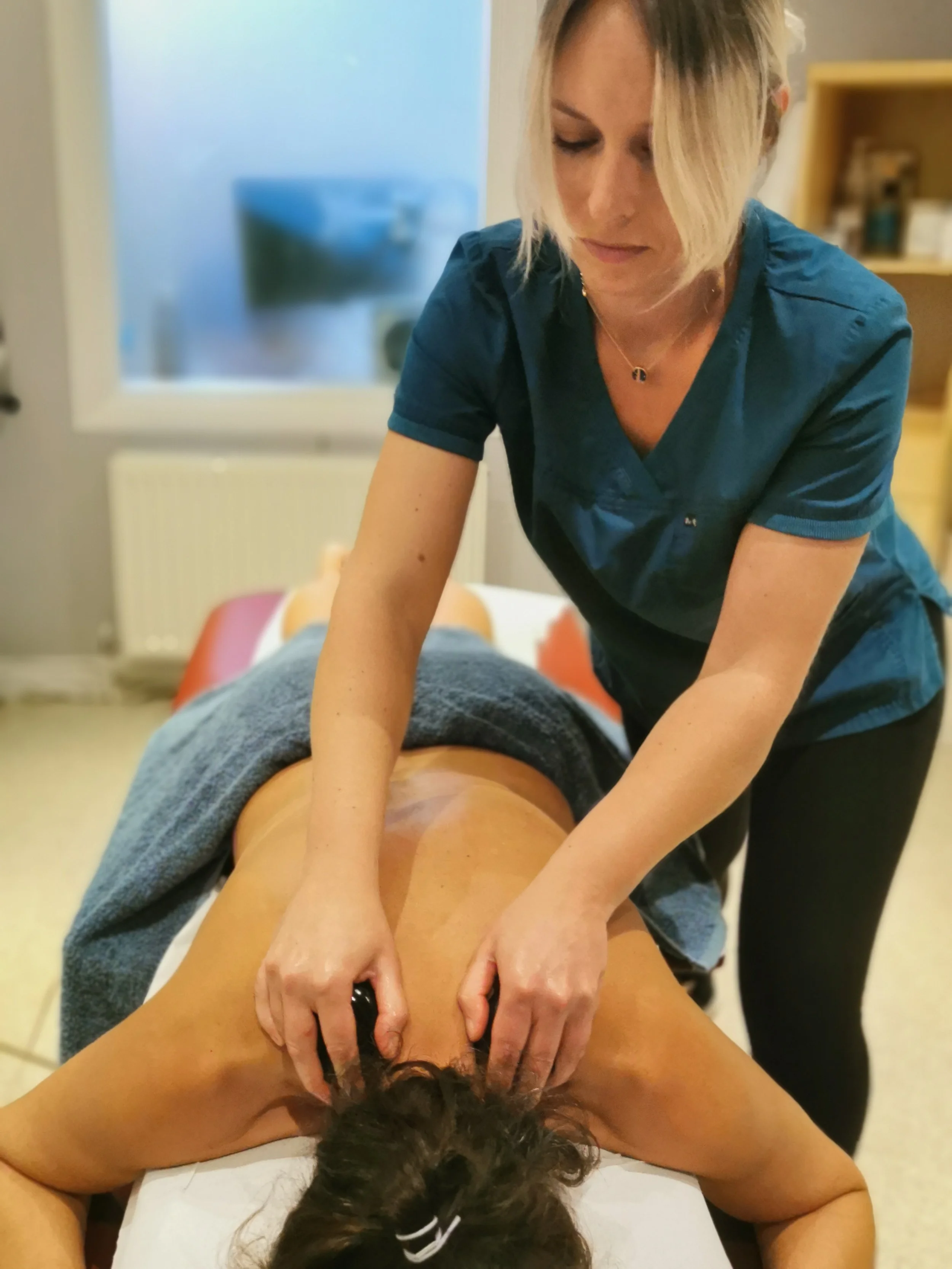
For a wonderfully soothing and powerful treatment this winter, try Leanne’s hot stone therapy massage. A thermotherapy treatment using heated basalt volcanic stones. Using a mix of flowing movements across the body with classic massage techniques to create the perfect blend of relaxation and reducing muscle tightness.
The heat encourages an increase in blood circulation deep into the muscle and is a great treatment to relax chronically tight muscles. If you struggle to find a treatment to relax particularly stubborn areas, usually in the upper back, shoulders and neck, then this is the treatment for you! It can be combined with deep tissue techniques if you require a firm massage or for those that prefer a light/medium pressure, the stones can be used alongside holistic massage techniques.
This is a really popular treatment at the clinic as it’s such a versatile and effective massage which is nurturing for both the body and mind. It has been particularly popular with clients affected by fibromyalgia, long covid and hypermobility.
Hot stone therapy can be incorporated into all of my massage treatments (except pregnancy), so just ask reception when you book in.
Leanne Bowden
ITEC Massage therapist & VTCT Reflexologist @ Back to Back
Book in by calling the clinic on 020 8605 2323


TREATING YOUR MUSCLES AS WE EASE OUT OF LOCKDOWN
A whole year of this has caused stiffness in our joints, poor posture, tightened muscles and has had a negative impact on our body. So, what are we going to do about it?
A GREAT POST FROM AMAZING MASSAGE THERAPIST ALEX
“LOTS OF SITTING AT MY HOME DESK… TRAVELLING FROM ONE ROOM TO ANOTHER IS THE MOST MOVEMENT I’VE DONE TODAY… WATCHING TONS AND TONS OF TELE.”
These are the most frequent comments I have heard from my clients throughout lockdown. The amount of movement we do has largely decreased throughout the pandemic. Not helped by the fact that gyms and sports had ground to a halt, travelling to and from work is so much less and throughout the winter months we are limited on the time we can spend exercising outside. A whole year of this has caused stiffness in our joints, poor posture, tightened muscles and has had a negative impact on our body. So, what are we going to do about it?
The time to act is now! As we are easing out of lockdown, we need to prepare our bodies for the freedom they are about to endure. The classic quote of ‘don’t run before you can walk, is a perfect example of why we need to re-train and treat our muscles, before throwing ourselves into the fitness world again. We've been cramped up at home for so long our muscles will feel cramped and stiff too. Here’s my step by step guide on coming out of lockdown safely for your body, helping to reduce injury when you do get back on the horse (or bike!) again.
STEP BY STEP GUIDE:
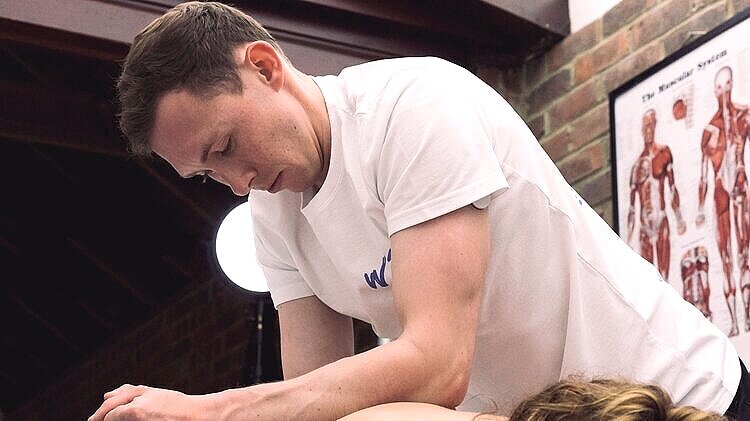
1. See a specialist - It is important to know how your body has adapted within lockdown. Going to see an Osteopath, Personal Trainer and/or a Massage Therapist, will give you a greater understanding of your body and what areas you’ll need to work on. One of the biggest problems I see with my clients is they rush straight into generic workouts, which can put huge pressure and stress on the body if it’s the wrong type of session for you. Being given specific exercises by a specialist can prepare and strengthen the areas that need the work safely, leading you to be confident when starting out in your sport or fitness journey.
Blog post by Alex Warren
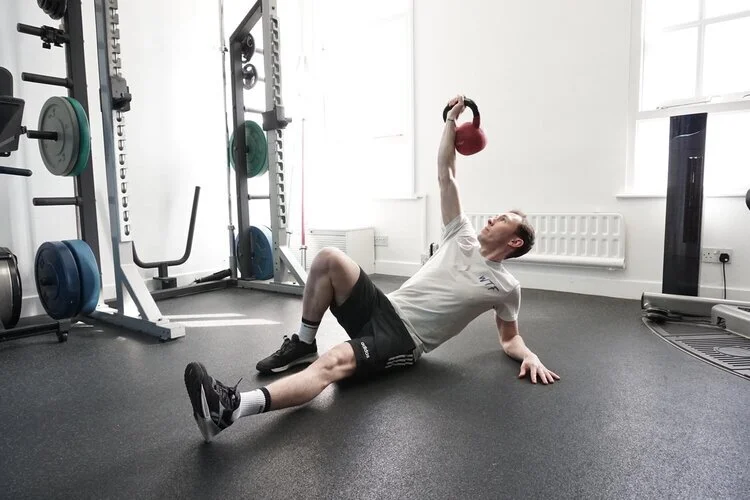
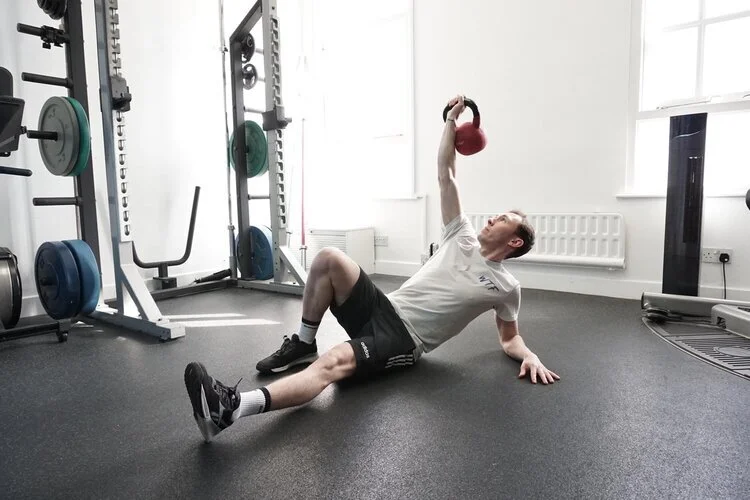
2. Move in all planes - We have become very static during lockdown, with some of us only performing the majority of exercises in a linear motion, like cycling or running. Our bodies should move in all planes comfortably and efficiently, so adding in some transverse and frontal planes of motion (rotational and side to side movements), such as a banded trunk rotation/oblique twist or isometric lateral bear crawl with pull throughs, will help improve and strengthen total body function. Your specialist Back to Back will be able to set you up with some exercises tailored to you and your needs involving all planes.
3. Build up strength SLOWLY - Going into the gym before lockdown and whacking on 100kg for the back squat may have been a breeze. Do not be lulled into a false sense of security when heading back into the gym thinking you could easily lift that 100kg again. Build up to that weight slowly again, no matter what exercise you are performing. Muscle memory will kick in and you will (hopefully sooner rather than later) get back to where you were. Receiving instruction from a personal trainer to look at form and technique is also a really sensible way to ease yourself back into training in a safe and effective manner. They can provide specific programmes to get you up to speed and even perform at a stronger level than before!
If we can help in any way, call us on 020 8605 2323 for an appointment with Alex or one of our great osteopaths.

Sports Massage… the low down
Research shows that there is moderate data supporting the use of massage to facilitate recovery from repetitive muscular contractions, as well as being effective in alleviating DOMS (delayed onset muscle soreness – that achey feeling you get after tough exercise) by approximately 30%.

Here is a great write up by Bhavesh Joshi about the benefits of Sports Massage. It does make a difference and people do report that they feel and notice the difference. With those of you that are training for an event such as the London Marathon or triathlons in the near future, make sure that you try a regular sports massage to keep your muscles less tight and feeling better!
Bhavesh says…..
Research shows that there is moderate data supporting the use of massage to facilitate recovery from repetitive muscular contractions, as well as being effective in alleviating DOMS (delayed onset muscle soreness – that achey feeling you get after tough exercise) by approximately 30%.

True Proprioception and Function
You get great proprioceptive training for free if you do authentic Functional Exercise. Proprioceptors provide us with information about movement and the position of our head, limbs and body in time and space.

Proprioception could be looked at as one of the inner ‘controllers’ of our body!
You get great proprioceptive training for free if you do authentic Functional Exercise. Proprioceptors provide us with information about movement and the position of our head, limbs and body in time and space. Their aim is to protect our body from damage by using ‘stretch reflexes’ and these can restrict or limit our movement at times of need. Some of these sit in joints, some in our muscles and some in skin and fascia. In combination, proprioceptors give our body a supreme and enhanced awareness of our ‘whereabouts’.
You do need to proprioceptively train the body towards the function it so requires. Doing a ‘plank’ for example will not train your abdominals proprioceptively to protect you in upright function with lumbar spine extension and rotation. Squatting will not proprioceptively train your legs to run and that ‘static squat hold’ at 90 degrees that many are given, will certainly not protect your hips, knees and ankles while you ski.
Training proprioceptors effectively requires movement and often (although not always) it needs ground force reaction too! Increased effectiveness is achieved by using different tweaks or additions to our movement such as adaptations in speed, depth, height and angulation and this may involve using your head, limbs and body, all in 3 planes of motion. An INTEGRATED chain reaction is needed, nothing is ISOLATED.
Whatever sport or exercise you want to do, to become and stay good at it, your conditioning and rehabilitative training needs to look and smell like the sport you want to do!
If you need any help with Functional Training or need an injury treated, call us at Back to Back on 020 8605 2323

Get Wise for CrossFit – and keep safe!
The first affiliated CrossFit (CF) gym was opened in Santa Cruz in 1995 and was founded and developed by the coach Greg Glassman. Over his years of watching the fitness industry, his idea was to create versatile athletes (gymnastics and weightlifting) through primal movements and intense training.

The first affiliated CrossFit (CF) gym was opened in Santa Cruz in 1995 and was founded and developed by the coach Greg Glassman. Over his years of watching the fitness industry, his idea was to create versatile athletes (gymnastics and weightlifting) through primal movements and intense training. It has since gained worldwide momentum and a huge following.
The typical workout or WOD may involve intense drills of weightlifting (squats, deadlifting and carrying odd objects or kettlebells etc) box jumps, burpees, sprinting and using gymnastic rings to name a few. Most activities are all well and good and with a structured and progressive integration into your lifestyle and using the basic premise of not walking before your can crawl and not running before you walk. This puts in place not just the neurological inputs that are needed to perform and function, but embeds some firm foundations of the chain reaction needed for movement and structural control.
I see and treat a fair amount of injuries sustained through CrossFit and whilst injury is often seen to be part of any intense exercise, I do feel some of these could be avoided.
CrossFit is massively intense and with that comes excitement and vigor and over time, a body that develops in power, coordination and agility. But I feel that with this excitement and vigor often comes lack of care for ones self and the idea that if your push yourself harder, you get faster results.
Let me use the example of running again. If we have a basic level of fitness, most of us assume we should be able to run. Running is composed of lots of hops and leaps. When treating/rehabbing athletes, I am often asked “am I ready to run yet?”…… and I ask them “can you repeatedly hop and leap?” and then depending on their answer we watch and see…… and we see if they can or if they fail. That gives us the answer and often, they cannot hop and leap! So surely, they should not run!
My point of this is much more about creating the foundations much deeper than you think you need. To enable Mo Farah’s fabulous achievements at the 2012 Olympic Games, he would have run around those tracks hundreds if not thousands of times and known that if he gets a PB, it will probably be within a certain amount of time.
So doing 25 squats with 100kgs if you have only ever twice before would be foolish. Doing 25 squats with 100kgs should ok if you are regularly doing 25 times 90kgs.
To enable good technique with power moves such as deadlifts and squats you don’t just need good technique, you really need good functional mechanics such as sufficient ankle, knee and hip movement and these need to be able to load the weight correctly. If they cannot do this, somewhere else will take the hit….and this hit maybe your lower back, shoulder or neck!
Over the next few months I will be working with Tom and Harri Bold from CrossFit Bold and other coaches from Athletic Alliance to develop some easy strategies to enhance movement and control, which we will be sharing with all the members. All with the idea injury avoidance! But in the meantime, please be careful of your form and technique and keep your ego in check and don’t find yourself where you are trying to push your body to a place where it has not been before too quickly.
Ignore the figures but, think of it like an iceberg – 70% underneath and 30% on top…..
Could your groin injury be coming from your hip?

Groin pain can be a difficult problem for patients as well as their clinicians. Part of the problem is that the location of the pain is often a poor indicator of the where the pathology actually lies. Additionally, when the pain becomes chronic, multiple pathologies can be generated, adding a further layer of complexity.
It is very important to make a clear diagnosis, and we should seek to look beyond merely labelling the problem as a ‘groin sprain’. There many causes of pain in the groin, but approximately 50% of groin pain can be attributed to pain generated by the hip joint; a surprise, perhaps, for younger patients. As in any medical condition, the patient’s history will give us many clues. It is extremely important to rule out sinister ‘red flags’, such as night pain, severe pain on loading the leg, weight loss or systemic symptoms, and we need to be mindful of conditions which may occur in certain age groups, such as slipped epiphysis in teenagers.
Common causes of groin pain besides the hip, include those generated by the lumbar spine, pubic overload (osteitis pubis), iliopsoas and adductor tendon pathologies and stress responses in the femoral neck in runners. Abdominal wall hernias may cause pain which is a little higher in the groin, and less commonly, younger patients can experience the rectus femoris pulling away from its attachment at the anterior inferior iliac spine. Testicular tumours and avascular necrosis can present insidiously and we need to be on the lookout for them.
A big proportion of patients who present with groin pain as a result of hip pathology, have an underling condition known as ‘femoral acetabular impingement syndrome’, or FAI. This is essentially a problem resulting from a tear in the acetabular labrum, usually caused by repetitive trauma due to a ‘bump’ or ‘CAM’ on the head neck junction of the femur, which may be genetic.
This can cause groin pain which is worse with exercise, sitting or standing, and the pain can be brought on by putting the patient in the ‘impingement position’ of hip flexion + internal rotation + adduction. In the long term, we believe that the tear in labrum causes changes in the acetabular articular cartilage next to it, and over many years, this may lead to osteoarthritis in the hip.
FAI can affect people of all ages, and is often missed in 30-40 year olds. Taking a careful history, and carrying out a thorough examination can help identify the likely cause. Imaging, such as MRI arthrogram of the hip, can help confirm the underlying diagnosis (as X-Ray cannot rule out FAI), but it should be remembered that imaging needs to be interpreted in light of the history and examination findings. FAI may require treatment with hip arthroscopy surgery, but in some cases injection therapy and robust physiotherapy or osteopathy may be enough to get a person back to full activity.
Sports Physicians and Osteopaths are ideally placed to identify the underlying cause of unexplained groin pain, and are skilled in directing the rehabilitation necessary to resolve the problems.
If you have any problems at all and would like in to see James Dodd or one of the team at Back to Back, please call 020 8605 2323.