Back to Back Blog

Loosing the boozing-reduce your Alcohol for a healthier you
Although you may first visit your osteopath to treat an injury or condition, a priority of the osteopath is to help you improve your overall health and wellbeing.

Alcohol after a busy Festive period
Although you may first visit your osteopath to treat an injury or condition, a priority of the osteopath is to help you improve your overall health and wellbeing.
There are a range of things that we do to our bodies that can help or hinder this, such as exercise and diet. Another significant factor is alcohol consumption.
With the new year underway, you may be looking to kickstart 2018 with a range of healthier living decisions. You may be trying the ‘Dry January Challenge’, to go without alcohol for a month. Or maybe you are looking to reduce how often or how much you drink.
If you experience joint pain, excessive alcohol can impede your bodies ability to repair and also interact badly with some medication.
Long term excessive drinking can also cause:
*Brain damage
*Increased risk of throat and mouth cancer
*Increased blood pressure and heart disease
*Inflammation of the stomach lining, stomach ulcers and increased risk of stomach and bowel cancer
*Liver damage and cancer
*Reproductive problems
*Mental health difficulties
Blog Post by James Dodd

The endangered glutes!
There’s a fairly obvious giveaway about the importance of our gluteal muscles; they are rather big! Having a big, powerful set of muscles such as the glutes should indicate to us that, through our evolution, the body has developed a demand for strength and power in that area.

Why are they not firing and what to do about it.
There’s a fairly obvious giveaway about the importance of our gluteal muscles; they are rather big! Having a big, powerful set of muscles such as the glutes should indicate to us that, through our evolution, the body has developed a demand for strength and power in that area.
Human anatomy has evolved to cope as efficiently as possible with the forces exerted upon it. Perhaps the most important force of all is gravity. Every time you take a stride, or step off from a curb, or land from a jump, there is a demand for the body to control this movement. Without our muscular system engaging to catch us, we would collapse like a bag of bones under the force of gravity.
The most powerful hinge in the body, which has evolved to adsorb these forces, is the hip. It makes sense, therefore, that the hip would need a big set of muscles surrounding it in order to absorb these forces and exert the control that is required – hence the big glutes!
Having developed a powerful set of muscles such as the glutes, it would be efficient for the body to regularly recruit their power when performing tasks. If I want to perform a movement efficiently, such as bending down to empty the dishwasher, I would like the powerful parts of my body to control this movement – rather than the smaller and more vulnerable muscles.
If we don’t use the large muscle groups appropriately, then smaller muscles may be asked to do more work and may end up failing.
The importance of the glutes is widely recognised and often discussed in gyms and clinics all over the world. You may have even been told that “your glutes aren’t firing” and may be currently trying to rectify this! Unfortunately, however, the glutes are often blamed (and trained) in isolation.
A lack of understanding of how the glutes work, leads to a very limited approach to gluteal training. The important question to ask is; why are the glutes not firing? Only by answering this will you be able to improve your gluteal activation and strength.
So, why do so many of us under use our glutes and how do you actually get them to work harder for you?
Evolution lesson #1 – use it or lose it!
I always feel that any announcement to a patient that “your glutes aren’t firing” should be delivered with a caveat. The caveat being that, for most of us, this is simply a bi-product of our modern lifestyles, it is not an unfortunate affliction that you just happen to be unlucky enough to have developed. Don’t worry; we’re all in the same boat. It’s not your fault!
A quick look at the animal kingdom can help to explain this point. Often we identify animals by their anatomical features, without necessarily knowing that we do so. If I asked you to look at the images below of the Capuchin Monkey and the Springbok and tell me where their “big bits” are, then I’m hoping you would say the Capuchin’s tail and the Springbok’s hind legs.
Even without knowing the habits of these animals, you would probably be able to make a fairly good guess as to what they were good at. The monkey has a powerful tail for climbing and swinging from trees, the Springbok has big hind legs for jumping.
Their anatomy has evolved to be fine-tuned for their lifestyles, habitats and activities and their continued success as a species is dependent upon them using these powerful areas to gain advantages in the wild. These animals take maximum advantage of their powerful areas!
This is where the problems for humans arise. We are far more sedentary now than at any time during our evolution. For many of us, the continued demands required to maintain the strength and power of our big muscle groups has significantly reduced. Our anatomy has been fine tuned to cope with regular, unpredictable, multi-directional movement such as jumping, landing, walking on uneven ground, running, sprinting, changing direction. By sitting, moving less and existing in very flat, unchallenging habitats we are no longer putting these demands on our bodies.
The gluteal muscles fire when they are placed under load through movement combined with the forces of body weight and gravity. They respond to three dimensional movement, so not just up and down, but side to side and rotational movements. We, not only, have a habit of being too sedentary but also training and exercising in a very one dimensional fashion. This leaves our glutes fairly underwhelmed.
So, how do we actually get the glutes to fire?
Although there is no literal need to throw out the trappings of modern life and return to an animalistic state in order to rescue our glutes, there may be a figurative one.
The best way to get the muscular system to activate, and to make any long term changes to the firing of muscles, is to make them do authentic movements. It is crucial for us to really understand what the gluteal muscles have evolved to do.
The glutes are designed to slow down and control our hip movements, both from the ground up and the top down.
Every time our foot hits the ground, the forces from above and below place a huge demand on our hips and the large glutes are there to cope with this significant work load. As the hips absorb movements such as landing or squatting (combined with gravity), the glutes fire in order to control this movement and convert these forces into elastic and kinetic energy. This energy is then utilised to fire us off into the next part of the movement, whether it be the next step or a jump from our squat.
If we want to train the glutes, then we need to create authentic movements at the hip. Only then will the nervous system recognise the movement and create the appropriate activation.
Glute bridges don’t cut it.
If you have been told that you have lazy glutes then you may currently be doing regular glute bridges to switch the blasted things back on again. This is where you lay on your back with your knees bent and lift your pelvis towards the ceiling.
Although this will indeed shorten the glute muscles and may cause them to fatigue – it is by no means an authentic movement. A glute bridge is not something that you are really required to do in daily life.
Putting one foot out in front of you, while reaching forward to pick something up is an action you are required to do frequently. Landing on one foot, while rotating your upper body, is a movement that you do every time you walk. By exercising and challenging the hips in these authentic positions, we begin to re-educate the glutes as to their true purpose. Our nervous systems are very plastic; they have the potential to adapt quickly. If we actually encourage the body to move in the way that it is designed to, our nervous systems will soon catch on to what we are asking of the body and begin to adapt and create the appropriate firing of muscles. If we continue to train in a non-authentic way, our nervous systems will remain confused and will seek ways of compensating – often leading to dysfunction.
Blog post by James Dodd

Standing desks…… a small note
I have just seen an article written in The Times yesterday by Carol Midgley on the subject of standing desks.
She talks briefly and mentions that ‘sitting is the new smoking’ and so she tries a basic device. This new device, you sit onto your existing desk to enable you to stand and work. I am not sure which one she tried, but here is a great example.

I have just seen an article written in The Times yesterday by Carol Midgley on the subject of standing desks.
She talks briefly and mentions that ‘sitting is the new smoking’ and so she tries a basic device. This new device, you sit onto your existing desk to enable you to stand and work. I am not sure which one she tried, but here is a great example.
She says “So after a few days of spending eight hours of standing, am I convert?” “No.” “Not one iota.” She talks of it being harder to focus and harder on ‘the old plates of meat’.
When you start to run, you do NOT just go out and run for 2 hours! When you want to get better at hill walking, you certainly don’t start off with a long day in the Alps! With everything new for our bodies, you should start off by laying better and more solid foundations so that your body adapts to its ‘new’ needs. The better your ‘foundations’, the more adaptable and protective your body is for the stresses and strains that we place on it.
I suspect if Carol had started off by adding in an hour of standing and then sitting for an hour and gradually adding in a bit more, she would have felt better. This may need to happen over the course of a few weeks.
In my opinion, I don’t think standing desks are for people to stand all day. I think it is a much better approach to do some sitting and some standing and mix it about. Doing it this way, you may stand for 3, 4 or 5 hours over the day in total. Your body gets to experience both.
I also get patients to stand with their feet in different positions to add variability. It encourages you to move more and this undoubtedly IS good for you.
If you have any muscle or joint problems or would like to come and see one of our Osteopaths, call 020 8605 2323.
Blog post by James Dodd

3 tips for Knee Rehabilitation and the need to be patient!
My Knee Rehabilitation! Nothing much to write today, other than I have been gradually increasing the amount of walking I have been doing and very clearly, it was too much! My knee was feeling unstable and it was ‘talking’ to me more. It was not unstable in any way. But it was just telling me to back off and I needed to listen. Knee rehabilitation after surgery takes time!

My Knee Rehabilitation! Nothing much to write today, other than I have been gradually increasing the amount of walking I have been doing and very clearly, it was too much! My knee was feeling unstable and it was ‘talking’ to me more. It was not unstable in any way. But it was just telling me to back off and I needed to listen. Knee rehabilitation after surgery takes time!
At only just over 2 weeks post operatively, mild swelling and inflammation was still present and the areas that had been cut inside were still sensitive.
What I did note, was that there were other aggravating factors having an impact. My footwear and the terrain that I had been walking on.
My shoes have been harder underneath with little or no give; this would have created more ‘jarring’ through to my knee. We have been increasing the distance that was walked, this inevitably included more hills, both up and down. In Cornwall these can be steep, especially in some of the beautiful towns that we visited.
So what did I do? The patient backed off and walked less! I wore softer shoes with more give in the soles.
I STOPPED being stubborn and soldiering on! It is so easy to just say….”Let’s carry on, it will be fine.” Clearly, it was not!
But I kept on with the same exercises without adding any more and would resume with more as soon as I was able.
I kept on reminding myself. It was ONLY 17 days post surgery and I am good with that. Healing takes time!!
Those 3 tips I mentioned.
I have really found walking is great- it is ‘free’ and being outside is brilliant for you in so many other ways too. Integration of your exercises is really important. Trying to work your knee in an integrated way joins other joints and muscles together. Your knee never works by itself.! Don’t underestimate how important your foot is. Your knee is a bit of a slave to your foot and so a really well moving foot allows your knee to track and load with greater efficiency.
More soon.
As Osteopaths at Back to Back, we recognise that it is crucial for post surgical rehabilitation to be UNIQUE to THE INDIVIDUAL. Exercises should be given to YOU and for YOUR problem and for YOUR stage of healing. The progression of exercises is also unique to the patient and given under the advice of a good health practitioner.
The above is all the opinion of Back to Back.
If you are concerned in anyway about your rehab, do come in and see one of our highly trained team.
Blog by James Dodd

Ligament injuries of the knee and footballers!
Knee/ligament injuries within football
I recently read the article on the BBC website by Karl Braidwood on the angst of the increased incidence of ligament injuries in the football premier league. Here is a link to the article.

Knee/ligament injuries within football
I recently read the article on the BBC website by Karl Braidwood on the angst of the increased incidence of ligament injuries in the football premier league. Here is a link to the article.
It is well written with a good amount of detail and is looking at the opinions of the experts as to ‘why’ there has been such a great increase of ligament injuries in football over the past few years. It is massively expensive to have football players that are unable to play. They are taking about £177m in wages paid to injured (all injuries) players just last season!!! And of those, knee injuries appear to be the costliest!!
There are many contributing factors for this increase.
Several experts have given their opinions. Included in these is the amount of football played, the kind of footwear and the newer and more modern/harder pitches. Most of these make complete sense and I wanted to explore these a little.
The consultant talks about players overplaying and fatigue. This makes huge sense as the impact of the amount of training and games played per season is massive. The games are faster and more challenging. The players are certainly fitter than they were in the 60s, 70s and 80s….. they do train harder. The ‘capacity’ in their bodies needs to be there for them to play and train this way. If the capacity is absent or not available at the time and the player is fatigued, injury becomes more of a possibility as their bodies are less able to cope with the demand.
With the advent of modern pitch construction the pitches are much more able to cope with the wear and tear and still look great for TV with ‘whatever’ logo they choose to place on it….. But the pitches are harder and this also helps to prevent the player slipping. This will take its toll as there is less give under the players boot and the next link in the chain is the knee!! There is a balance between ‘zero’ give under foot and a small amount of give.
The ‘footwear expert’ talks about the ‘softer and less supportive boots’ are a large factor as to why knee injuries are more prevalent in football as the pace of the game is increasing exponentially. I am not so sure about this and feel that a stiffer boot will again put more strain up onto the knee.
For those of you that are old enough….. do you remember those fantastic ‘high-tops’ that were developed for basketball? They all wore them for some time. Then they realised that MORE injuries were happening. They took the high-tops out of the leagues and injury rates went back down again to where they were before.
What is really not talked about is the kind of training that they do do. Maybe it is that this needs to be changed or adapted to cope with the modern challenges that are faced of the fatigue and the different surfaces that are played on. I think that they could do much more three dimensional loading and improved training into how the body copes with changes in direction. This could be done with arms below their hips and overhead. The players bodies need to be taken gradually into those positions of ‘vulnerability’ to get them adapting to those ‘stresses’ and to get their neurological systems more ‘proprioceptively’ aware.
Sometimes we will get injured. It happens. There will always be injuries like Zlatan Ibrahimovic hurting his knee. Link here. He did land badly on one leg as he was travelling backwards and his body was very upright…….. his knee just ‘had no place to go’.
If you are concerned about your knee or any other muscle or joint, come in and see one of our great osteopaths who can fully assess and treat you.
The above is the opinion of Back to Back and is not in any way intended as advice. IF you are concerned about your training and want more information, see a great health professional.
Blog post by James Dodd

Rehabilitation story – Knee arthroscopy
I sustained a tear on the inner rim of my medial meniscus. It hurt and made a pop when I landed and gradually I became less able to walk and climb stairs. Dog walking made me sore and grumpy….. Exercising just left me in pain. I had had some regular treatment on this, since the injury and it was not helping.
My Story - James Dodd
I sustained a tear on the inner rim of my medial meniscus. It hurt and made a pop when I landed and gradually I became less able to walk and climb stairs. Dog walking made me sore and grumpy….. Exercising just left me in pain. I had had some regular treatment on this, since the injury and it was not helping.
I chose to go and get my knee scanned. I took home the disc and looked at the images at home. Immediately, it was apparent that there was a tear in an area that takes load and the snapping was my meniscus being pushed out of the way.
Grrrrrr. Next step was to see Adrian Fairbank. A knee orthopaedic surgeon. I did not take this step with easily. I had had 10 treatments and this and the exercises were not working. The tipping point for me was when my function was actually getting worse!
Adrian was thorough. He questioned, examined and looked at the MRI and confirmed my thoughts. I had medical insurance and so we decided to try to fix this as soon as….. ‘Soon as’ was two days later!!
The operation went without any concerns or problems and I was home just after lunch. I had been given some very basic post operative exercises to keep my knee mobile and help with the inflammation. I did as I was asked.
I had some pain and anti-inflammatory medication and due to the higher risk of Deep Vein Thrombosis (DVT) post surgery, I was told I needed to wear a stocking for 2 weeks. This went all the way from my left foot up to the top of my thigh!
Why are there risks of DVT. Here is a link
After two days of ‘pottering’ and some time off my feet. I started to do a little bit more. Just little bits of walking is good – I was limping and it was sore, so I was careful to avoid doing too much. What I did start to do was more on my other leg. I started to do some basic single leg squats and some pistol squats and for my upper body, I used my TRX to start pushing and pulling work. It is important to keep the upper body control there. I feel that many people have such a large disassociation between their lower and upper bodies. The balance, in my opinion, needs to be better.
Day 4
It was still pretty sore and my range of motion still limited. Stockings were still to be worn for the next 10 days.
Squatting and adding load to my left knee was still too much, so I was starting to do some hand/arm reaches with my feet in various positions. I was trying to be as functional as possible with my exercises. These were really to keep my body working as an integrated unit. If my legs were wide appart with my left leg forward, I could reach with my right hand to the left at shoulder height or take my left hand overhead to the right.
I managed to walk for just over a mile. I actually felt I could do more. But felt I should be sensible as I was still only 4 days post surgery. What would I be telling my patients?? ‘Rest a bit and give it time for the swelling and the inflammation to subside’. ‘Add in exercises gently’.
Tomorrow we are to set off to Cornwall for almost two weeks. This is one of the reasons why I chose to have my knee done at this time. I could then use my time away to rehab my knee to give it the very best chance it could get. We were driving early, hoping to miss the morning traffic. So we packed the car today. This involved a fair amount of stairs and carrying bags and some kettlebells?! As part of my rehab work, I had decided to take with me the RIPtrainer, the TRX and various kettlebells. I often use these along the rest of my training as the TRX is about ‘body weight’ exercises which I love and they can both be used extremely effectively for multidirectional training.
For some pretty dumb reason, I made it my business to put most of this into the car from the garden including and many trips up and down the stairs.
Day 5
Getting up early, my knee was more stiff and more painful than yesterday. I suspect sleeping on my side my knees a little bent did not help and then almost 6 hours in a car (with knee bent). Grumble……I then did some more lifting to empty the car. …. More grumble…. I was suffering for my excess yesterday and this morning! I had done way, way too much. Bit of a wake-up call really. Quite simply, it was my body telling me that I had done too much. It was also more puffy than it had been. But I suppose this is to expected. We decided to put my leg up and straighten it for a bit – this did feel good and it helped calm it. I then also did some more of the exercises I was given at the hospital to encourage drainage and reduce swelling.
This is MY story of MY knee. Everyone will be different. It is important to get advice from your osteopath or physiotherapist with regards to your rehab post surgery. YOUR rehabilitation is crucial ……. you do need to do this to give your body the very best chances for full recovery.
Day 9
It is now nine days post knee arthroscopy. How is that knee doing and what is it feeling like?
It certainly still gets sore if I do too much. We walked a bit further yesterday (on road and more hills!) and as I got near to ‘you have done too much’… it felt ‘unstable’… that was the only way I could describe it?! So I backed off and rested it a bit. Later than day we did a bit more flat walking and it was ok. Loading my knee and stairs are still slow, but that is to be expected. The stitches are dissolving and wounds heeling.

Exercises
I have stopped the original exercises that I was given and doing all my exercises upright now.
Beyond walking, I am not ready to involve exercises with stepping just yet, so they are to be closed chain with my left foot fixed on the ground.
Knee is not too keen in sagittal plane (SP) (knee bend) loading, but I can load my left hip into rotation and SP. I can also load my hip into the frontal plane …. but interestingly, my knee feels ok with this too. Using the Gray Institute’s 27 different foot positions, I am positioning my feet to add small ‘loading’ to my hip and knee with my foot on the ground. The knee is less keen to work with my left leg behind me…. and easier with my leg in front. It is also easier if my left foot is turned in a little, which asks more from my butt/gluts.
Short hand notes say ‘left leg forward’ is called LXX and with your left leg forward, but a wider stance is called LWX.
So in LXX and LWX, I am fixing my knee at about 20º and using ‘top-down’ trunk movement, I am loading my hips and trunk with various hand reaches. I am also doing some of these with a straight knee and allowing it to bend to a max of 20º. I am making sure that these are NOT painful and I am able to achieve them, so that my brain does not perceive these movements as a threat. These exercises are proprioceptively great too!
I am doing a few sets 3-4 times a day. I am also using the TRX as before keep my upper body conditioned. It is funny to see how easily I forget to do them and so I have set reminders on my phone and have also used the “wallpaper’ screen on my phone, so that each time I look at my phone it says ‘do your exercises!!)
Knee arthroscopy is not a small undertaking and it really highlights how important your rehabilitation is to get youback to function.
Function is about doing what you need to do as part of your day to day activities. In my opinion, our lives do involve bending and squatting to various degrees. It does involve reaching and twisting and it does involve coordination and us being able to control our balance and movement onto one leg. This also involves various combinations of all of these movements. We want to walk, pick things up off the floor, we sit, we twist and reach to get things off shelves. To most, this is just life.
The aim of Functional Rehabilitation is to get people getting back to what they are capable of and so all of my exercises are as close to ‘real’ function as possible. None of my exercises are with me on the floor bending my knee or on my side lifting my leg up and down! I want to load my body and replicate normal movements with much more efficiency, in a way that my body recognises and remembers.
My life certainly involves all of the above and so much more. For completeness, my rehabilitation will involve many of these movements and my knee exercises are just integrated into these.
13 days post surgery

Sleeping is better and I can find more ways to lie on my side without discomfort. I am still a little stiff in the morning.
The last couple of days have produced a good shift. I am walking better with improved control. I am able to do slower ‘high knee’ walking. My exercises have started to include reaches with a small knee bend. Caution is still high on my radar as I can still feel a ‘bite’ if I bend my knee too far with load. I am yet to use a forward step in my exercises, but I really feel that this will be soon. I am now also able to do exercises with my right leg forward too. This was previously painful.
I am doing more frontal and transverse plane loading. These include small lateral and rotational reaching with the aim of working the muscles of my butt, but also the ones in my thigh. These all involve ankle movement, so I am encouraging good foot biomechanics. Going forwards, I will be using some correctly placed foot wedges to use with some of my exercises to integrate better ‘ground reaction’ and ‘push off’.
As Osteopaths at Back to Back, we recognise that it is crucial for post surgical rehabilitation to be UNIQUE to THE INDIVIDUAL. It really is not good enough to be given a sheet of exercises that are not tailored to the individual and being asked to ‘get on with them’. The progression of exercises is also unique to the patient and given under the advice of a good health practitioner.
The above is all the opinion of Back to Back. If you are concerned in anyway about your rehab, come in and see one of our highly trained team.

Rucksacks and back pain
Rucksacks…. how to pack and wear them to avoid back pain.
Many of us now sensibly wear a rucksack to work or school. Some have had advice that it would be a better way to carry their gear to work or school and others have just found that is just helps in their overall day to day efficiency. We often see patients who wear their packs poorly and this may have been a contributory cause to them suffering with back pain and them needing to see an osteopath.

Rucksacks…. how to pack and wear them to avoid back pain.
Many of us now sensibly wear a rucksack to work or school. Some have had advice that it would be a better way to carry their gear to work or school and others have just found that is just helps in their overall day to day efficiency. We often see patients who wear their packs poorly and this may have been a contributory cause to them suffering with back pain and them needing to see an osteopath.
At Back to Back, we regularly see patients coming in wearing their backpacks. This is great, but often they wear them in a way that over time, adds more additional load to their bodies that is needed or good for them. Getting this right is key to a more efficient body and hopefully less back pain.
Here are some basic tips to consider when putting things into your pack.
Ideally, have the correct pack to meet your needs. Unfortunately, one pack does not meet the requirements of all jobs!
Decide what you NEED to take with you. Don’t pack it with lots of unnecessary items. People often walk around with items in their bags that are rarely used or have never been used.
They say that one should organise your ‘kit’ into groups. This sounds a bit mad, but what it really means is that different weights and bulkier items should be placed in your pack differently.
For work, we are unlikely to be taking a sleeping bag, but we need to load the heaviest items low down and close to our backs. This is nearest to our centre of gravity. Wrongly placed heavy items can lead to us being unbalanced and strained.
Lightest items go on top.
Now…. almost the most important part is that once on your back, the sack needs to sit snug to you body and the upper part of the pack against the upper part of your back. Often we see patients who wear their packs hanging as low as their bottoms. This is not good! Walk along the street and you regularly see children wearing their rucksacks this way. This pulls you off balance and backwards, excessively straining your body. This can often lead to lower or upper back pain or even hip pain.
For those that are interested look to this link on ways to pack your backpack and adjust the advice appropriately for your work bag use.
Blog post by James Dodd
Motivation
As an osteopathic clinic we regularly try to motivate our patients to improve their health to encourage healing and better function of the body. This can be through exercise, diet, weight loss or just allowing more time for oneself.
The definition of motivation is ‘internal and external factors that stimulate desire and energy in people to be continually interested and committed to a job, role or subject, or to make an effort to attain a goal’.
As an osteopathic clinic we regularly try to motivate our patients to improve their health to encourage healing and better function of the body. This can be through exercise, diet, weight loss or just allowing more time for oneself.
It may be the motivation to move better or become pain free that’s required. Sometimes large lifestyle adjustments are needed to create a space for change. Often though, we come across a lack of motivation, despite patients really wanting the end goal.
Those that have been successful in what they do must have had some degree of motivation. Some people aim to reach or exceed expectations, some like recognition or responsibility and others like personal advancement or growth. Many are simply motivated to help others.
Can we inspire people who are not motivated or have no desire to make changes even though it will undoubtedly improve their health? I think you can, but it can be tricky. Finding that gateway to positive thoughts and feelings is different for everyone so it’s a matter of wading through the options until you find something that sticks.
Here are a few tips on achieving what you want through motivation:
Smart goal setting. Remember the goal you set must be realistic, timely, attainable and specific.
Self-Efficacy. Believe in yourself. Those with high levels of self-efficacy believe in their ability to perform a task and achieve goals. Take a look at the reasons you have decided you can’t do something and check the facts/evidence. Often there isn’t as much standing in your way as you thought.
Little by little. Sometimes the goal can be overwhelming, so start small and set targets. Make changes bit by bit. Create a new routine using repetition and before you know it you’ll be doing the change instinctively and enjoying the benefits. Then implement the next change and so on.
Motivate others to achieve or create change. The way you would motivate and encourage a colleague or friend, do this to yourself in the same way.
Going forward……try to empower yourself and set yourself little goals to achieve something that you would not normally do. Once you have achieved these small things – encourage yourself to do a little bit more. It can be amazing and wonderful at the same time when you do achieve what you have set out to do, how good it can make you feel.
Remember how THAT made you feel and hopefully it will motivate you to do more.
Blog post by James Dodd

iKids and screens…
You know kids love looking at screens. According to a 2015 study, British children between 5 and 16 years old spend an average of 6.5 hours a DAY looking at screens! The article is pretty in-depth and is listening to the thoughts of psychologists and their concerns of how the escalation of children (both young and old) using ‘screens’ is affecting their wellbeing.

The Times on Saturday yesterday did a great article called ‘I can’t walk yet, but I know how to work an iPad’. It is a great article talking about the affects of ‘screen time’ on children. The front page even goes so far as to state “Daddy won’t give me a cigarette, so why does he think a tablet is OK?’ Yikes!!
You know kids love looking at screens. According to a 2015 study, British children between 5 and 16 years old spend an average of 6.5 hours a DAY looking at screens! The article is pretty in-depth and is listening to the thoughts of psychologists and their concerns of how the escalation of children (both young and old) using ‘screens’ is affecting their wellbeing. In November, the American Academy of Pediatrics reduced the recommended screen time for children of under five by half to just one hour a day. Babies under 18 months, they advised, should avoiddigital media altogether.
There is a best selling New York author has just released a new book ‘Why we can’t stop checking, scrolling, clicking and watching’. This kind of says it all. There are many über clever people in Silicon Valley (and all over the world) with a huge and detailed understanding of what drives us as humans and they have made it ‘their’ business to make sure we cannot put down their hardware or apps.
This has prompted a boom in what Alter (a psychologist) calls “behavioural addictions”. And Facebook and the like have not even got started yet. They are gradually building bigger and greater portfolios about us all so that we can become even bigger targets of digital media.
Where it becomes more dangerous is when kids get bored and use the devices as a mental crutch! Turn to the device…. What shall I do next? Turn to the device….. I have a bit of time…. turn to the device. Children have not yet developed developed self control. So they are an even bigger target as future users. Relationships of all kinds will suffer too.
There was some recent hard research out about the use of social media and its links to depression. We need to be careful.
So I think my point of this is do we need to stop giving very young children tablets and phones? I think we probably need to think a lot more about it than we do and then decide. Steve Jobs would not allow his kids to use an iPad at home!
Blog post by James Dodd

Fascia – a couple of great and informative reads!
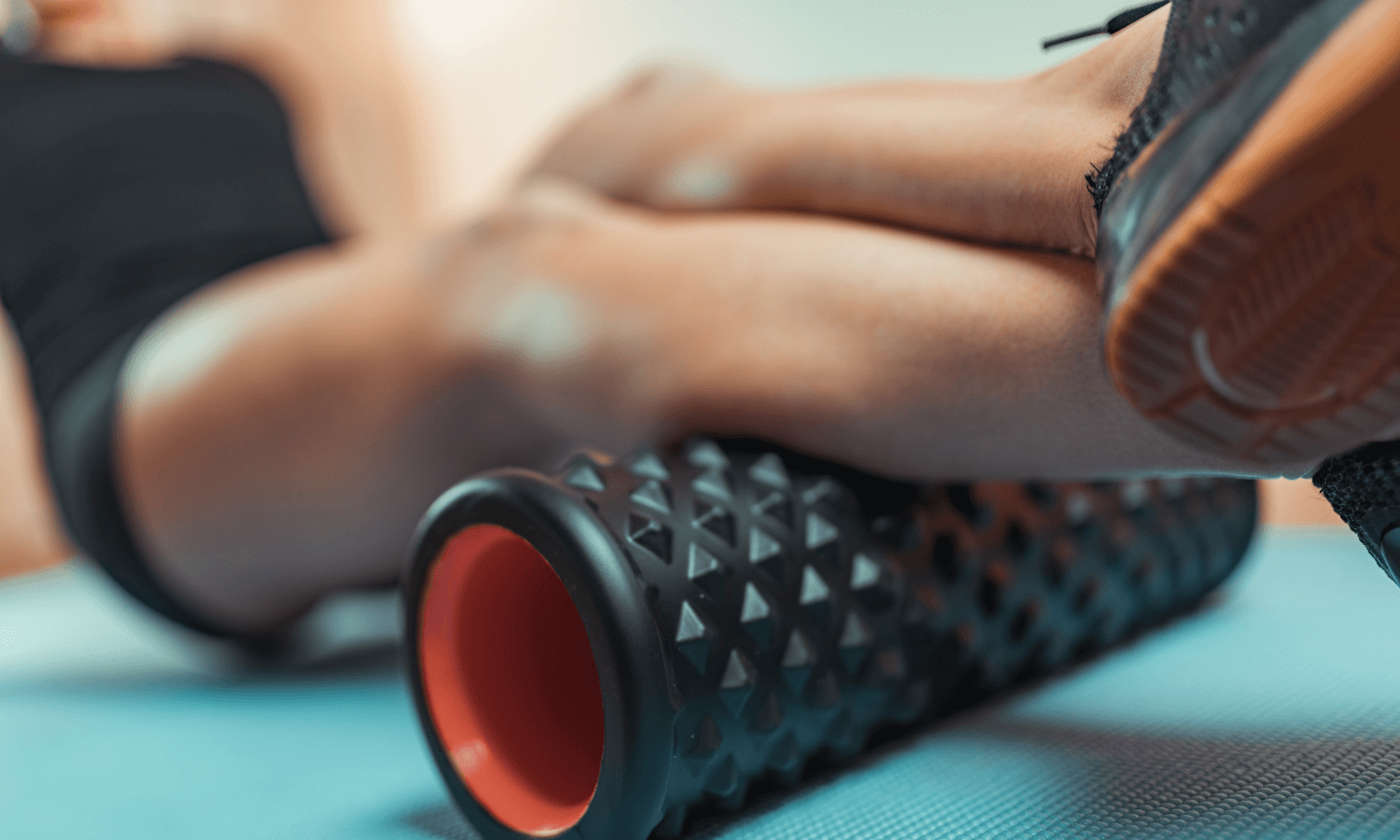
Have a read here about fascia from Jennie Rawlings. It is a good read and it highlights common myths and the more modern views on the robustness of fascia and how a simple ‘rub’ does not break down fascia.
Here is another by the brilliant ‘Pain Science‘ writer Paul Ingram. He goes into massive depth on the current views and research on fascia.
Wonderfully interesting! Using this knowledge should empower practitioners in the management and treatment of their patients and enable them to make sound therapeutic decisions based on current research.
Blog post by James Dodd

Diabetes ….. the way to reverse Type II
In Michael Mosleys’ book ‘The 8-week blood sugar diet’, he states “Now we have completed careful studies which have shown that people who REALLY want to get rid of their type II diabetes can, in just 8 weeks, lose substantial amounts of weight and return blood sugar to normal or near normal. They remain free of diabetes provided they keep their weight off”.

Prof Roy Taylor and Newcastle University have published a recent paper on Diabetes. The team showed that Type 2 diabetes could be reversed even in people who had the condition for 10 or more years.
See the paper’s breakdown here.
In Michael Mosleys’ book ‘The 8-week blood sugar diet’, he states “Now we have completed careful studies which have shown that people who REALLY want to get rid of their type II diabetes can, in just 8 weeks, lose substantial amounts of weight and return blood sugar to normal or near normal. They remain free of diabetes provided they keep their weight off”.
The biggest part of what he says is ‘those who really want to’! This is about people taking responsibility for their health and making that difference. Sure, that is super hard to do. But to take control of your diabetes and ‘beating it’ would be a phenomenal thing to achieve. For those that have achieved this, risks to their lives would have been reduced massively!!
Blog post by James Dodd

The Glutes, the butt, the big one and lower back pain
A bit of contention, but we all have big butts for a reason. Or compared to your biceps, shoulders or calves anyway! This is because the Glutes need to be able to do so much. They control the ‘top down’ movement of your head and trunk etc and also of the ‘bottom up’ part of you ….meaning of your legs and the reaction of you contacting with the ground.

Your Glutes!
A bit of contention, but we all have big butts for a reason. Or compared to your biceps, shoulders or calves anyway! This is because the Glutes need to be able to do so much. They control the ‘top down’ movement of your head and trunk etc and also of the ‘bottom up’ part of you ….meaning of your legs and the reaction of you contacting with the ground.
Glutes NEED to be able to control movement and be strong. So many of us extensively sit and this does nothing to help with strengthening your butts. This even deconditions your glutes. Then some of us go to the gym or exercise and only train this fantastic muscle in one plane. To really get your glutes working well (‘switching on’ or firing) you really need to to a combination of multi-plane exercises. The exercise that you do must not all be in one direction. This should involve some side-to-side and some rotational loading.
Many people garden at this time of year and this involves a lot of bending down. Great glutes will really assist with this. Yet we do very little to help with our bending.
If I went to lift a heavy weight with my arm, many may say ‘that’s too heavy, you have not done that before. You need to regularly exercise those muscles in your arms to be able to do that. Your gluts are the same. To enable you to bend well, your glutes need to be able help with the job of bending. If a crane was only rated to lift 1000kgs – you would never load up that crane with 1500kgs because you would be worried it will fail. And it probably would fail!
When we bend many muscles, our glutes included, have to be able to cope with the weight of our head, shoulders and trunk and then be able to sustain that bend for as long as we are bending. If your butt or glutes are not strong enough, one of the parts that often fails is our lower backs. And lower back pain is massively prevalent in today’s society. There is way too much of it.
Dr Rangan Chatterjee recently did a post about back pain. One of the things he mentions in his post was the butt and how it really helps our backs. It is massively important!
The last think I wanted to say was that along with training your glutes in a multi directional way, you must train them in an ‘integrated’ way rather than in a ‘isolated’ way. It is not just about that buzz word – ‘the core’. All our muscles work as a team and no one muscle ever works by itself when we move. Your glutes NEVER work by themselves and so you must train them in an integrated way. For example, when you bend, your calves and hamstrings switch on along with your glutes and the muscles in your lower back.
Thinking about this when you train can make exercise much more fun, but also more challenging.
If you are worried about a problem or want some advice, come in and see one of our osteopaths at Back to Back. Call 020 8605 2323.
Blog post by James Dodd

Knee pain and running
If you think you’re suffering from ‘runners knee’ and knee pain it is critical for the landing hip to work (not just your gluts) and how essential it is for the foot to be able to sustain the mass of your landing. With knee pain, sometimes the last place you need to look at is the knee. So many other factors can affect the knee.

Very recently, there was an interesting article in The Guardian on ‘runners knee’ and knee pain. The link is here. The article contains some great information. But we feel where is does fall short is not mentioning how critical it is for the landing hip to work (not just your gluts) and how essential it is for the foot to be able to sustain the mass of your landing. With knee pain, sometimes the last place you need to look at is the knee. So many other factors can affect the knee.
Knee pain is certainly not just about ‘pronation’ or the ‘rolling in’ of your foot. If you have a high arched foot your knee takes more hit as you are unable to react to the ground well. Sometimes people need to pronate more! Gary Gray from the Gray Institute coined the phrase ‘Everything changes when your foot hits the floor’ and he is so correct! You also need to assess what happens to the ‘back leg or trailing hip. If your left hip does not extend fully – the knee of your right leg will have to work harder.
I think it is critical to appreciate that everything is connected in our bodies. How one area not working may or may not increase the load onto another and make the body compensate. Then knee is stuck between your hip and your foot. It is more likely that one of these is not working well and the knee pain is only the symptom.
Then the rehabilitation must then target the areas that are not working, rather than just the symptomatic areas.
If you are concerned about your running or indeed are suffering, make an appointment to come and see one of our great osteopaths.
Blog post by James Dodd
The Physical Therapies:- Osteopathy, Chiropractic and Physiotherapy ….The Differences…
Osteopathic therapy, physiotherapy, chiropractic care and massage share a common philosophy: The integrity of the spine is important in ensuring good health. In fact, this philosophy is shared by almost all traditional healing arts and is also found in many modern alternative treatments.
The Difference Between Osteos, Chiros, Physios and massage……
We are often asked how osteopathic therapy differs from physiotherapy, chiropractic care or massage.
Please note – this is general overview that we have found over the years and what many other patients have reported. All practitioners treat differently and it is important to find one that works for you! Being osteopaths – we are obviously Osteopathically biased!
Let’s start with the similarities:
Osteopathic therapy, physiotherapy, chiropractic care and massage share a common philosophy: The integrity of the spine is important in ensuring good health. In fact, this philosophy is shared by almost all traditional healing arts and is also found in many modern alternative treatments.
Now for the differences:
Generally people seek a therapist because of pain or impaired movement. Let’s look at how the same problem might be treated by the different types of therapists. Imagine you have a shoulder injury. You play some recreational golf and each year you get a twinge in your shoulder at the beginning of the season. You’d like to play golf pain-free and you’d like the pain dealt with once and for all.
You try physiotherapy . . .
Your treatment time will vary from 15 to 30 minutes.
The physiotherapist assesses your shoulder using standard orthopaedic tests and reaches the conclusion that there is some impingement of one of the rotator cuff muscles, which is a very common shoulder injury.
The therapist might choose to use some ultrasound on your shoulder.
You will get some specific exercises to increase strength to any weakened muscles of your shoulder.
The treatment may or may not include hands-on work. If it does, it will probably just be focused on your shoulder or upper ribs.
You are asked to come back twice a week for eight treatments.
You try chiropractic care . . .
Your treatment time will vary from 5 to 30 minutes for your first appointment, and last for about 5 minutes in subsequent sessions.
Like the physiotherapist, the chiropractor might assess your shoulder using some standard orthopaedic tests. The tests might also include an assessment of your spine, often using x-rays.
The chiropractor will be looking at the parts of your spine where the nerves to the shoulder come out, checking for what is called a subluxation. From the chiropractic perspective, the spine can become minutely out of alignment, and the resulting subluxations inhibit nerve flow, which can cause joints to become injured.
Treatment will probably involve manipulating your spine to free up the nerves so that they can control your shoulder better.
You are probably asked to come back two to three times a week for three weeks. You will then slowly decrease the frequency of your treatments until you are on some sort of monthly maintenance program to check for general subluxations.
You try massage . . .
Your treatment time is usually an hour.
The massage therapist will probably feel what muscles are tight and will just work on those muscles.
Generally you will lie down and the therapist will massage the tight or sore muscles to increase blood flow to the area to speed up the healing.
You will probably be encouraged to come back whenever you feel the need.
You try osteopathy at our clinic . . .
Your first treatment lasts one hour. Subsequent treatments last 30 minutes.
We assess your shoulder to find our which areas are damaged or strained.
We then assess your spine to see if the nerves to your shoulder are compromised. In this way we are similar to a chiropractor.
BUT we also look further afield because your shoulder never works in isolation:We assess other joints that work in conjunction with your shoulder, especially your wrists, elbows, neck and hips.We might even choose to look at movement patterns. For example, we’d ask you to demonstrate your golf swing technique to see if any restrictions in your hips or neck are placing too much work on your shoulder. We may even video this and slow it down.
The treatment is strictly hands-on.
The hands of an osteopathic therapist are more sensitive and knowledgeable than any type of machine. We don’t use ultrasound or any other machine to help us understand what’s going on.We find we get the best results by keeping the treatment to the work of our trained hands.We are trained to do manipulations (both gentle and firm), joint movements and massage techniques.We also know how to use our hands in a very subtle way to gently free restrictions around organs and other deep body structures to restore health to your whole body.It is key for us to grasp why your body is struggling and assessing and treating it in an joined-up way is important here. We may work with your hips and feet to enable you to achieve better range in your shoulder (as everything is connected….)
The course of treatment with osteopathic therapy
We might ask you back in one or two weeks.Dependent on what the diagnosis is or how severe the injury may be, on average, we will want to see you about four to six more times over a two to three month period to make sure the problem is resolved.That will also give us a chance to assess and help you with any other problems that we think will cause you trouble in the future.
Blog post by James Dodd

Ibuprofen and back pain
The Guardian recently reported ‘Anti-inflammatory drugs or NSAIDs (like Ibuprofen) are not much more effective than placebo and patients taking them are 2.5 times more likely to suffer from stomach problems’.

The Guardian recently reported ‘Anti-inflammatory drugs or NSAIDs (like Ibuprofen) are not much more effective than placebo and patients taking them are 2.5 times more likely to suffer from stomach problems’. See the link to the article in The Guardian here.
All good points…. but two things need to be looked at here.
1. There are many different reasons that people suffer with back pain (‘back pain’ is never that simple) and so when every patient comes into see an osteopath here at Back to Back, we take a comprehensive case history and they have a thorough examination. This gives us a really good idea why they may be suffering.
There ARE inflammatory reasons why we can get back pain. These people will most likely respond well to anti-inflammatory medication. The back pain that is not inflammatory may not get the same level of relief. Also, during an acute episode of back pain, there may well be an inflammatory phase as the body reacts to the injury. These patients may also get some relief from ibuprofen. Once back pain becomes CHRONIC or more longer term, often it looses its inflammatory nature and so these drugs will be less useful.
2. Patients that take these medications for a short time only are less likely to suffer from stomach problems unless they already have a sensitivity to them. If you take them for extended periods, it is very well documented that anti-inflammatory drugs (NSAIDs) can irritate your gut and cause other problems. There are also different types of NSAIDs (varying in strength and mechanism) and some also have gut protecting properties. So taking care with high doses or for extended periods is important.
Taking any painkiller does not sort out the cause of your back pain. It is sort of like putting a plaster on it, but is does not sort out why it happened to you in the first place. Often getting assessed first is a great place to start and work out why it happened. Get the cause treated and then become empowered to move more efficiently and effectively.
It always depends why things happen…. bodies are super complicated. There is never a straightforward answer. If you are told it is straightforward, maybe look deeper. So as ever….Get good advice from your health professional.
Blog post by James Dodd

Golf and the golf swing
At Back to Back we treat more than a few golfers and their injuries. An injury common to the golfer may be one of many…. But often a golfer presents with pain in their elbow, shoulder, their back, hip or knee. It could be their neck or other area.
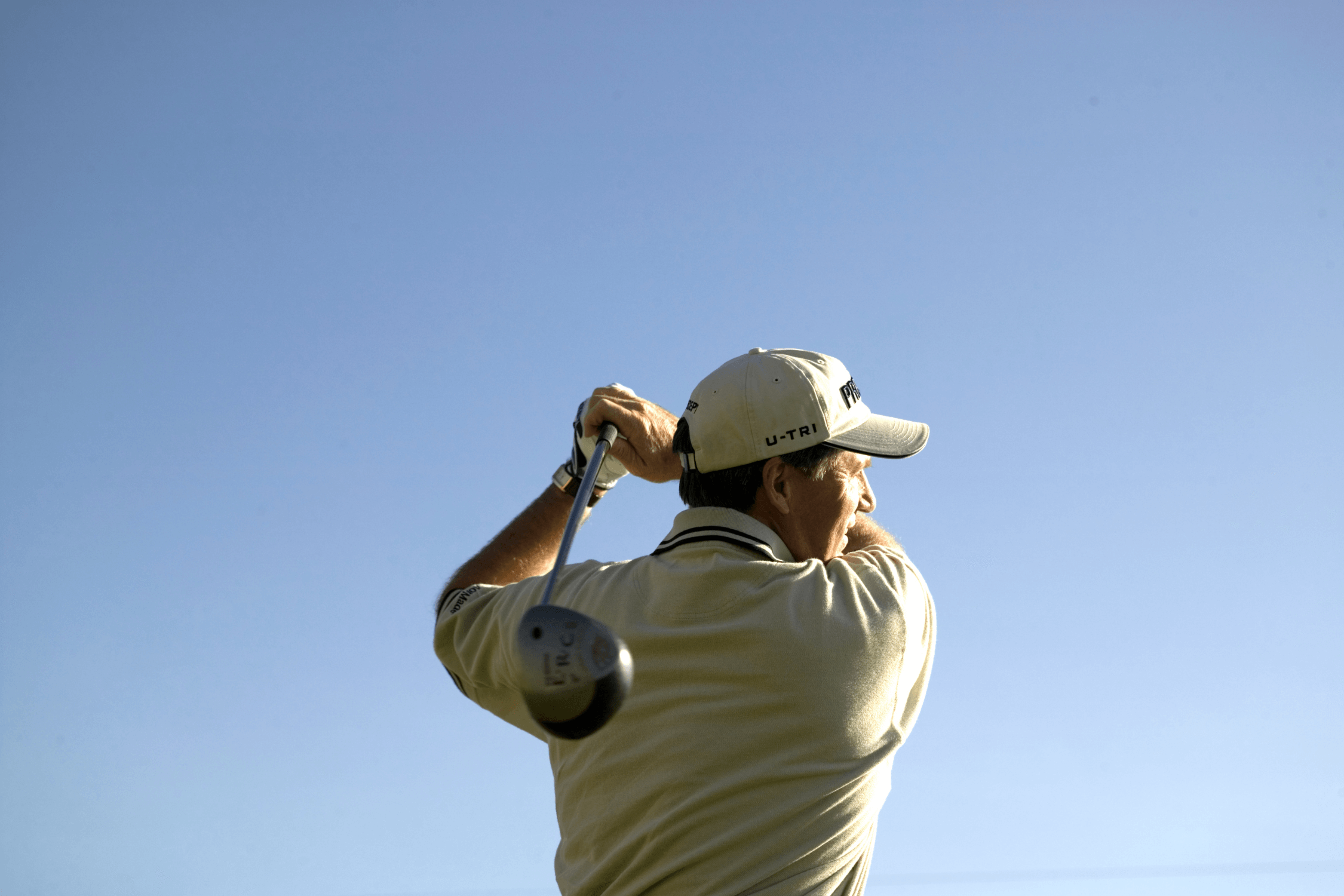
At Back to Back we treat more than a few golfers and their injuries. An injury common to the golfer may be one of many…. But often a golfer presents with pain in their elbow, shoulder, their back, hip or knee. It could be their neck or other area.
Identifying with their pain can be the easy part. Working out why they have pain is often a little more challenging.
Our AFS (or Applied Functional Science) team will be best to do this. Their aim is to track down the ‘why behind the what’. What I mean by this is … why has that particular area of your body failed? What in that person’s body is not working as it should and increasing the ‘load’ elsewhere?
What encouraged me to write this was a patient that I saw just over 4 weeks ago. He was in his late forties with a handicap of 4! He had been suffering with right shoulder pain for the last 5 months! He had seen a few other practitioners before find his way to the clinic.
To me, it was crucial to see him swing as if he was hitting the ball! Watching this and adapting the way he hit the ball, it immediately became apparent that he was restricted in his left hip. As he was halfway through his backswing the movement that should have been available at his left hip was not there and he was then using his upper back and right shoulder to do much more work than it needed or was build to do.
All that was happening was his shoulder was becoming strained because of his hip! Before coming to see us, this lovely patient had had his shoulder and surrounding area rubbed for 14 treatments.
Working with his left hip and left foot and integrating them into his swing gave great results in 3 treatments and he was almost pain free at 4 treatments. He still has a small way to go, but it just goes to show that rubbing symptoms (in this case the shoulder) is not always the right answer. Getting fully assessed by someone that appreciates integrated movement and treats the body as a whole is critical.
Get assessed properly and get properly fixed!
Blog post by James Dodd

Your knee is your hip and your hip is your knee… it is joined by a big bone!
As we are entering spring, more of us are getting outside to enjoy some sun and take up those summer activities, tennis being one of them. So what does this mean for our hibernating bodies and how can your knee become a victim of your new interest?
The knee can be your best friend, but it can also take a ‘beating’ in games like tennis.

As we are entering spring, more of us are getting outside to enjoy some sun and take up those summer activities, tennis being one of them. So what does this mean for our hibernating bodies and how can your knee become a victim of your new interest?
The knee can be your best friend, but it can also take a ‘beating’ in games like tennis.
The primary purpose of the knee and its surrounding tissues is to absorb shock and propel us in movement. It is mostly known for its ability to flex and extend and allowing us to twist and turn.
To help you understand why the knee takes a beating, I would like to explain why and how you can give your knees a better start to the summer.
“The Knee is caught in the middle with few places to go and no place to hide”
What does this mean?
As we walk, run, jump or bounce, the foot reacts as it makes contact to the ground. This pretty quickly feeds the information to the knee. The knee will then go through an appropriate movement depending on what stage you are in gait: it will react to most of what the foot does.
Sounds easy enough, but what happens if you are the knee and your foot or your hip (or both) does not load or move properly? Your knee may struggle to cope with the different movement above and below and this may be the start of your knee symptoms or dysfunction.
So what do we advise?
Great foot and hip motion is going to give the knee the best opportunity to work in all of its planes of motion and will facilitate the reaction of the proprioceptors, (information messenger’s found in joints, muscles and joints) and muscles.
We want to create an environment for the knee where the knee can twist, turn, bend, straighten at speed and adjust to different environments such as different terrain.
Does this sound familiar when playing a game of tennis?
By doing a simple matrix (an exercise to brilliantly allow the integration of the hip, knee and foot ) you will be providing a successful chain of movement which will help to provide stability for the knee and improve overall muscle control. See the videos below on how to do these.
Blog post by Annie Fonfe

Skiing preparation
Many of you are about to go skiing soon. Even if you are a great skier, it is really important to have laid some fitness foundations and have prepared your body to enable it to cope with the power and endurance that is required. As we get older, it becomes more important that we look after ourselves to protect ourselves from injury.
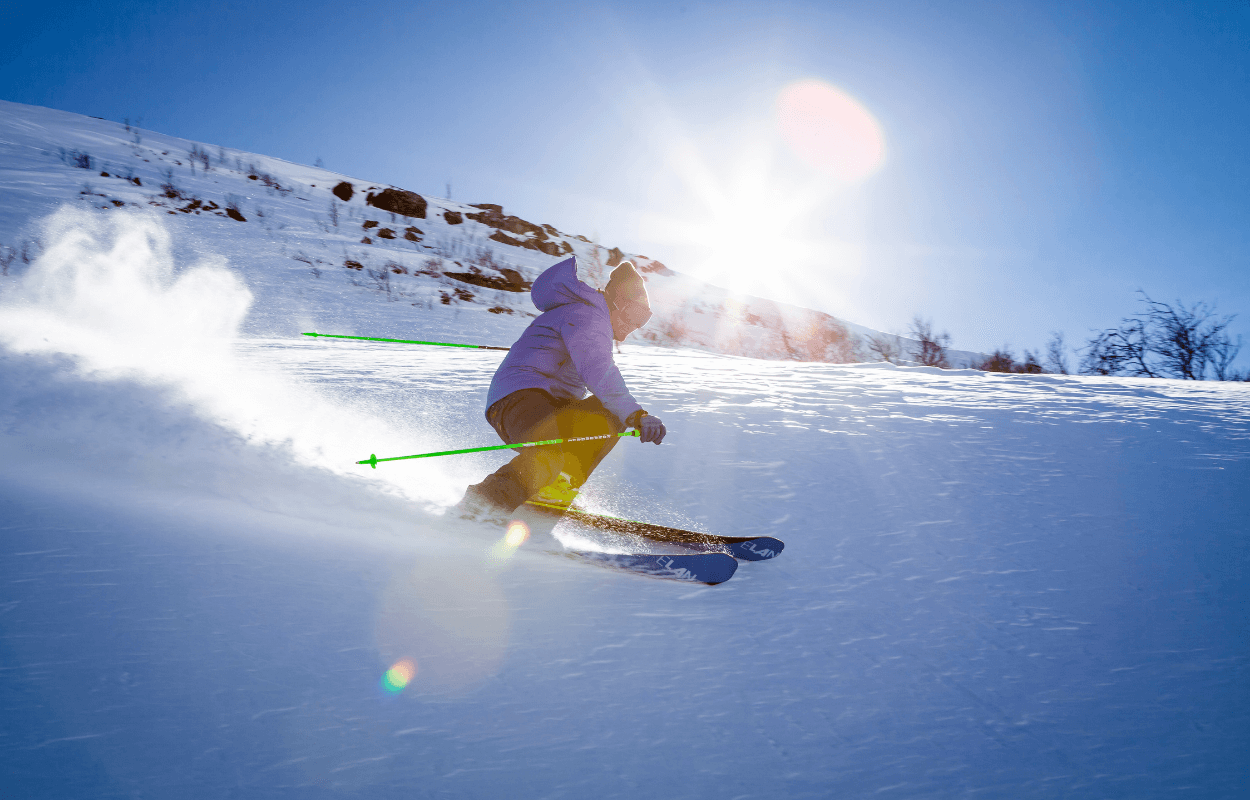
About to go skiing??
Many of you are about to go skiing soon. Even if you are a great skier, it is really important to have laid some fitness foundations and have prepared your body to enable it to cope with the power and endurance that is required. As we get older, it becomes more important that we look after ourselves to protect ourselves from injury. Going from sitting at a desk all day every day, to a week or two of skiing can create havoc on an unconditioned body. Check out these two videos from Mark Leyland that will be a great starting point. Build on these gradually. It is important to see that these movements are pretty close to what we all do when we ski. Noting is fixed and it works the whole kinetic chain.
Please be safe and do get hurt. If you do, call us on 020 8605 2323 and we will be able to help.

Health Benefits of Zumba® fitness training: a systematic review
An interesting paper which concluded that:
Zumba® fitness could be considered an effective type of physical activity able to improve aerobic capacity. Limited evidence described positive effects on muscular strength and flexibility.

Read this paper here.
It concluded that:
Zumba® fitness could be considered an effective type of physical activity able to improve aerobic capacity. Limited evidence described positive effects on muscular strength and flexibility.
So a great one to try. Good multidirectional, upright cardiovascular exercise. Fun too!
If you are concerned about an injury, come and see on of the team at Back to Back. Call reception on 020 8605 2323

Explaining back pain
This really lovely and simple short video from Dr Mike Evans explaining some of the reasons for lower back pain and what you may be able to do to help yourself. Often it is about taking responsibility for yourself and talking control and deciding what you need to do. Movement and treatment are often great ways to start. Osteopaths are able to treat and advise.
This really lovely and simple short video from Dr Mike Evans explaining some of the reasons for lower back pain and what you may be able to do to help yourself. Often it is about taking responsibility for yourself and talking control and deciding what you need to do. Movement and treatment are often great ways to start. Osteopaths are able to treat and advise.
Have a watch …. it is only a few minutes! But really good…
Come in and see one of the great osteopaths at Back to Back if you need help or are concerned. They are registered and qualified to assess and treat you. We are also trained to rule out any ‘red flags’ or ‘things of concern’. Osteopaths not only treat lower back pain, but neck pain, shoulder pain and most muscle or joint pains. We also rehab patients post surgery and some of us also use exercises to improve performance or movement in sport.
Call us on 020 8605 2323