Back to Back Blog

3 tips for Knee Rehabilitation and the need to be patient!
My Knee Rehabilitation! Nothing much to write today, other than I have been gradually increasing the amount of walking I have been doing and very clearly, it was too much! My knee was feeling unstable and it was ‘talking’ to me more. It was not unstable in any way. But it was just telling me to back off and I needed to listen. Knee rehabilitation after surgery takes time!

My Knee Rehabilitation! Nothing much to write today, other than I have been gradually increasing the amount of walking I have been doing and very clearly, it was too much! My knee was feeling unstable and it was ‘talking’ to me more. It was not unstable in any way. But it was just telling me to back off and I needed to listen. Knee rehabilitation after surgery takes time!
At only just over 2 weeks post operatively, mild swelling and inflammation was still present and the areas that had been cut inside were still sensitive.
What I did note, was that there were other aggravating factors having an impact. My footwear and the terrain that I had been walking on.
My shoes have been harder underneath with little or no give; this would have created more ‘jarring’ through to my knee. We have been increasing the distance that was walked, this inevitably included more hills, both up and down. In Cornwall these can be steep, especially in some of the beautiful towns that we visited.
So what did I do? The patient backed off and walked less! I wore softer shoes with more give in the soles.
I STOPPED being stubborn and soldiering on! It is so easy to just say….”Let’s carry on, it will be fine.” Clearly, it was not!
But I kept on with the same exercises without adding any more and would resume with more as soon as I was able.
I kept on reminding myself. It was ONLY 17 days post surgery and I am good with that. Healing takes time!!
Those 3 tips I mentioned.
I have really found walking is great- it is ‘free’ and being outside is brilliant for you in so many other ways too. Integration of your exercises is really important. Trying to work your knee in an integrated way joins other joints and muscles together. Your knee never works by itself.! Don’t underestimate how important your foot is. Your knee is a bit of a slave to your foot and so a really well moving foot allows your knee to track and load with greater efficiency.
More soon.
As Osteopaths at Back to Back, we recognise that it is crucial for post surgical rehabilitation to be UNIQUE to THE INDIVIDUAL. Exercises should be given to YOU and for YOUR problem and for YOUR stage of healing. The progression of exercises is also unique to the patient and given under the advice of a good health practitioner.
The above is all the opinion of Back to Back.
If you are concerned in anyway about your rehab, do come in and see one of our highly trained team.
Blog by James Dodd

Rehabilitation story – Knee arthroscopy
I sustained a tear on the inner rim of my medial meniscus. It hurt and made a pop when I landed and gradually I became less able to walk and climb stairs. Dog walking made me sore and grumpy….. Exercising just left me in pain. I had had some regular treatment on this, since the injury and it was not helping.
My Story - James Dodd
I sustained a tear on the inner rim of my medial meniscus. It hurt and made a pop when I landed and gradually I became less able to walk and climb stairs. Dog walking made me sore and grumpy….. Exercising just left me in pain. I had had some regular treatment on this, since the injury and it was not helping.
I chose to go and get my knee scanned. I took home the disc and looked at the images at home. Immediately, it was apparent that there was a tear in an area that takes load and the snapping was my meniscus being pushed out of the way.
Grrrrrr. Next step was to see Adrian Fairbank. A knee orthopaedic surgeon. I did not take this step with easily. I had had 10 treatments and this and the exercises were not working. The tipping point for me was when my function was actually getting worse!
Adrian was thorough. He questioned, examined and looked at the MRI and confirmed my thoughts. I had medical insurance and so we decided to try to fix this as soon as….. ‘Soon as’ was two days later!!
The operation went without any concerns or problems and I was home just after lunch. I had been given some very basic post operative exercises to keep my knee mobile and help with the inflammation. I did as I was asked.
I had some pain and anti-inflammatory medication and due to the higher risk of Deep Vein Thrombosis (DVT) post surgery, I was told I needed to wear a stocking for 2 weeks. This went all the way from my left foot up to the top of my thigh!
Why are there risks of DVT. Here is a link
After two days of ‘pottering’ and some time off my feet. I started to do a little bit more. Just little bits of walking is good – I was limping and it was sore, so I was careful to avoid doing too much. What I did start to do was more on my other leg. I started to do some basic single leg squats and some pistol squats and for my upper body, I used my TRX to start pushing and pulling work. It is important to keep the upper body control there. I feel that many people have such a large disassociation between their lower and upper bodies. The balance, in my opinion, needs to be better.
Day 4
It was still pretty sore and my range of motion still limited. Stockings were still to be worn for the next 10 days.
Squatting and adding load to my left knee was still too much, so I was starting to do some hand/arm reaches with my feet in various positions. I was trying to be as functional as possible with my exercises. These were really to keep my body working as an integrated unit. If my legs were wide appart with my left leg forward, I could reach with my right hand to the left at shoulder height or take my left hand overhead to the right.
I managed to walk for just over a mile. I actually felt I could do more. But felt I should be sensible as I was still only 4 days post surgery. What would I be telling my patients?? ‘Rest a bit and give it time for the swelling and the inflammation to subside’. ‘Add in exercises gently’.
Tomorrow we are to set off to Cornwall for almost two weeks. This is one of the reasons why I chose to have my knee done at this time. I could then use my time away to rehab my knee to give it the very best chance it could get. We were driving early, hoping to miss the morning traffic. So we packed the car today. This involved a fair amount of stairs and carrying bags and some kettlebells?! As part of my rehab work, I had decided to take with me the RIPtrainer, the TRX and various kettlebells. I often use these along the rest of my training as the TRX is about ‘body weight’ exercises which I love and they can both be used extremely effectively for multidirectional training.
For some pretty dumb reason, I made it my business to put most of this into the car from the garden including and many trips up and down the stairs.
Day 5
Getting up early, my knee was more stiff and more painful than yesterday. I suspect sleeping on my side my knees a little bent did not help and then almost 6 hours in a car (with knee bent). Grumble……I then did some more lifting to empty the car. …. More grumble…. I was suffering for my excess yesterday and this morning! I had done way, way too much. Bit of a wake-up call really. Quite simply, it was my body telling me that I had done too much. It was also more puffy than it had been. But I suppose this is to expected. We decided to put my leg up and straighten it for a bit – this did feel good and it helped calm it. I then also did some more of the exercises I was given at the hospital to encourage drainage and reduce swelling.
This is MY story of MY knee. Everyone will be different. It is important to get advice from your osteopath or physiotherapist with regards to your rehab post surgery. YOUR rehabilitation is crucial ……. you do need to do this to give your body the very best chances for full recovery.
Day 9
It is now nine days post knee arthroscopy. How is that knee doing and what is it feeling like?
It certainly still gets sore if I do too much. We walked a bit further yesterday (on road and more hills!) and as I got near to ‘you have done too much’… it felt ‘unstable’… that was the only way I could describe it?! So I backed off and rested it a bit. Later than day we did a bit more flat walking and it was ok. Loading my knee and stairs are still slow, but that is to be expected. The stitches are dissolving and wounds heeling.

Exercises
I have stopped the original exercises that I was given and doing all my exercises upright now.
Beyond walking, I am not ready to involve exercises with stepping just yet, so they are to be closed chain with my left foot fixed on the ground.
Knee is not too keen in sagittal plane (SP) (knee bend) loading, but I can load my left hip into rotation and SP. I can also load my hip into the frontal plane …. but interestingly, my knee feels ok with this too. Using the Gray Institute’s 27 different foot positions, I am positioning my feet to add small ‘loading’ to my hip and knee with my foot on the ground. The knee is less keen to work with my left leg behind me…. and easier with my leg in front. It is also easier if my left foot is turned in a little, which asks more from my butt/gluts.
Short hand notes say ‘left leg forward’ is called LXX and with your left leg forward, but a wider stance is called LWX.
So in LXX and LWX, I am fixing my knee at about 20º and using ‘top-down’ trunk movement, I am loading my hips and trunk with various hand reaches. I am also doing some of these with a straight knee and allowing it to bend to a max of 20º. I am making sure that these are NOT painful and I am able to achieve them, so that my brain does not perceive these movements as a threat. These exercises are proprioceptively great too!
I am doing a few sets 3-4 times a day. I am also using the TRX as before keep my upper body conditioned. It is funny to see how easily I forget to do them and so I have set reminders on my phone and have also used the “wallpaper’ screen on my phone, so that each time I look at my phone it says ‘do your exercises!!)
Knee arthroscopy is not a small undertaking and it really highlights how important your rehabilitation is to get youback to function.
Function is about doing what you need to do as part of your day to day activities. In my opinion, our lives do involve bending and squatting to various degrees. It does involve reaching and twisting and it does involve coordination and us being able to control our balance and movement onto one leg. This also involves various combinations of all of these movements. We want to walk, pick things up off the floor, we sit, we twist and reach to get things off shelves. To most, this is just life.
The aim of Functional Rehabilitation is to get people getting back to what they are capable of and so all of my exercises are as close to ‘real’ function as possible. None of my exercises are with me on the floor bending my knee or on my side lifting my leg up and down! I want to load my body and replicate normal movements with much more efficiency, in a way that my body recognises and remembers.
My life certainly involves all of the above and so much more. For completeness, my rehabilitation will involve many of these movements and my knee exercises are just integrated into these.
13 days post surgery

Sleeping is better and I can find more ways to lie on my side without discomfort. I am still a little stiff in the morning.
The last couple of days have produced a good shift. I am walking better with improved control. I am able to do slower ‘high knee’ walking. My exercises have started to include reaches with a small knee bend. Caution is still high on my radar as I can still feel a ‘bite’ if I bend my knee too far with load. I am yet to use a forward step in my exercises, but I really feel that this will be soon. I am now also able to do exercises with my right leg forward too. This was previously painful.
I am doing more frontal and transverse plane loading. These include small lateral and rotational reaching with the aim of working the muscles of my butt, but also the ones in my thigh. These all involve ankle movement, so I am encouraging good foot biomechanics. Going forwards, I will be using some correctly placed foot wedges to use with some of my exercises to integrate better ‘ground reaction’ and ‘push off’.
As Osteopaths at Back to Back, we recognise that it is crucial for post surgical rehabilitation to be UNIQUE to THE INDIVIDUAL. It really is not good enough to be given a sheet of exercises that are not tailored to the individual and being asked to ‘get on with them’. The progression of exercises is also unique to the patient and given under the advice of a good health practitioner.
The above is all the opinion of Back to Back. If you are concerned in anyway about your rehab, come in and see one of our highly trained team.

Joint Replacements and osteopaths
Arthritis can affect people both physically and mentally and the pain it may cause can be extremely draining.
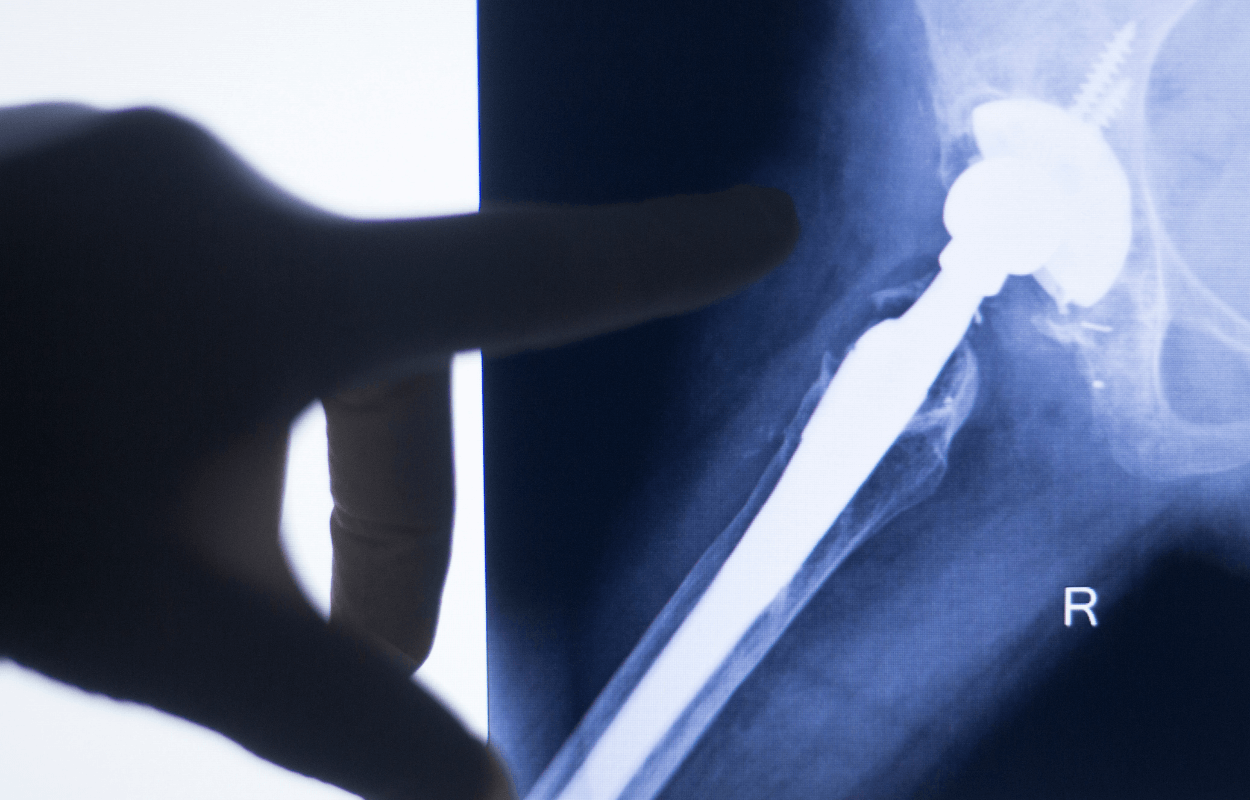
There are a number of patients who often present to our Osteopathy clinic for the treatment and management of arthritic conditions that may eventually require a joint replacement. Often these clients will ask the Osteopaths for their opinion on this and whether it is the right thing to do. This is often a difficult question to answer because every individual is different. Arthritis can affect people both physically and mentally and the pain it may cause can be extremely draining.
Other than advice from a health professional, it is also important to speak to others that have also had the same procedure. These are big operations and the ‘pros’ and ‘cons’ must be looked at. Most importantly, if you do decide to undergo an operation like this, you must be prepared to do the rehabilitation afterwards. This gives your body the very best chances of healing well and coping with your new joint.