Back to Back Blog
Chronic Heel Pain; Is it Baxter’s Nerve Entrapment?
Sufferers of chronic heel pain often are often diagnosed with Plantar fasciitis, however not all cases of heel pain are due to this. Other causes include nerve trapping, joint inflammation, stress fracture and Baxter’s nerve entrapment. In fact, Baxter’s nerve entrapment can cause up to 20% of cases of chronic heel pain.


Do you suffer from Chronic Heel Pain?
Sufferers of chronic heel pain often are often diagnosed with Plantar fasciitis, however not all cases of heel pain are due to this. Other causes include nerve trapping, joint inflammation, stress fracture and Baxter’s nerve entrapment. In fact, Baxter’s nerve entrapment can cause up to 20% of cases of chronic heel pain.
So, what is Baxter’s nerve?
Baxter’s nerve is a tiny nerve coming from the larger plantar nerve on the inside of the ankle. It supplies the small muscles of the foot and sensation to the heel. When the nerve becomes impinged it causes a sharp, burning pain, often associated with pins and needles and numbness and pins around the heel.
What causes Baxter’s nerve entrapment?
Baxter’s nerve entrapment can occur after injuring your ankle or heel, but more commonly, it develops slowly, without injury. It is unclear how it happens but there are theories that the nerve might become trapped from pressure, due to reduced movement of the ankle joint, flattened feet, and/or a pressure from a heel spur or plantar fasciitis. It can happen to anyone and doesn’t appear to be gender or age specific.
What are the symptoms and diagnosis
Symptoms often include:
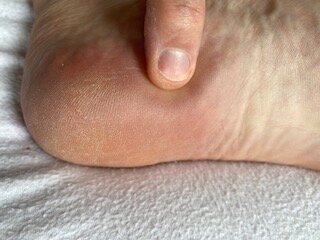
Pain when you touch the inside of the heel
A sharp/burning pain around the inside aspect of the heel
Pain when walking and placing your foot on the floor after a period of rest
Some people may suffer from pins and needles around the inner aspect of under the heel. Especially when the nerve is knocked or trapped.
Although Baxter’s nerve entrapment presents very similarly to plantar fasciitis, there is a subtle difference in where the pain is felt and some of the symptoms. Baxter’s nerve entrapment is felt on the heel and the medial arch of the foot, whereas Plantar fasciitis is more concentrated just on the heel. As noted above Baxter’s nerve entrapment can also include a sensation of numbness or pins and needles.
Imaging such as ultrasound or MRI can help with diagnosis. You might see thickening of the small Baxter’s nerve on the inside of the heel, or if your scan appears normal this increases suspicion of nerve trapping as the cause of pain. In severe cases, nerve trapping can cause shrinking of the muscles on the outside of the foot which will be seen on MRI.
What is the treatment of Baxter’s nerve entrapment?
Often, we would start with simple, gentle treatments, such as taping and orthotics (inner soles for your shoes), stretching and foot strengthening. We would give an individual strengthening routine and specific stretches to work on at home. Sometimes an injection of cortisone can be helpful, this would be done with ultrasound to ensure we target the correct site of Baxter’s nerve trapping. Finally, in some cases, surgery to release the Baxter’s entrapment might be needed.
If you are suffering from any form of heel pain, get in touch with the team today and see what we can do to help you.
Blog post by James Dodd

CANCANEAL APOPHYSITIS (SEVER’S DISEASE)
This is painful inflammation of a child’s growth plate at the heel. Normally, this affects children between 8 – 14 years old as their calcaneus (heel bone) is still developing.
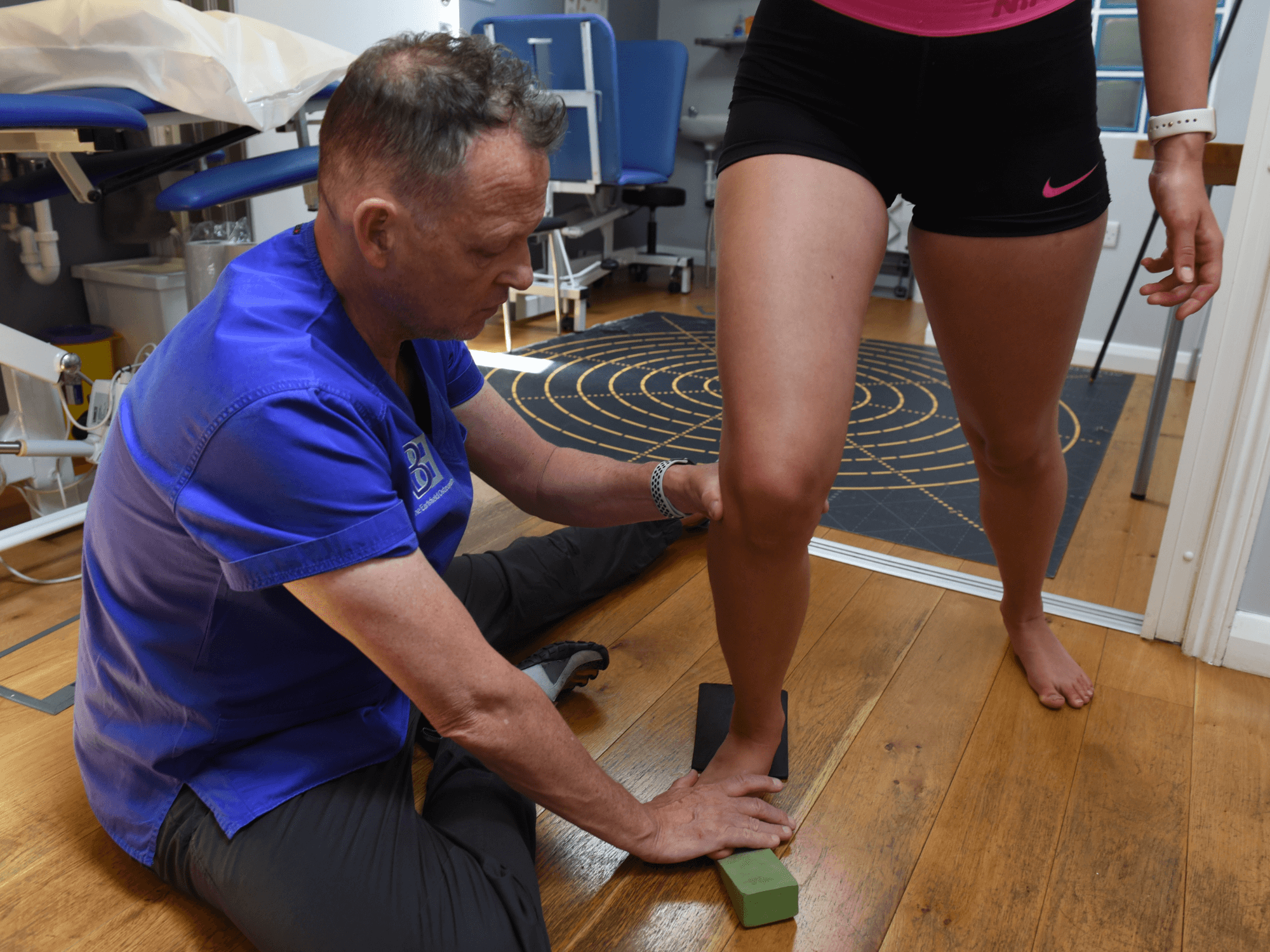
This is painful inflammation of a child’s growth plate at the heel. Normally, this affects children between 8 – 14 years old as their calcaneus (heel bone) is still developing. It is also at a time when children often increase the amount of exercise they do. With increased and repetitive use, the achilles tendon ‘tractions’ on the growth plate at the heel and so causing pain and inflammation. Approximately 60% of Sever’s is bilateral.
Causes
It is essentially an overuse injury at the time of growth. Sports that ‘load’ the achilles tendon and heel such as running and jumping are normally the culprits. Often a bout of Sever’s can become aggravated at the start of a season after a ‘rest’ period or exercising on harder ground as it gets colder. Tightness in the calf can also lead to increased load onto the heel bone. It bad cases, it may take until the child stops growing before complete resolution. It is also really important to try to observe why there has been more load placed onto their heel… this may be from a stiff hip or other area. This is key to successful treatment.
Diagnosis
This needs to be based on a full and correct examination by your osteopath, doctor or other medical professional. X-ray or MRI may be used to confirm the diagnosis or monitor the progress, but often this is not necessary.
Treatment
Calcaneal apophysitis has no known long-term complications and is self-limiting; that is, it should go away when the two parts of bony growth eventually join together (occurring around 16 years of age).
It is important to limit (temporarily) excessive or rigorous activity in its painful stages. But it is also about management, as you can get times when it calms and at other times, it can then flare up again as they increase activity. Soft shoes and heel cups can make a difference and it is important to make sure the child has sound biomechanics (eg no excessive pronation or muscular imbalance). Regular and correct stretching of the tight muscles in the calf and thigh are essential. Ice can be of great help if used correctly. Anti inflammatory medication may be of use – but do check with your medical professional about this first.
Seeking help from your osteopath or good physical therapist can really help too. They will check for poor biomechanics and work and stretch the calf and thigh and manage this injury with some good strengthening exercises.
Return to sports or activity
The goal here is to get your child back to their desired sport or activity as soon as safely possible. It may be a gradual return to see if the condition regresses. If they return too early, it may lead to more chronic pain.
To return to sport your child should have no pain at rest and should be able to walk pain free. They should also be able to jog, sprint and hop pretty much symptom free too.
If after the pain resolves…. it is important that there is still a regime of regular stretching of their calves, thigh and leg muscles.
Blog post by James Dodd
Sever’s Disease. Heel pain in children.
Essentially, it is an overuse injury at the time of growth.
Sports that ‘load’ the Achilles tendon and heel, such as running and jumping, are normally the culprits. Often a bout of Sever’s can become aggravated at the start of a season after a ‘rest’ period, or exercising on harder ground as it gets colder.
Causes
Essentially, it is an overuse injury at the time of growth.
Sports that ‘load’ the Achilles tendon and heel, such as running and jumping, are normally the culprits. Often a bout of Sever’s can become aggravated at the start of a season after a ‘rest’ period, or exercising on harder ground as it gets colder. Tightness in the calf can also lead to an increased load on the heel bone. In bad cases, it may take until the child stops growing before complete resolution.
Other important areas to look at as to ‘why’ this may have happened, are ankles that do not move well and/or feet that are stiff which result in the force from the ground being poorly dissipated.
Also hips that are unable to give the range of movement required can increase the load to the achilles and heel bone, leaving the heels to take the hit! This is key to successful treatment. The symptoms and the diagnosis is Severs Disease, but it is not telling you ‘why’ this is happening.
Diagnosis
The diagnosis of Sever’s Disease needs to be based on a full and correct examination by your osteopath, doctor or other medical professional. An X-ray or MRI scan may be used to confirm the diagnosis or monitor the progress, but often this is not necessary.
Treatment
Calcaneal apophysitis has no known long-term complications. This is self-limiting in that it should go away when the two parts of bony growth eventually join together (occurring around 16 years of age).
It is important to limit (temporarily) excessive or rigorous activity in its painful stages. This needs to be about management, as you can get times when it calms and at other times when it can flare up again as they increase activity. Soft shoes and heel cups can make a difference. It is important to make sure the child has sound biomechanics (e.g. no excessive pronation or muscular imbalance). Regular and correct stretching of the tight muscles in the calf and thigh are essential. Ice can be of great help if used correctly. Anti-inflammatory medication may be of use, but do check with your medical professional about this first.
Seeking treatment from your osteopath or good physical therapist can really help too. They will check for poor biomechanics, work and stretch the calf and thigh, and manage this injury with some good strengthening exercises.
Return to sports or activity
The goal here is to get your child back to their desired sport or activity as soon as safely possible. It may be a gradual return to see if the condition regresses. If they return too early, it may lead to more chronic pain.
To return to sport your child should have no pain at rest and should be able to walk pain free. They should also be able to jog, sprint and hop pretty much symptom free as well..
After the pain resolves it is important that there is still a regime of regular stretching of their calves, thigh and leg muscles in place.
If you have any questions or would like us to look at your musculoskeletal problem, please book in to see an osteopath at Back To Back on 020 8605 2323.
If you suffer from an acute muscle injury and are not sure what to do, it is always suggested that you see your GP, Osteopath or Physiotherapist for further assessment and advice on treatment and management.

Cancaneal Apophysitis (Sever’s Disease)
Sever’s Disease in children; the cause and treatment.
This is painful inflammation of a child’s growth plate at the heel. Normally, this affects children between 8 – 14 years old as their calcaneus (heel bone) is still developing. It is also at a time when children often increase the amount of exercise they do. With increased and repetitive use, the achilles tendon ‘tractions’ on the growth plate at the heel and so causing pain and inflammation. Approximately 60% of Sever’s is bilateral.
Causes
It is essentially an overuse injury at the time of growth. Sports that ‘load’ the achilles tendon and heel such as running and jumping are normally the culprits. Often a bout of Sever’s can become aggravated at the start of a season after a ‘rest’ period or exercising on harder ground as it gets colder. Tightness in the calf can also lead to increased load onto the heel bone. It bad cases, it may take until the child stops growing before complete resolution. It is also really important to try to observe why there has been more load placed onto their heel… this may be from a stiff hip or other area. This is key to successful treatment.
Diagnosis
This needs to be based on a full and correct examination by your osteopath, doctor or other medical professional. X-ray or MRI may be used to confirm the diagnosis or monitor the progress, but often this is not necessary.
Treatment
Calcaneal apophysitis has no known long-term complications and is self-limiting; that is, it should go away when the two parts of bony growth eventually join together (occurring around 16 years of age).
It is important to limit (temporarily) excessive or rigorous activity in its painful stages. But it is also about management, as you can get times when it calms and at other times, it can then flare up again as they increase activity. Soft shoes and heel cups can make a difference and it is important to make sure the child has sound biomechanics (eg no excessive pronation or muscular imbalance). Regular and correct stretching of the tight muscles in the calf and thigh are essential. Ice can be of great help if used correctly. Anti inflammatory medication may be of use – but do check with your medical professional about this first.
Seeking help from your osteopath or good physical therapist can really help too. They will check for poor biomechanics and work and stretch the calf and thigh and manage this injury with some good strengthening exercises.
Return to sports or activity
The goal here is to get your child back to their desired sport or activity as soon as safely possible. It may be a gradual return to see if the condition regresses. If they return too early, it may lead to more chronic pain.
To return to sport your child should have no pain at rest and should be able to walk pain free. They should also be able to jog, sprint and hop pretty much symptom free too.
If after the pain resolves…. it is important that there is still a regime of regular stretching of their calves, thigh and leg muscles